
|Author: Hency Kushwah|
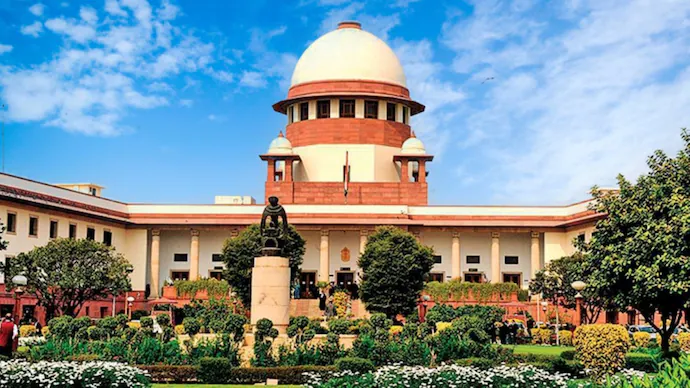
Photo: Supreme Court of India/IndiaToday
The Supreme Court of India has issued notice to the Union government on a Public Interest Litigation (PIL) seeking legal remedies for individuals who are falsely implicated in criminal cases. The petition raises concerns about gaps in the procedural framework under the Bharatiya Nagarik Suraksha Sanhita (BNSS) and argues that the current system does not provide an effective mechanism for victims of malicious prosecution to take action against those responsible for fabricated allegations.
The plea, filed by advocate Ashwini Kumar Upadhyay, asks the Court to interpret provisions of the BNSS in a manner that enables victims of false criminal cases to initiate complaints against individuals who knowingly fabricate evidence or file false accusations.
The petition highlights the broader impact of malicious prosecution on innocent individuals who often face lengthy trials, social stigma, and financial hardship before their innocence is established.
Legal Framework Under BNSS
The PIL focuses particularly on Sections 215 and 379 of the Bharatiya Nagarik Suraksha Sanhita (BNSS), the procedural law that replaced the Code of Criminal Procedure (CrPC) in India’s new criminal law framework.
Under the current legal structure, prosecution for offences such as:
- giving false evidence,
- fabricating false documents, or
- instituting false criminal charges
Generally, requires a complaint by the court itself before which the offence was committed.
The petitioner argues that this procedural requirement significantly limits the ability of individuals who are falsely accused to initiate action independently against those who file fabricated complaints.
According to the petition, the restriction effectively leaves victims of malicious prosecution dependent on judicial discretion rather than providing them with a direct legal remedy.
Argument of the Petitioner
The PIL contends that the present interpretation of the procedural provisions creates a systemic imbalance within the criminal justice system.
While the law allows complainants to initiate criminal proceedings easily, individuals who are falsely accused often lack a comparable mechanism to hold malicious complainants accountable.
The petitioner argues that this imbalance can result in situations where:
- Innocent individuals remain entangled in criminal proceedings for years,
- Reputational damage and psychological trauma continue even after an acquittal, and
- Those responsible for filing fabricated allegations rarely face legal consequences.
The plea therefore, seeks judicial clarification to ensure that victims of false cases are not left without an effective legal remedy.
Reference to Fatehpur Tragedy
To underline the seriousness of the issue, the petition refers to a tragic incident in Fatehpur, Uttar Pradesh, where three members of a family allegedly died by suicide after being threatened with false implication under the Scheduled Castes and Scheduled Tribes (Prevention of Atrocities) Act in connection with a financial dispute.
The petitioner argues that such incidents illustrate the severe social and psychological consequences that may arise when legal provisions are misused or when individuals face threats of fabricated criminal charges.
While the PIL does not question the importance of protective legislation such as the SC/ST Act, it argues that legal safeguards should exist to prevent misuse and protect innocent individuals from malicious prosecution.
Lack of Data on False Cases
The PIL also raises concerns regarding the absence of comprehensive data on false criminal cases in India.
Relying on reports published by the National Crime Records Bureau (NCRB), the petitioner argues that existing statistical frameworks primarily focus on crime reporting, arrests, and convictions, but do not adequately track instances of:
- false complaints,
- fabricated evidence, or
- malicious prosecution.
According to the petition, the lack of such data makes it difficult to assess the scale of the problem and prevents policymakers from developing targeted reforms.
The petitioner has therefore requested the Supreme Court to direct the NCRB to collect and publish data relating to false criminal cases and malicious prosecutions.
Supreme Court’s Initial Observations
During the preliminary hearing, the Supreme Court acknowledged that the issue raised in the petition touches upon serious concerns within the criminal justice system.
The Bench observed that the misuse of criminal procedures through fabricated complaints could harm innocent individuals and potentially undermine public confidence in the justice system.
The Court also noted concerns about situations where criminal complaints may be filed without the genuine complainant’s knowledge, suggesting the possibility of procedural manipulation or misuse by third parties.
In light of the issues raised, the Court issued notice to the Union government and other relevant authorities, seeking their response to the concerns highlighted in the PIL.
Broader Debate on False Complaints
The PIL arrives at a time when debates around false criminal complaints and malicious prosecution have increasingly entered public discourse.
While legal experts acknowledge that most complaints are genuine, they also note that procedural misuse, though relatively rare, can have devastating consequences for individuals who are falsely accused.
Indian criminal law does contain provisions for prosecuting false evidence or malicious complaints, but the procedural requirement that such prosecutions be initiated through the courts has often limited their practical use.
The outcome of this PIL could therefore shape how the legal system balances two critical objectives:
Protecting victims and encouraging the reporting of genuine crimes, and ensuring safeguards against the misuse of criminal law.
Yeh article aapko kaisa laga?