|Author: Hency Kushwah|
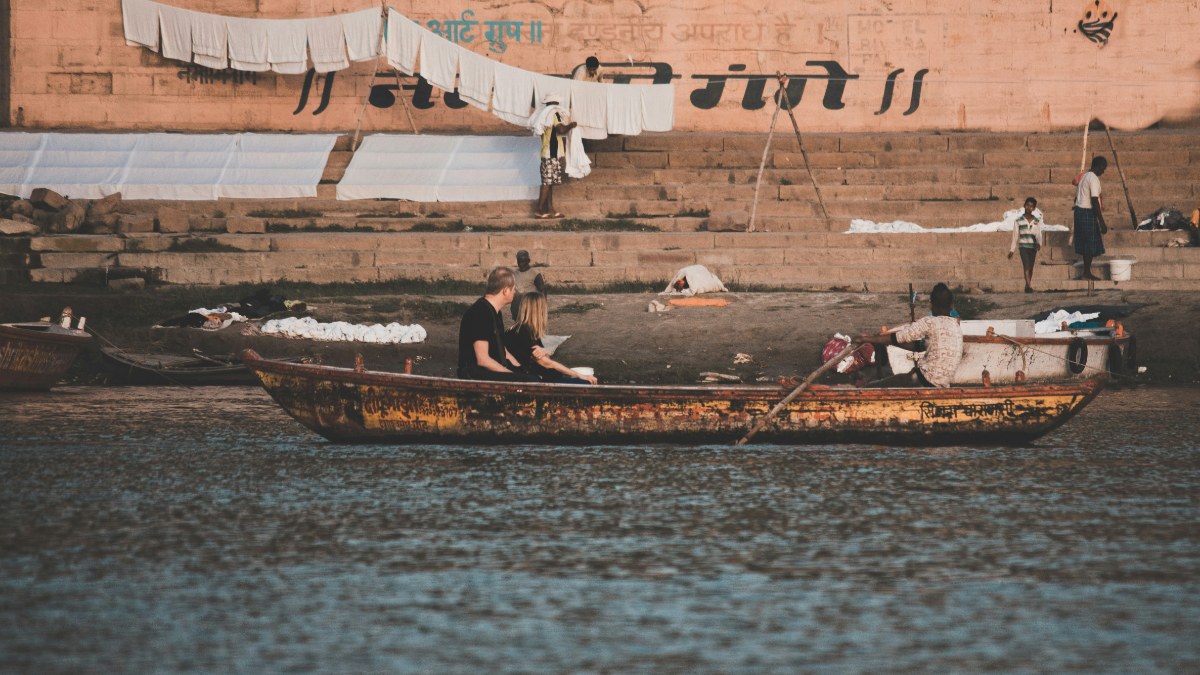
Photo by ADITYA PRAKASH on Unsplash
A viral video showing polluted stretches of the Ganga River has once again drawn public attention to the river’s deteriorating condition. Around the same time, visuals of people breaking their Ramadan fast (iftar) on boats in the river also circulated widely.
While these developments appear unrelated, together they point to a deeper and recurring issue: the Ganga continues to be extensively used and symbolically revered, yet inadequately protected. This is not the first time such concerns have surfaced.
From Jeremy Wade to Viral Footage: A Recurring Exposure
Long before the current wave of social media content, Jeremy Wade, through the television programme River Monsters, highlighted the condition of the Ganga to a global audience. In that episode, Wade pointed to visible pollution, the presence of waste, and the potential health risks associated with the river. The portrayal generated significant debate, as it presented a river of immense cultural and religious significance in a visibly degraded state.
However, the concerns raised were not new. They reflected an existing reality that has since been repeatedly documented by scientific studies and government agencies. The recent viral videos follow a similar pattern. While the medium of exposure has changed, the underlying problem remains unchanged.
A River of Shared Use and Increasing Pressure
The Ganga occupies a central place in India’s social and cultural life. It serves as:
- a site of religious rituals and ceremonies,
- a source of livelihood for millions, and
- a space for daily human activity.
The recent visuals of iftar gatherings on boats illustrate how the river functions as a shared public space across communities. Such interactions are not inherently problematic. However, the scale and intensity of human use have placed considerable stress on the river’s ecological balance.
The Ganga is often treated as an inexhaustible resource capable of absorbing continuous human activity. In reality, it is a fragile ecosystem with limited capacity to withstand sustained pressure.
The Primary Cause: Untreated Sewage and Infrastructure Gaps
The condition of the Ganga cannot be understood through isolated incidents or visual narratives alone. The principal source of pollution lies in systemic infrastructural deficiencies. Data from the Central Pollution Control Board indicates that several stretches of the river contain high levels of fecal coliform bacteria, a key indicator of contamination from untreated sewage.
This is primarily due to:
- inadequate sewage treatment capacity,
- malfunctioning or underutilised treatment plants, and
- rapid urbanisation along the river basin.
As a result, large quantities of untreated or partially treated waste enter the river on a daily basis. This continuous inflow, rather than isolated human activities, is the dominant factor contributing to the river’s pollution.
Legal and Policy Framework: Strong on Paper, Weak in Practice
The issue of Ganga pollution has been the subject of sustained judicial and policy intervention.
In MC Mehta v. Union of India, the Supreme Court recognised river pollution as a violation of the right to life under Article 21 of the Constitution. The Court issued several directions, including the regulation of industrial discharge and the establishment of sewage treatment facilities.
On the policy front, initiatives such as the Namami Gange Programme were introduced with significant financial allocation and clearly defined objectives.
Despite these efforts, implementation has remained inconsistent. Key challenges include:
- gaps in enforcement mechanisms,
- delays in infrastructure development, and
- limited accountability for non-compliance.
Consequently, the gap between legal mandates and ground realities continues to persist.
A Continuing Crisis Without Resolution
From the observations made by Jeremy Wade to the current wave of viral videos, the condition of the Ganga has been repeatedly brought into public discourse. Each instance generates attention and debate, but rarely leads to sustained corrective action.
The issue is no longer one of awareness. The nature, causes, and consequences of the problem are well documented. The central question, therefore, is not whether the Ganga is polluted, but why a long-recognised environmental crisis continues without effective resolution.
The river remains a site of deep cultural significance. Yet, it also reflects a pattern of systemic neglect. Until structural issues such as infrastructure deficiencies and enforcement failures are addressed, the condition of the Ganga is unlikely to change.
Yeh article aapko kaisa laga?