
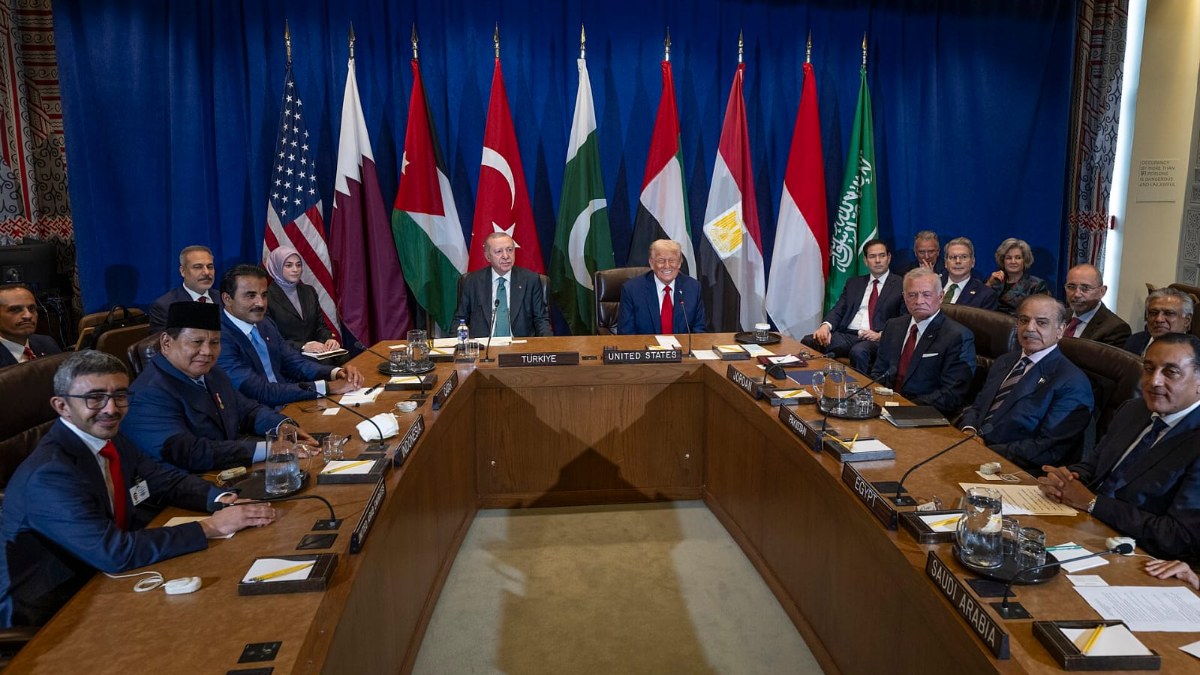
Photo: The White House
As the world watches the United States and Iran edge closer to an all-out war, Pakistan has suddenly stepped into the spotlight as the primary peacemaker. Global commentators are quickly praising Islamabad for trying to bridge the dangerous gap between Washington and Tehran. However, this hopeful framing hides a much harsher reality.
| Written by Ahad Khan |
Prime Minister Shehbaz Sharif’s government is not acting out of a noble desire for global harmony. Instead, Islamabad is executing a desperate, high-risk maneuver to save its own failing economy. They are trying to stop a war in the Middle East because if the region burns, Pakistan will financially collapse right alongside it.
Failing Economy
Pakistan is currently surviving on borrowed time and foreign money. According to recent economic assessments published by the World Bank, the country relies on nations in the Gulf for more than half of its total global remittances. The State Bank of Pakistan’s official fiscal reports show that these money transfers, which amount to tens of billions of dollars every single year which are the primary lifeline stopping the nation from defaulting on its massive foreign debt.
Furthermore, the global energy data paints a terrifying picture for the nation that Islamabad buys over eighty percent of its crude oil through the Strait of Hormuz. This critical waterway is currently threatened by military blockades and retaliatory strikes. For Pakistan’s civilian and military leaders, stopping the US-Iran war is not just a foreign policy goal; it is an absolute domestic necessity. If oil prices skyrocket, it will trigger severe fuel shortages and massive inflation, potentially leading to widespread riots and civil unrest within Pakistan’s own borders.
Whispers in the Diplomatic Shadows
The actual work of this peacemaking effort is happening far away from public cameras. While the Pakistani Ministry of Foreign Affairs has publicly offered Islamabad as a neutral hosting ground for direct peace talks, the real heavy lifting is being conducted secretly by the Pakistani military establishment. Global intelligence organizations, including Stratfor, have noted that Pakistan is in a remarkably rare geopolitical position to handle this crisis.
Islamabad has a strong, though complicated, historical security relationship with the United States, relying heavily on Washington for military aid and support at the International Monetary Fund. At the same time, it shares a long, porous border and deep cultural ties with Iran. Because Washington and Tehran refuse to speak directly and possess zero trust in one another, Pakistan has become the only reliable messenger in a highly explosive region. They are forcing communication lines to remain open when all traditional diplomatic bridges have been completely burned down.
Carrying an American Ultimatum
The most visible result of this secret diplomacy is a highly controversial fifteen-point ceasefire document. Recently, Pakistani officials delivered this American proposal directly to the Iranian leadership. Security analysts at the Brookings Institution suggest that this document should not be viewed as a fair peace treaty, but rather as a strict set of demands.
According to leaked reports cited by regional news agencies, the framework requires Tehran to entirely take apart its nuclear facilities, strictly limit its ballistic missile programs, and guarantee safe passage for global shipping vessels in the Persian Gulf. In return, the United States is only offering a temporary pause in the bombing and a vague promise to lift some economic sanctions. This one-sided offer is transparently designed to permanently weaken Iran’s military power while securing American and Israeli strategic goals in the Middle East.
Risking Everything for Survival
As expected, the initial reaction from Tehran has been incredibly cold. Official statements released by the Iranian Foreign Ministry have strongly rejected the American demands. Iranian officials called the terms completely unreasonable, especially following the recent assassinations of top leaders and the ongoing military strikes against their infrastructure.
However, the simple fact that these sensitive documents are being passed back and forth through Pakistani Diplomats shows that a tiny, fragile window for peace is still open. If Islamabad actually manages to broker a ceasefire, it will gain massive global respect and will likely receive huge financial rewards and bailouts from Washington as a thank you. But this remains a dangerous gamble. If the peace talks fail, Pakistan risks dragging its already weak, debt-heavy economy right into the middle of a growing regional war that it simply has no money or military power to survive.
Yeh article aapko kaisa laga?