
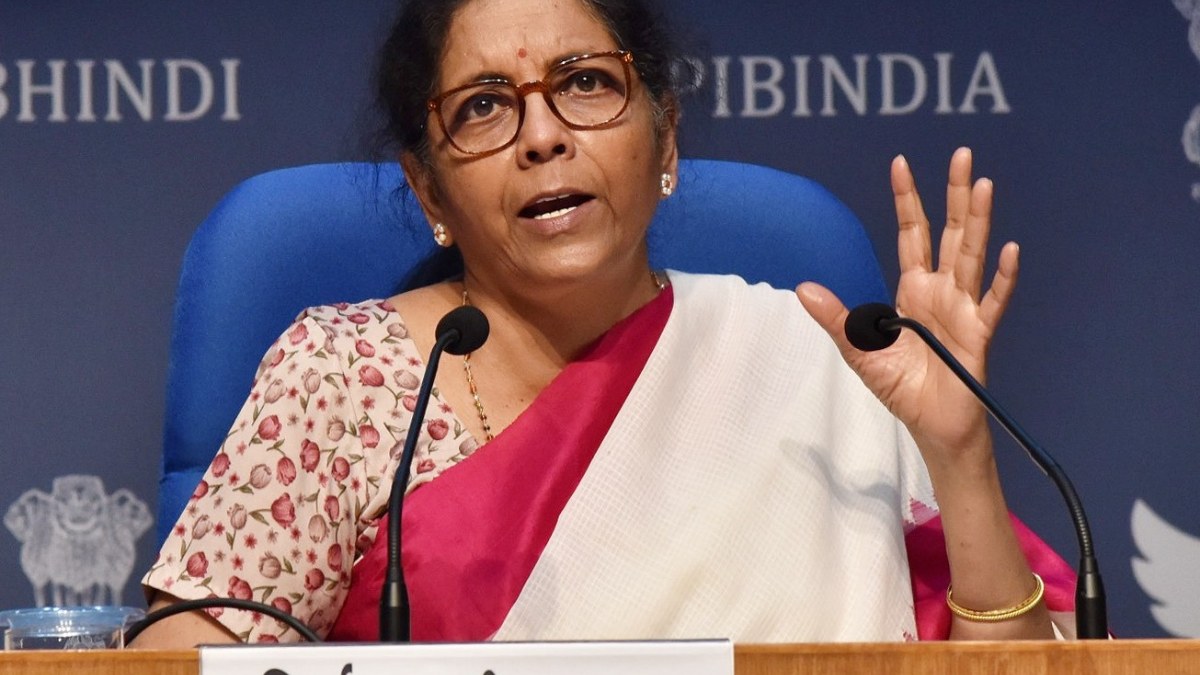
Photo: Press Information Bureau, Government of India, GODL-India
Have you checked the purchasing power of your wallet today? The numbers printed on your currency notes haven’t changed, but their actual power on the global stage is quietly evaporating.
| Written by Ahad Khan |
The Indian Rupee (INR) is currently caught in a fierce financial storm, plunging to unprecedented record lows and experiencing intense market volatility. For the everyday citizen, foreign exchange rates might sound like abstract Wall Street jargon. But make no mistake: this is a high-stakes economic thriller unfolding in real-time, and your financial well-being is directly tied to its outcome. Why is the Rupee falling with such aggressive momentum? Is it a symptom of domestic failure, or is India simply collateral damage in a chaotic global economy? Let’s investigate the hard facts.
Diagnosing the Free-fall
The Rupee’s descent is not happening in a vacuum. A critical analysis reveals that it is the victim of a macroeconomic “perfect storm” driven by three massive global forces:
1. The Crude Oil Squeeze
India imports over 80% of its crude oil. With escalating geopolitical tensions in the Middle East particularly conflicts impacting energy supply routes and oil prices have surged unpredictably. When oil gets expensive, India’s import bill skyrockets, aggressively draining the nation’s dollar reserves. The mathematics of this are unforgiving; economists at Nomura Holdings recently highlighted a chilling metric: for every 10% rise in oil prices, India’s current account deficit automatically widens by roughly 0.4% of its GDP.
2. The Exodus of Foreign Capital
In times of global uncertainty, investors panic. We are witnessing a relentless capital flight where Foreign Institutional Investors (FIIs) are pulling billions out of emerging markets. Seeking the ultimate safety of the US Dollar and capitalizing on attractive US bond yields, foreign funds have steadily exited Indian equities, creating massive downward pressure on the Rupee.
3. The Trade Deficit Trap
Because vastly more foreign exchange is flowing out of India to pay for high-priced energy imports than is coming in from exports, the fundamental laws of supply and demand dictate that the domestic currency must weaken to balance the scales.
“The problem is the pressure on the rupee is not just from speculators; it comes from the real demand for dollars in the economy,” noted Abbas Keshvani, Asia Macro Strategy Director at RBC Capital Markets. “Even before all of this kicked off in the Middle East, India had a very wide trade deficit, and that deficit is going to widen.”
The RBI’s Defensive Playbook
Interactive Checkpoint: Imagine trying to stop a rising flood with a bucket. That is the monumental task central banks face during global currency crises. How would you protect a nation’s wealth?
The Reserve Bank of India (RBI) has not been a silent spectator. Authorities have actively burned through billions in foreign exchange reserves to absorb the shock and cushion the Rupee’s fall. Recently, the central bank took dramatic regulatory steps, such as capping banks’ net open forex positions to strictly curb wild market speculation.
However, market authorities caution that these measures are temporary stopgaps against overwhelming global tides. Anubhuti Sahay, India Economist at Standard Chartered, sounded a high-stakes alarm regarding the broader economic picture: “Risk of a third year of balance of payment deficit has increased,” signaling unprecedented and sustained pressure on the currency in the coming fiscal cycle.
What This Means for You
• Consumers: Are you planning to buy a new smartphone, an imported laptop, or even paying for daily cooking gas? As the Rupee falls, the cost of importing these baseline goods rises, directly fueling domestic inflation. Simply put, your monthly paycheck buys you less today than it did a year ago.
• Students & Travelers: If you are planning to study abroad or take an international vacation, your tuition fees and travel costs just became significantly more expensive overnight, requiring more Rupees to buy the exact same amount of Dollars or Euros.
It is crucial to objectively correct a common panic-induced insight. Many assume a falling Rupee means the entire Indian economy is collapsing. This is factually incorrect. India remains one of the fastest-growing major economies globally. The Rupee’s fall is primarily an “external sector” problem driven by a dominant US Dollar and global energy wars. In fact, a weaker Rupee strategically benefits export-heavy sectors like Indian IT services and pharmaceuticals by making their pricing more competitive on the global stage.
Conclusion
The historic volatility of the Indian Rupee is a stark reminder of how deeply interconnected our global economy truly is. The data points to a prolonged period of pressure as long as global oil prices remain elevated and Western interest rates stay strictly competitive. The Rupee may be battered by global winds, but it is fundamentally backed by a robust domestic market.
Yeh article aapko kaisa laga?