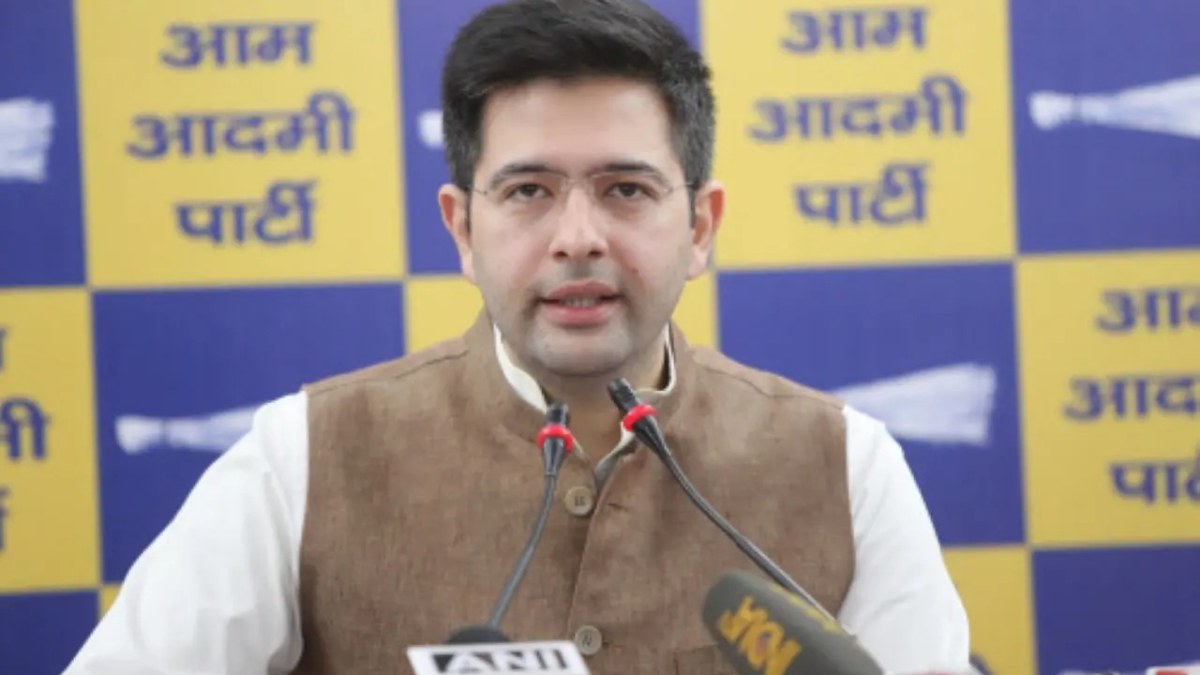
Photo: Raghav Chadha
In the corridors of Parliament, political exile is rarely announced with a megaphone. It usually arrives quietly, hidden in bureaucratic paperwork. In early April 2026, the Aam Aadmi Party (AAP) dispatched a decisive letter to the Rajya Sabha Secretariat. The directive was clear: Raghav Chadha, the party’s poster boy, was to be stripped of his role as Deputy Leader of the House and cut off from the party’s parliamentary speaking quota.
| Written by Ahad Khan |
Correcting a widespread public misconception: the Aam Aadmi Party (AAP) has not officially “expelled” its most visible parliamentarian, Raghav Chadha. Instead, they are executing a textbook silent purge.
Why is a major political party actively silencing one of its youngest, most articulate voices? The answer lies in a dangerous, real-time clash between personal public relations and the rigid demands of political loyalty.
The Optics of Absence During a Siege
The fault lines first appeared during AAP’s most severe existential threat. As central investigative agencies tightened their grip on the party’s top brass over the Delhi excise policy case, eventually jailing key figures including Arvind Kejriwal and Manish Sisodia, the party machinery demanded aggressive, unified retaliation from its ranks. Chadha, however, was in the United Kingdom undergoing eye surgery.
Upon returning to the Rajya Sabha, AAP expected Chadha to aggressively corner the central government on core political issues like unemployment and inflation. Instead, Chadha focused heavily on independent social issues (such as paid paternity leave, gig worker rights, and menstrual hygiene). While praised by the public, AAP leadership reportedly viewed this as an attempt at personal branding rather than acting as a party loyalist.
When the legal tides shifted and Kejriwal was cleared, Chadha didn’t attend the celebratory press conferences. He visibly distanced himself from the party’s combative street politics. To the AAP leadership, the silence of their star spokesperson was not a passive oversight; it was an active abandonment.
A Pivot to Progressive Public Relations
Instead of functioning as the embattled party’s shield, Chadha executed a textbook public relations pivot. He redirected his parliamentary focus entirely toward safe, progressive policy issues that resonated with a liberal, urban demographic, effectively decoupling his public image from the party’s legal battles.
He championed the rights of quick-commerce gig workers, advocated for the economic necessity of paid paternity leave, and aggressively criticized the “sarpanch pati” system that undermines female elected officials in rural India. For Young Voters, Chadha appeared as a refreshing, policy-driven lawmaker rising above the toxic political mudslinging of the capital.
Yet, the timing of this intellectual rebranding proved fatal to his internal standing. Just hours after news broke of his demotion from the Deputy Leader post, Chadha uploaded a highly produced video to his social media platforms highlighting this exact independent advocacy, completely ignoring the party’s disciplinary action. To AAP’s core loyalists, this confirmed their worst suspicion: Chadha was using his parliamentary seat for political self-preservation, actively insulating his personal brand while his colleagues fought for political survival.
The Structural Trap of Party Loyalty
The sidelining of Raghav Chadha exposes a harsh structural reality of the Indian democratic framework. The system leaves virtually no breathing room for individual intellectual growth if it does not strictly serve the immediate survival strategy of the party boss.
Notably, AAP has not officially expelled Chadha. Under the Anti-Defection Law, expelling him might allow him to continue as an unattached member with his own agency. By keeping him within the fold but actively taking away his microphone, the party has effectively neutralized him. It is a calculated containment strategy designed to ensure that no individual brand outshines the collective shadow of the party.
As the political machinery gears up for the next electoral cycle, Chadha’s enforced silence serves as a stark warning to ambitious young leaders across the spectrum. A politician can draft the sharpest policies and build the most polished public persona, but the moment that personal PR conflicts with the party’s survival instinct, the platform is swiftly revoked. The capital now watches closely to see whether Chadha’s silence is a temporary disciplinary phase, or the quiet groundwork for a highly strategic exit.
Yeh article aapko kaisa laga?