Photo: Creative Commons
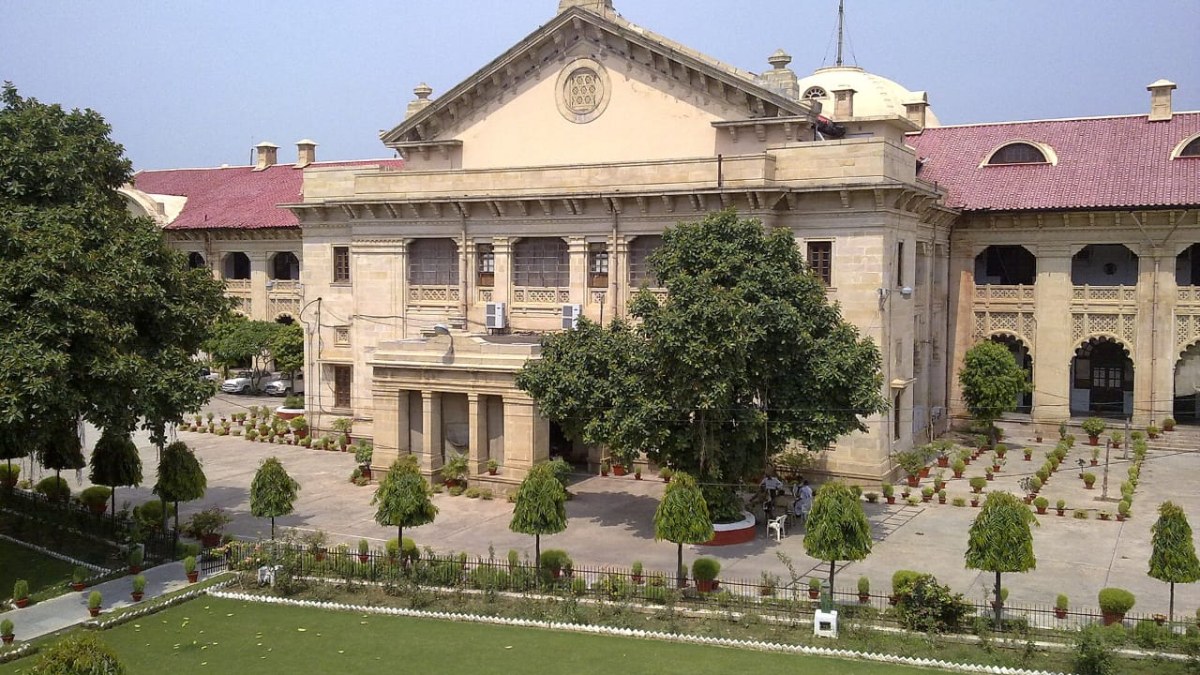
In a significant reaffirmation of the legal position governing mutation proceedings, the Allahabad High Court has held that disputes involving title to immovable property cannot be adjudicated by revenue authorities and must instead be resolved through a properly instituted civil suit. The ruling came in Rajveer Singh v. Board of Revenue, Uttar Pradesh, Lucknow and Others (2026), where the Court upheld the rejection of a mutation recall application filed after an inordinate delay of over three decades.
Factual Background
The dispute centered around agricultural land claimed by the petitioner, Rajveer Singh, who asserted that the property was bhumidhari land belonging to his predecessors. According to the petitioner, he had inherited the land through the male line of succession from his grandfather, Jhandu, and had remained in continuous possession.
A key point of contention arose due to the existence of two individuals named Jhandu within the same extended family. One was the petitioner’s grandfather, while the other was the husband of his grandfather’s sister, Janki. Lal Singh, the contesting respondent, was the grandson of Janki and claimed rights over the disputed property.
The petitioner argued that Lal Singh, being a descendant through the female line, was not entitled to inherit the property under the applicable provisions of the Uttar Pradesh Zamindari Abolition and Land Reforms Act, 1950. It was further alleged that no sale deed had ever been executed in Lal Singh’s favor and that his name had been fraudulently entered into the revenue records through an ex parte mutation order dated 30 September 1970.
The petitioner claimed to have discovered this mutation only in 2003, following which he filed an application before the Naib Tehsildar seeking recall of the 1970 order.
Procedural History
The Naib Tehsildar rejected the recall application primarily on two grounds:
Inordinate Delay: The application was filed after approximately 34 years, rendering it hopelessly time-barred.
Statutory Bar: The authority also referred to Section 49 of the Uttar Pradesh Consolidation of Holdings Act, 1953, suggesting a bar on civil court jurisdiction in certain consolidation matters.
Aggrieved, the petitioner filed an appeal before the Sub-Divisional Officer (SDO), Sadar, Firozabad, who allowed the appeal and remanded the matter back to the Naib Tehsildar. However, this order was subsequently challenged before the Commissioner and later the Board of Revenue, both of which restored and upheld the original order of the Naib Tehsildar.
The petitioner then approached the High Court under its writ jurisdiction.
Issues Before the Court
The primary legal issues that arose for consideration were:
Whether mutation authorities have jurisdiction to decide complex questions of title.
Whether the recall application filed after 34 years could be entertained.
Whether the bar under Section 49 of the UP Consolidation of Holdings Act would preclude the petitioner from seeking relief elsewhere.
Observations of the Court
Justice J.J. Munir, delivering the judgment, made critical observations regarding the limited scope of mutation proceedings. The Court emphasized that mutation entries are primarily maintained for fiscal purposes and do not confer or extinguish title.
The Court noted that:
“The claim of the petitioner… involves a complicated question of title, which is way beyond the competence of Mutation Authorities to decide.”
It further observed that the dispute between the parties was not merely about correction of revenue records but involved intricate questions of inheritance, succession, and competing proprietary claims. Such issues require detailed examination of evidence and legal rights, which fall squarely within the domain of civil courts.
The Court also took into account that Lal Singh’s name had been recorded in the revenue records as far back as 1970 and that he was in possession of the land at the time. This longstanding entry, coupled with the delay in challenging it, weighed heavily against the petitioner.
Interpretation of Succession Laws
The petitioner had relied on Section 171 of the Uttar Pradesh Zamindari Abolition and Land Reforms Act to argue that Lal Singh, being a descendant through the female line, would be excluded from succession.
While the Court acknowledged that such an argument raises important legal questions regarding inheritance preferences and survivorship rights under Sections 171 and 175 of the Act, it reiterated that adjudication of these issues requires a full-fledged trial.
The Court agreed with the reasoning of the Commissioner, who had held that:
The dispute involved competing inheritance claims.
Determination of such claims requires evaluation of evidence and legal interpretation beyond the scope of summary mutation proceedings.
On Limitation and Delay
A crucial factor in the Court’s decision was the extraordinary delay of 34 years in filing the recall application. The Court held that such a belated challenge to a mutation order could not be entertained, particularly when the entry had remained unchallenged for decades.
The Court described the recall application as “hopelessly barred by time,” thereby upholding the Naib Tehsildar’s decision on limitation grounds.
Section 49 of the UP Consolidation of Holdings Act
With respect to the Naib Tehsildar’s observation regarding the bar under Section 49 of the UP Consolidation of Holdings Act, the High Court clarified that such observations were merely tentative.
Importantly, the Court held that:
Any remarks made by the revenue authority regarding the bar of jurisdiction would not bind a competent civil court.
If the petitioner chooses to file a civil suit for declaration of title, the issue of jurisdiction and limitation would be independently adjudicated.
This clarification preserves the petitioner’s right to seek appropriate relief before a civil court, notwithstanding the findings in mutation proceedings.
Final Decision
The High Court ultimately dismissed the writ petition, affirming the orders passed by:
The Naib Tehsildar,
The Commissioner, and
The Board of Revenue.
It held that no interference was warranted, as the revenue authorities had acted within their jurisdiction and correctly refrained from deciding issues of title.
Legal Significance
This judgment reinforces several well-established principles in property and revenue law:
Limited Scope of Mutation Proceedings:
Mutation entries are administrative in nature and do not determine ownership rights. Revenue authorities are not equipped to adjudicate complex title disputes.
Primacy of Civil Courts in Title Disputes:
Questions relating to ownership, inheritance, and proprietary rights must be resolved through civil suits.
Importance of Timely Action:
Challenges to revenue entries must be made within a reasonable time. Courts are unlikely to entertain stale claims, particularly where third-party rights may have crystallized.
Non-Binding Nature of Revenue Observations:
Observations made by revenue authorities regarding jurisdictional bars do not preclude independent adjudication by civil courts.
Conclusion
The Allahabad High Court’s ruling in Rajveer Singh v. Board of Revenue serves as a crucial reminder that mutation proceedings are not a substitute for civil litigation in matters of title. By drawing a clear boundary between administrative and judicial functions, the Court has upheld procedural discipline and ensured that complex property disputes are adjudicated in the appropriate legal forum.
For litigants, the decision underscores the importance of pursuing the correct remedy namely, a civil suit for declaration of title rather than attempting to resolve substantive ownership disputes through mutation proceedings.
Yeh article aapko kaisa laga?