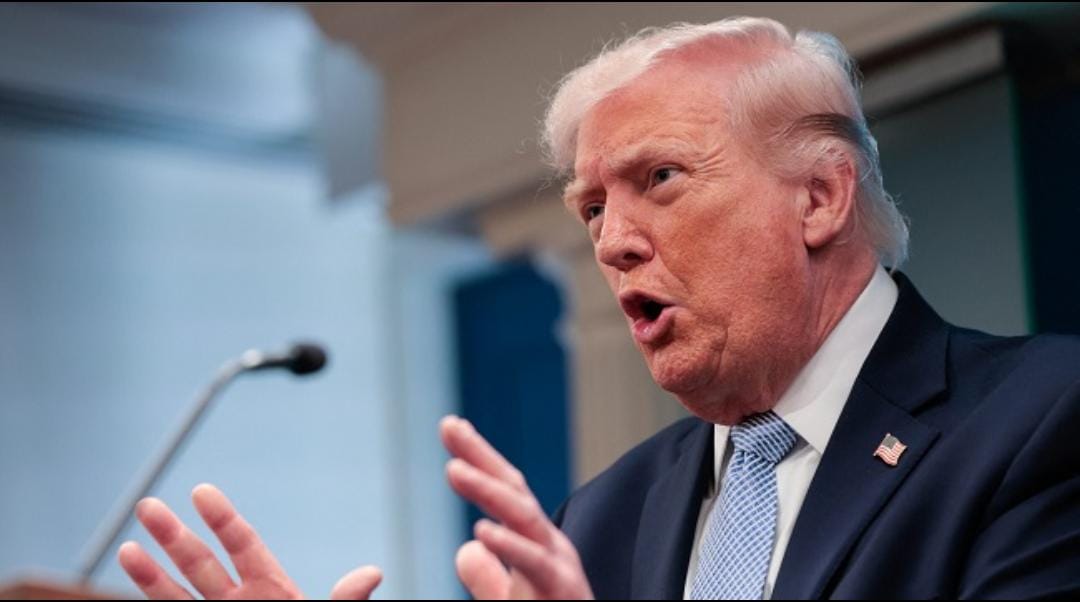

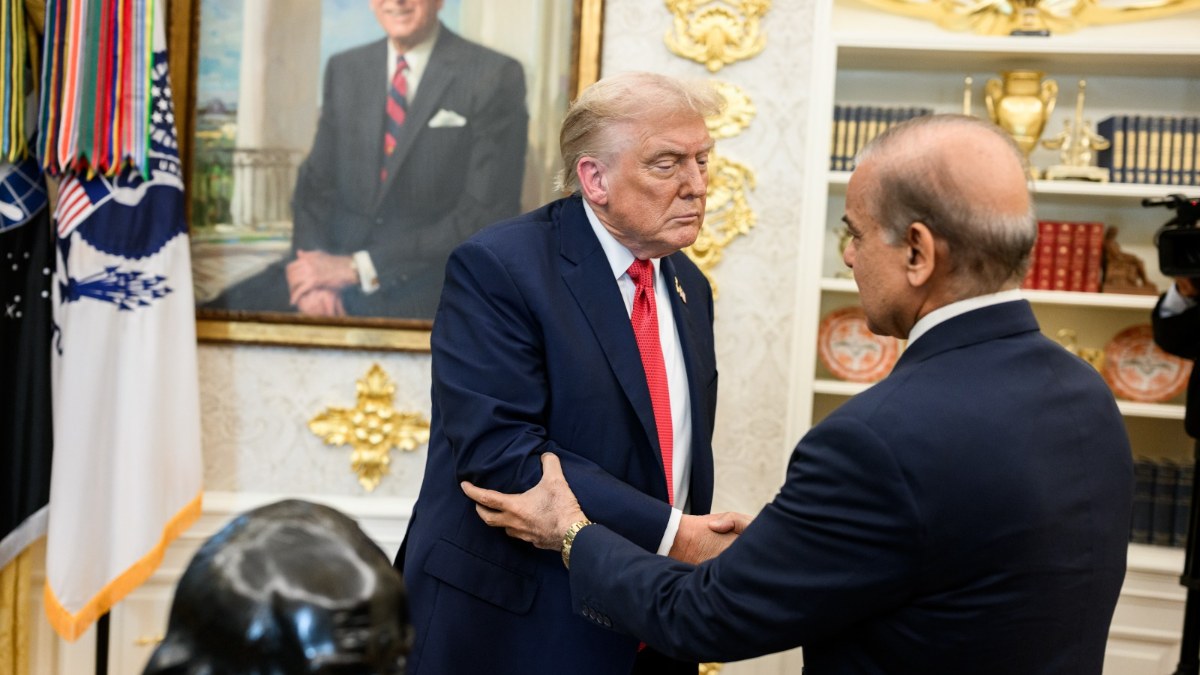
Photo: The White House, President Donald Trump meets with Prime Minister Shehbaz Sharif and Field Marshal Asim Munir of Pakistan, Thursday, September 25, 2025, in the Oval Office
Today, US Vice President J.D. Vance and Iranian Parliament Speaker Mohammad Bagher Ghalibaf are sitting across from each other, mediated by Pakistani Prime Minister Shehbaz Sharif. Their objective is monumental: converting a fragile ceasefire into a permanent resolution to the devastating US-Iran conflict.
The ongoing closure of the Strait of Hormuz has sent devastating economic shockwaves across the globe, aggressively squeezing emerging markets. Yet, the true tragedy for New Delhi is not merely the economic pain, it is the glaring realization of where the solution is being engineered. As of mid-April 2026, the blueprint for global energy security is not being drafted in the corridors of South Block. It is being actively negotiated right next door in Islamabad.
For years, the Indian foreign policy establishment has assured its citizens that Pakistan is a diplomatically bankrupt, completely isolated pariah state. Yet, when the global economy required a critical backchannel to de-escalate a catastrophic war, Washington and Tehran bypassed New Delhi entirely. Analyzing how the self-proclaimed “Vishwaguru” ended up locked out of the most critical geopolitical summit of the decade requires a hard, objective look at the systemic flaws of India’s current diplomatic machinery.
Illusion of ‘Event Management’ Diplomacy
The fundamental failure of India’s recent foreign policy lies in confusing public relations with actionable geopolitics. Over the last decade, the diplomatic strategy has relied heavily on spectacular optics: massive stadium rallies in foreign capitals, highly choreographed embraces between heads of state, and loud domestic declarations of India’s arrival as an unstoppable superpower.
While this brand of “huglomacy” works brilliantly for winning domestic elections and generating viral social media narratives, it holds zero currency in a war room. International relations, especially during an active military conflict, are entirely transactional. Peace treaties are not brokered on the back of good public relations; they are secured through hard, tangible leverage.
Pakistan, despite its shattered economy and fractured internal politics, recognized exactly what the geopolitical market demanded. Washington needed a face-saving exit strategy, and Tehran needed a secure, trusted backchannel. Islamabad supplied that exact leverage, trading geographical utility for diplomatic rehabilitation. New Delhi, conversely, relied on its own domestic hype, seemingly expecting the warring factions to seek Indian mediation by default. When the crisis escalated, India’s optic-heavy diplomacy offered no practical utility to either side.
Cost of Compromised Neutrality
This sidelining was not merely an accident of geography; it was the direct consequence of severe strategic miscalculations. The Indian establishment frequently champions “Strategic Autonomy“, the doctrine of maintaining independent, friendly relations with all global powers, from Washington to Moscow to Tehran.
However, true autonomy requires immense discipline. Just prior to the outbreak of the US-Iran conflict, Indian leadership undertook a highly publicized visit to Israel, publicly embracing the administration and pledging unwavering solidarity. While the optics of a strong, decisive alliance played incredibly well to a specific domestic voting bloc, the geopolitical cost in the Middle East was devastating.
By publicly picking a side right before a regional explosion, New Delhi completely incinerated its credibility with Tehran. In high-stakes diplomacy, a nation cannot publicly champion the leadership of a country actively launching military strikes and simultaneously expect the opposing side to trust it as an impartial peace broker. India traded long-term diplomatic trust for a short-term photo opportunity. Consequently, when Iran required a secure mediator, it looked away from the compromised neutrality of New Delhi and turned toward Islamabad.
Collapse of Regional Strategy
The Islamabad talks also represent the catastrophic collapse of India’s primary regional doctrine: the total diplomatic isolation of Pakistan. The Ministry of External Affairs played a localized, zero-sum game, assuming that treating Pakistan as a diplomatic untouchable would permanently freeze it out of the global arena.
This strategy suffered from acute geopolitical myopia. It failed to account for the fact that superpowers like the United States and China will instantly bypass regional blockades the moment a global crisis demands it. By hosting this summit, Pakistan is executing a masterclass in geopolitical laundering using a global energy crisis to scrub its past transgressions and render itself indispensable to the West.
Tax on the Citizen
Because the government failed to secure a seat at the negotiating table, India has absolutely zero leverage to force the reopening of the Strait of Hormuz. The financial stability of the Indian middle class is currently being negotiated by American and Pakistani officials. India is absorbing the massive economic shock of this war, yet remains entirely voiceless in dictating its conclusion.
The ongoing talks in Islamabad must serve as a definitive, uncomfortable wake-up call. Sitting safely on the fence during a global crisis may keep a nation out of the immediate crossfire, but it explicitly strips away the power to shape the peace. Until India transitions from the illusion of event-managed diplomacy to the cultivation of brutal, undeniable geopolitical leverage, the nation will continue to watch its rivals broker the deals that dictate its future.
Yeh article aapko kaisa laga?