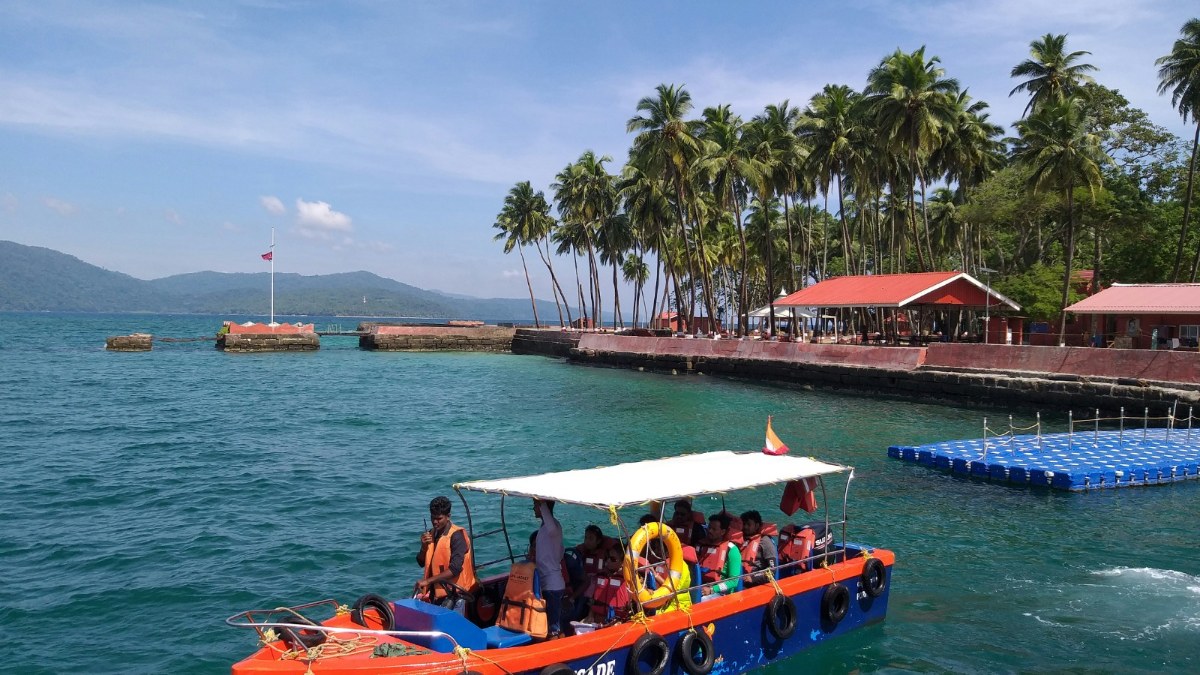
Photo: Jeshika Sinojia on Unsplash: Tourism at Andamans
|Author: Hency Kushwah|
Introduction: A Project Framed as Development, Questioned as Disruption
At the southernmost edge of India lies Great Nicobar Island, ecologically fragile, geographically strategic, and now the focus of one of the country’s most ambitious infrastructure projects. The draft master plan for the island envisions a transformation driven primarily by tourism, supported by a transshipment port, international airport, and urban infrastructure.
What is officially presented as a model of integrated development has, however, triggered intense scrutiny. Environmental experts, policy analysts, and rights groups have raised concerns not merely about scale, but about the fundamental assumptions underlying the project. This is no ordinary development plan. It is a test case for how India balances strategic ambition, economic growth, and ecological survival.
The Vision: Tourism as the Core Economic Engine
The draft master plan positions tourism not as a supplementary activity, but as the primary growth driver for Great Nicobar. The proposal includes high-end resorts, leisure infrastructure, and connectivity systems designed to attract both domestic and international visitors.
This shift reflects a broader policy trend, treating remote regions as untapped tourism economies. The idea is straightforward: infrastructure will bring accessibility, accessibility will bring investment, and investment will generate sustained economic activity.
However, what distinguishes Great Nicobar is its scale. The plan does not aim for incremental tourism development. It proposes a large-scale transformation of land use, including forest areas, to create an entirely new economic zone.
The Strategic Layer: More Than Just Tourism
To understand the project fully, one must look beyond tourism. The island’s location, close to the Malacca Strait, makes it strategically critical for India’s maritime interests.
The proposed international container transshipment terminal is intended to reduce India’s dependence on foreign ports like Singapore and Colombo. Alongside this, the airport is designed to serve both civilian and strategic purposes.
In this context, tourism becomes part of a larger narrative, one that combines economic development with geopolitical positioning. The government’s approach suggests that infrastructure in Great Nicobar is not just about growth, but about asserting presence in a region of increasing global importance.
Ecological Reality: A Biodiversity Hotspot Under Pressure
Great Nicobar is not an empty land awaiting development. It is one of India’s richest ecological zones, home to tropical forests, endemic species, and critical coastal ecosystems.
The proposed project involves diversion of thousands of hectares of forest land, including areas that serve as habitats for species such as the Nicobar megapode and leatherback turtles. The island also lies in a seismically active zone, raising concerns about the long-term sustainability of heavy infrastructure.
Environmental Impact Assessment (EIA) reports submitted for clearance have acknowledged these risks but have simultaneously proposed mitigation measures. Critics argue that such measures often underestimate cumulative ecological damage.
The key issue is not whether development has an impact, it always does. The question is whether the scale of impact here crosses a threshold beyond which recovery becomes uncertain.
Indigenous Communities: The Overlooked Dimension
One of the most sensitive aspects of the project concerns the indigenous communities of the island, particularly the Shompen tribe. These communities have historically lived in isolation, with minimal external contact.
Development on this scale inevitably raises questions about displacement, cultural disruption, and long-term survival of traditional ways of life. While official documents refer to safeguards and minimal disturbance, the reality of large infrastructure projects often tells a different story.
The challenge here is not only legal but ethical. Development frameworks tend to prioritise economic output, but in doing so, they risk overlooking communities that do not fit into conventional models of growth.
Environmental Clearance: Process Versus Substance
The project has already received environmental clearance, but the process itself has been contested. Critics have pointed to concerns regarding the adequacy of baseline data, the speed of approvals, and the fragmentation of impact assessment across different components of the project.
One recurring concern is the tendency to evaluate each part, port, airport, township, individually, rather than assessing the cumulative impact of the entire development. This approach can significantly understate environmental consequences.
The clearance process, therefore, becomes central to the debate. It raises a broader question about whether existing regulatory frameworks are equipped to handle projects of this scale and complexity.
Tourism Model: Sustainability or Overreach?
The positioning of tourism as the primary growth driver invites closer scrutiny. Tourism, particularly high-end or large-scale tourism, requires extensive infrastructure, roads, water supply, waste management, and energy systems.
In ecologically sensitive regions, such infrastructure can exert pressure far beyond the immediate footprint of construction. Waste disposal, freshwater usage, and coastal degradation become long-term challenges. The central concern is whether the tourism model being proposed is aligned with the ecological capacity of the island. If not, the very asset being promoted, natural beauty, risks being degraded over time.
The Larger Question: Development at What Cost?
The Great Nicobar project reflects a broader shift in India’s development philosophy, towards large, integrated, and strategically aligned infrastructure initiatives. But it also exposes a recurring tension. Economic and strategic objectives are often pursued with urgency, while environmental and social considerations are treated as secondary or manageable risks.
This approach may deliver short-term gains, but it raises questions about long-term sustainability. Once ecological damage reaches a certain point, it cannot be reversed through policy adjustments or mitigation plans.
Conclusion: A Defining Moment for Policy and Priorities
The draft master plan for Great Nicobar is not just a blueprint for development. It is a statement of priorities.
It asks whether India is willing to treat fragile ecosystems as sites of large-scale economic transformation, and whether strategic interests justify environmental risk. It also forces a reconsideration of how development is defined whether it is measured only in infrastructure and investment, or also in preservation and balance.
The decisions taken here will extend far beyond one island. They will shape the framework within which future projects are conceived, approved, and implemented. Great Nicobar, in that sense, is not just a project. It is a precedent.
Sources:
1. Wildlife Institute of India, Biodiversity Assessment Report: Great Nicobar Island Development Project (2021)
2. Forest Advisory Committee, Ministry of Environment, Forest and Climate Change, Minutes of Meeting on Great Nicobar Forest Diversion Proposal (2022).
3. NITI Aayog, Holistic Development of Great Nicobar Island (2020).
4. Ministry of Ports, Shipping and Waterways, Government of India, Parliamentary Response on Great Nicobar Project (2022–2024)
5. National Board for Wildlife, Minutes of Standing Committee Meeting on Great Nicobar Project (2022).
6. National Board for Wildlife, Minutes of Standing Committee Meeting on Great Nicobar Project (2022).
7. Anthropological Survey of India, Report on Shompen Tribe and Great Nicobar Development Impact (referenced in MoEFCC proceedings)
Yeh article aapko kaisa laga?