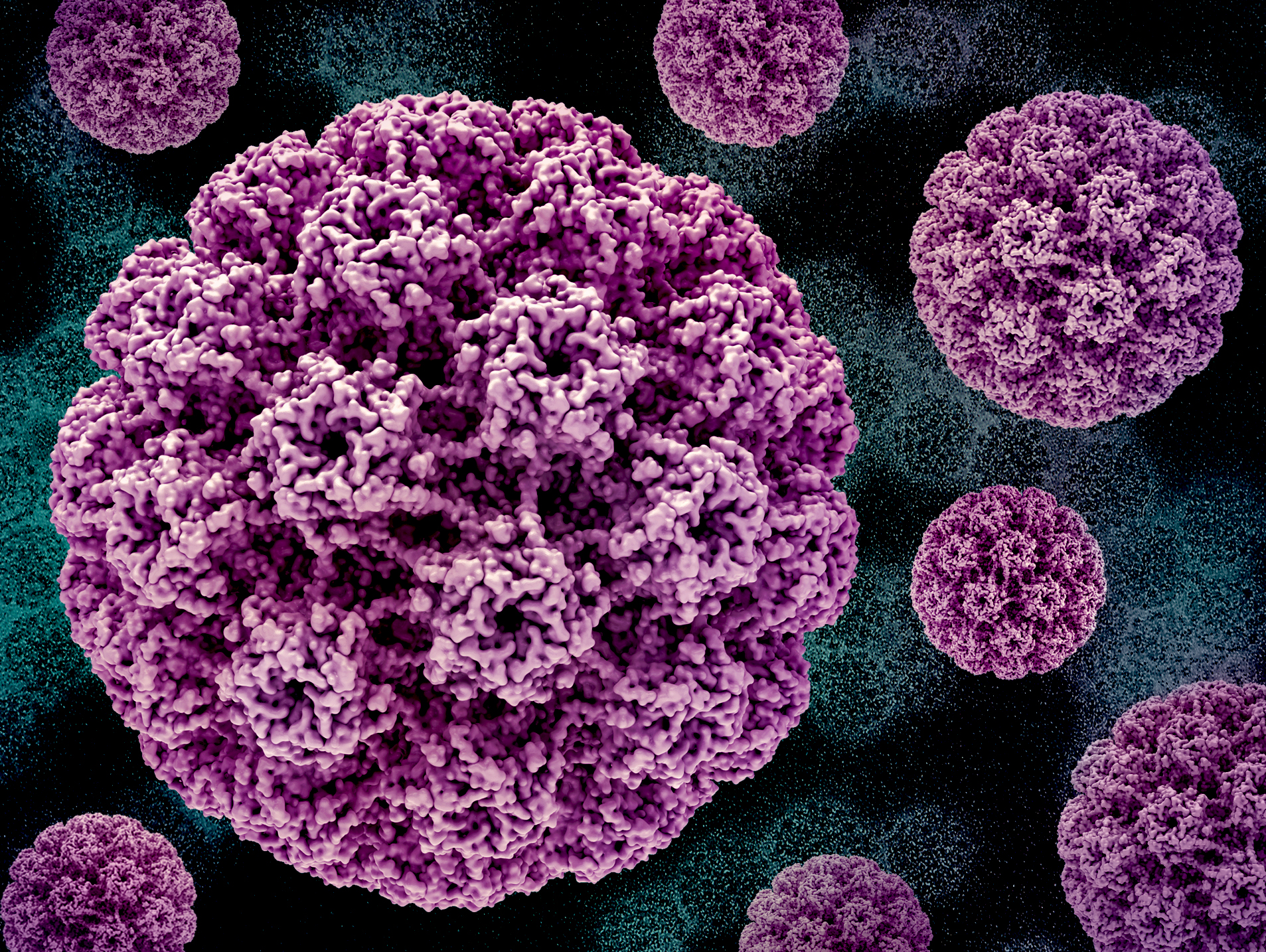
Photo: Human Papillomavirus (HPV) NIAID, CC BY 2.0
India is on the edge of a public health milestone. With the highest number of cervical cancer cases in Asia, the country accounts for nearly a quarter of the global burden of the disease. In response, the Government of India is accelerating plans to introduce the Human Papillomavirus (HPV) vaccine into the national immunization program. Here is everything you need to know about HPV, cervical cancer, and the historic vaccination drive.
| Written by Siddhant Bijoliya |
What is HPV? The Silent Infection
Human Papillomavirus (HPV) is the most common viral infection of the reproductive tract. It is a group of more than 200 related viruses, with specific “high-risk” types (like HPV 16 and 18) responsible for causing cancers. While the immune system clears most infections naturally, persistent infection with high-risk HPV can lead to cellular changes. In India, the prevalence of HPV is significant, with studies noting variability across different genders and age groups, highlighting the need for widespread prevention.
Importance to Indians: Beyond Cervical Cancer
While HPV is infamous for causing cervical cancer, its impact in India extends further. The virus is linked to 90% of anal cancers, 63% of penile cancers, and a significant number of oropharyngeal (throat) cancers. Research in India has found HPV present in 42.5% of penile cancers and up to 44.8% of oropharyngeal cancers. This means HPV affects both men and women, making vaccination a crucial preventive tool for the entire population.
What is Cervical Cancer and How is it Cured?
Cervical cancer develops in the lining of the cervix, usually slowly over time. Before cancer appears, cervical cells undergo precancerous changes known as dysplasia. If detected at this stage, it is highly treatable. Treatment depends on the stage:
· Precancerous lesions: These can be treated with minor procedures such as LEEP (Loop Electrosurgical Excision Procedure) or cryotherapy to remove or freeze abnormal cells.
· Invasive cancer: Treatment may involve surgery (hysterectomy), radiation therapy, and chemotherapy.
Vaccination: Eligibility and Effectiveness
· Effectiveness: India has a safe, made-in-India vaccine called Cerva, alongside global brands like Gardasil. The good news is that you may not need three doses. Landmark long-term research conducted in India has established that a single dose of the HPV vaccine provides high protective efficacy (over 90%) against persistent HPV 16 and 18 infections for at least 15 years. This single-dose efficacy is comparable to two or three doses, making the program highly feasible.
· Eligibility: The vaccine is recommended for girls aged 9 to 14 years as the primary target. It can also be given to women up to 26 years if not vaccinated earlier. Boys may also benefit, given HPV’s link to other cancers. Schedule for those aged 9-14 years, a two-dose schedule (0 and 6-12 months) is typical, aligning with WHO guidelines.
WHO Stand and Quality Assurance
The World Health Organization (WHO) strongly endorses HPV vaccination as a key strategy to eliminate cervical cancer. In line with the latest evidence including data from India, the WHO recommends a single-dose schedule for girls aged 9-20 years to improve affordability and access. The vaccines used in India are approved by the Drug Controller General of India (DCGI) and have proven safety and efficacy records globally.
The Main Criticisms of the HPV vaccine in India.
Implementation and Access Barriers
One of the most significant criticisms is not about the vaccine itself, but the barriers to accessing it. Even with the indigenous vaccine Cervavac, the out-of-pocket cost of ₹1,500-2,000 per dose remains a hefty price tag for many, especially since it is not yet universally available for free in all states. This financial barrier is a major point of contention for public health advocates.
Government Rollout Delays
The government’s own parliamentary committees have become critics of the rollout speed. A parliamentary panel recently flagged that despite the 2024 budget announcement and NTAGI recommendations, the vaccine has only been integrated into schedules in Sikkim and Bihar.
The panel strongly recommended expediting this process to avoid further preventable deaths.
Public Skepticism and Misinformation
High-profile individuals have also voiced skepticism. Zoho founder Sridhar Vembu sparked a major controversy in late 2025 by questioning the logic of vaccinating young girls against a sexually transmitted infection, citing fainting incidents in Bihar. His comments highlight the cultural and informational hurdles the program faces.
Ethical and Scientific Debates
Some critics, often from non-medical backgrounds, have raised more fundamental questions. These include debates about the direct causality between HPV and cervical cancer, and ethical concerns about vaccinating pre-pubescent girls in a traditional society.
Historical Safety Scares
The program is still haunted by a 2009 incident where seven girls died after receiving the HPV vaccine in a trial. Although an Indian government inquiry conclusively found that the deaths were unrelated to the vaccine (caused by issues like drowning and snake bites).
Conclusion
In summary, while the scientific and medical consensus strongly supports the vaccine’s efficacy and safety, the critics of the HPV vaccine in India are currently focused on cost, slow government execution, and social skepticism. Addressing these non-scientific barriers is now as crucial as the vaccine itself.