|Author: Hency Kushwah|
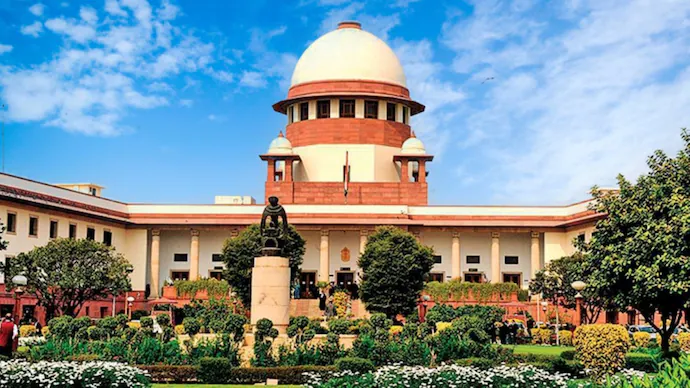
Photo: Supreme Court of India/IndiaToday
In Indian judicial practice, there exists a form of power that rarely reaches newspaper headlines but quietly influences how justice unfolds the authority to decide which case is heard by which judge. For decades, that authority has rested almost entirely with one individual: the Chief Justice of India, constitutionally recognised as the Master of the Roster.
What the Chief Justice lists gets heard. What does not appear on the cause list must wait.
That system is now poised to change. On 13 March 2026, Chief Justice Surya Kant decided to deploy AI-powered software to assist in case listing and bench allocation in the Supreme Court. The move aims to reduce human discretion in a process that has long stood at the centre of some of the judiciary’s most uncomfortable institutional debates.
The Administrative Lapse That Triggered the Shift
The immediate trigger was not a dramatic constitutional confrontation, but an administrative failure.
A petition challenging the Uttar Pradesh Gangsters and Anti-Social Activities (Prevention) Act came up for hearing before a newly constituted bench. During the proceedings, the State of Uttar Pradesh pointed out that an almost identical petition had already been dismissed in December 2022 by a three-judge bench led by former Chief Justice D.Y. Chandrachud.
The earlier bench had directed the petitioner to pursue remedies before the appropriate forum. However, that direction had apparently slipped through the administrative processes of the Supreme Court registry.
Chief Justice Surya Kant reacted sharply in open court. He declined to permit withdrawal of the petition and indicated that a deeper administrative review would follow.
According to reports, the internal review revealed two interconnected issues: long-entrenched registry structures that had created pockets of institutional inertia, and outdated technological systems that allowed such lapses to persist.
The response was swift. A series of inter-departmental transfers within the registry has already begun, with further administrative reshuffling expected before the end of March. Alongside these structural changes, the Court has now moved toward technological intervention through artificial intelligence.
A Debate That Predates the Technology
The significance of this decision becomes clearer when viewed against the backdrop of an earlier institutional controversy.
In January 2018, four senior judges of the Supreme Court, Justices J. Chelameswar, Ranjan Gogoi, Madan Lokur and Kurian Joseph, took the unprecedented step of addressing the media publicly. Their statement that “democracy is in danger” shook India’s legal establishment.
Their concern centred on the allocation of sensitive cases to particular benches without transparent criteria.
The judges stopped short of making direct allegations. Instead, they raised a deeper concern: that the existing system allowed the perception that the roster process could be manipulated.
Later that year, in Campaign for Judicial Accountability and Reforms v. Union of India (2018), the Supreme Court reaffirmed that the Chief Justice of India alone possesses the authority to allocate cases and constitute benches.
The legal position was settled. The debate, however, never completely disappeared. Over the years, lawyers and court observers have occasionally raised concerns about urgent matters being listed unusually quickly, certain constitutional cases reaching specific benches, and other matters waiting in the listing process for extended periods. No systemic wrongdoing was conclusively established. Yet in judicial institutions, perception itself carries consequences.
What the AI System Seeks to Achieve
The proposed AI-based system promises a cleaner administrative framework.
Under the model being considered, cases would be automatically categorised according to subject matter, and benches would be assigned through pre-defined parameters built into the algorithm. The aim is to remove routine human discretion from the listing process and replace it with rule-based allocation.
If implemented effectively, the daily cause list would become the outcome of structured logic rather than administrative judgment. The appeal of such a system is evident. Yet it also raises important questions.
The Limits of Algorithmic Neutrality
An algorithm is only as neutral as the rules programmed into it.
If the parameters guiding case allocation are designed without transparency or independent scrutiny, an automated system may simply replicate existing institutional biases rather than eliminate them.
Equally important are questions of governance.
Who designs the algorithm?
Who audits its functioning?
And who is accountable if the system produces flawed allocations? These questions are not merely technical concerns. They lie at the heart of judicial administration.
Judicial independence is often discussed in terms of protection from executive interference. But it also requires internal institutional structures that remain resistant to influence from powerful litigants, bureaucratic inertia, or poorly designed technological systems.
Reform with Caution
Chief Justice Surya Kant’s initiative represents a significant attempt to address administrative opacity within the Supreme Court. The willingness to confront entrenched institutional practices, initiate transfers within the registry, and introduce technology into a traditionally opaque process deserves recognition. India’s judicial administrative machinery has long resisted structural reform.
Yet a reform of this magnitude requires more than technological deployment. It requires transparent design, public scrutiny, and institutional accountability. Once the system becomes operational, one question will inevitably arise: if the algorithm makes a mistake, who bears responsibility?
For now, the experiment marks a turning point in the evolution of judicial administration.
But one principle remains unchanged. Justice, ultimately, cannot be delegated entirely to code. Not yet. And perhaps not ever.