|Author: Hency Kushwah|
A Case That Refuses to Stay in the Past
Some cases end with a judgment. Others refuse to settle, returning again and again until the system is forced to answer a deeper question. Sabarimala belongs to the second kind.
What once appeared to be a dispute over women’s entry into the Sabarimala Temple has gradually transformed into something far larger. The 2018 ruling of Indian Young Lawyers Association v. State of Kerala (2018) did not close the issue, it opened a constitutional fault line. On one side stands the idea of equality as an enforceable right. On the other stands the claim that religion has its own internal logic, one that may not always align with modern constitutional values.
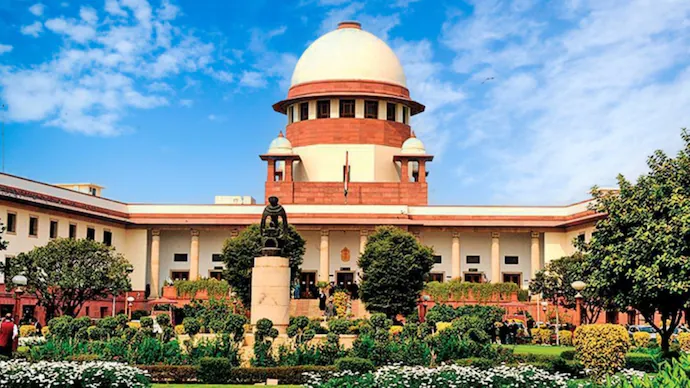
Now, as the Supreme Court of India revisits the issue through a larger bench, the focus has shifted. The question is no longer just about who can enter a temple. It is about who has the authority to define religion itself.
The Government’s Position: A Line Must Be Drawn Somewhere
The Union government’s recent submissions signal a clear discomfort with how far judicial intervention has travelled in religious matters. The argument is not framed in terms of defending a single practice. Instead, it attempts to reset the broader relationship between courts and faith.
At its core is a simple proposition: courts are institutions of law, not theology. When judges begin to decide which practices are central to a religion and which are not, they move into a space that is inherently interpretative and deeply subjective. Religious traditions, especially in India, are rarely uniform. They evolve through customs, local practices, and long-standing beliefs rather than fixed texts.
The concern, therefore, is not just about error, it is about legitimacy. Even a well-intentioned judicial decision may end up reshaping a practice in ways that neither its followers nor its history recognises.
The Uneasy Question of “Constitutional Morality”
Much of the earlier Sabarimala ruling rested on the idea that constitutional values must prevail over social or religious practices that appear exclusionary. This approach has been described as progressive, even necessary. But it has also invited criticism.
The government’s argument reflects that unease. It suggests that concepts like “constitutional morality” can become too open-ended, allowing courts to rely on broad principles without a clear standard for application. When that happens, the fear is that decisions begin to reflect judicial philosophy rather than constitutional text.
This is not to deny the importance of rights. It is necessary to question the method. Should courts actively reshape social practices in the name of constitutional ideals, or should they proceed more cautiously, recognising that change in matters of faith often follows a different path?
Rethinking the Way Courts Approach Religion
For years, Indian courts have relied on a particular method to resolve religious disputes, examining whether a practice is “essential” to a religion. It sounds straightforward, but in practice, it has proven anything but.
Determining what is essential requires courts to interpret beliefs, traditions, and histories that are often contested even within the community itself. What one group considers fundamental, another may see as optional. In such a situation, the court’s role becomes less about adjudication and more about selection.
The criticism here is not technical, it is conceptual. When a secular court starts deciding theological importance, it risks imposing a uniform structure on traditions that are inherently diverse. The result can be a narrowing of religion rather than its protection.
When Rights Collide, What Gives Way?
At the heart of the Sabarimala debate lies a genuine constitutional dilemma. The right to equality and the right to religious freedom are both fundamental, yet in cases like this, they pull in different directions.
Those supporting entry argue that exclusion based on gender cannot be justified under any framework of equality. Those opposing it argue that the practice is tied to the nature of the deity and the form of worship, and altering it would fundamentally change the religious experience.
There is no easy answer here. If individual rights always prevail, collective religious practices may gradually lose their distinct identity. If community practices are always protected, individual freedoms may remain limited within those spaces. The challenge is not in choosing one over the other, but in finding a balance that does not erase either.
Who Should Lead Change: Courts or Society?
Another layer of the debate concerns how reform should take place. Courts can deliver immediate and binding decisions, but they do so within the confines of legal reasoning. Social change, especially in matters of faith, often unfolds more gradually, through dialogue, internal reform, and legislative action.
The argument being raised is that courts may not always be the most effective forum for initiating such change. When reform is imposed from above, it can generate resistance rather than acceptance. On the other hand, when it emerges from within the community or through democratic processes, it may have a more lasting impact.
This does not mean courts have no role. It means their role must be carefully defined.
The Question of Who Gets to Challenge Religion
One of the more subtle but significant issues raised in this context is about who has the right to question a religious practice. Public interest litigation has long allowed individuals to approach courts on behalf of larger causes. But when it comes to religion, this raises a sensitive question.
Can someone who does not follow a particular faith challenge its internal practices? Or should such challenges come from within the community itself? This is not merely a procedural issue. It touches upon the autonomy of religious groups and the extent to which they can define their own practices without external intervention.
Conclusion: Beyond Sabarimala, Toward a Larger Constitutional Answer
What the Supreme Court is dealing with today is not just a temple dispute. It is confronting a larger question that has no simple resolution how should a constitutional democracy engage with religion?
The answer will not lie in choosing one principle over another, but in recognising the limits of each. Rights matter. So does faith. Courts have authority. So do communities. Sabarimala, in the end, is forcing the system to confront something it has long tried to balance quietly: that the Constitution does not operate in isolation from society, and society does not always move at the pace of constitutional ideals.