Photo: United States Census,
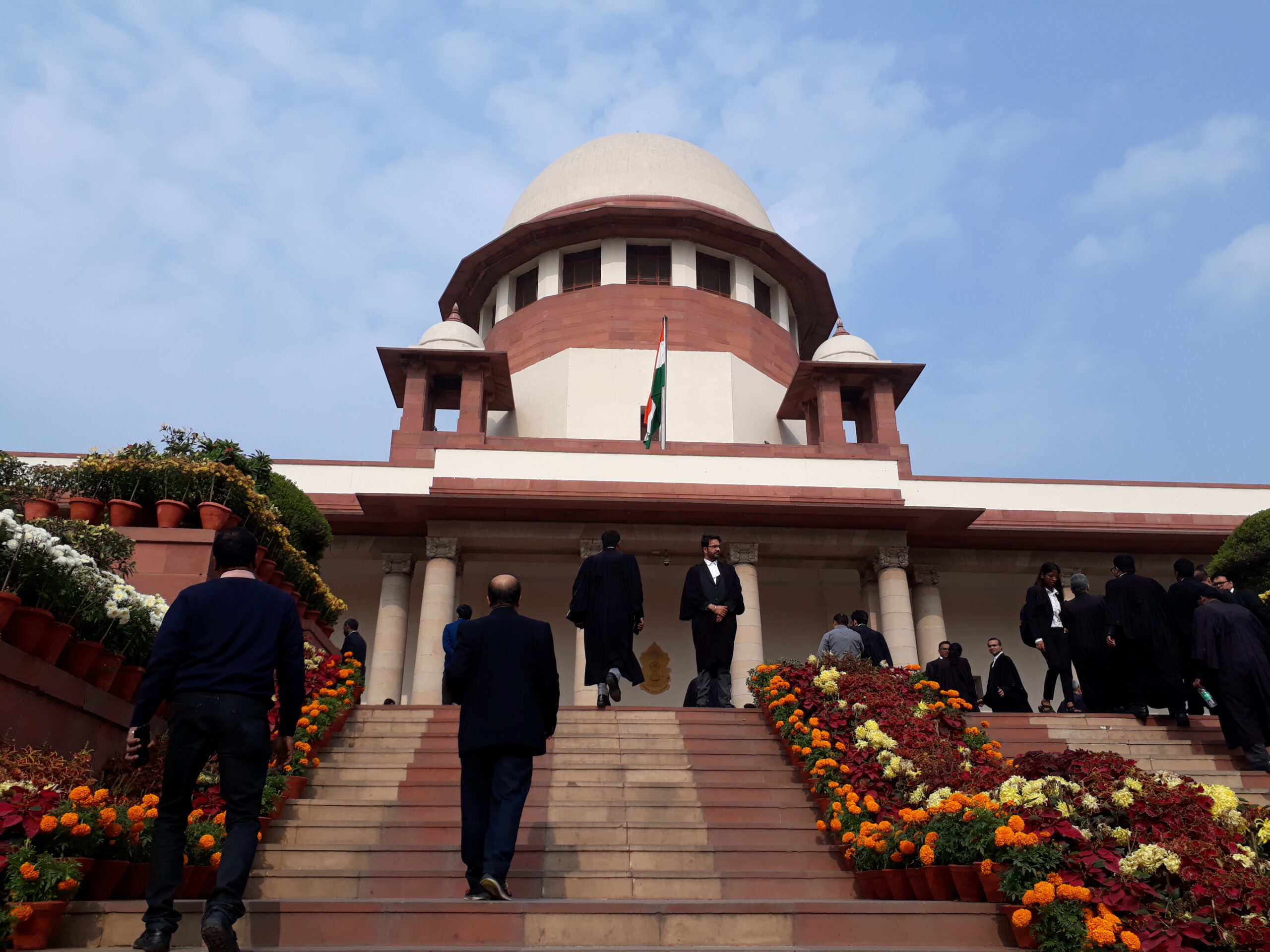
New Delhi, The Supreme Court of India on Tuesday directed the Government of India to formulate a no-fault compensation policy for individuals who suffer serious adverse effects following COVID-19 vaccination.
| Written by Anshika Chauhan |
A Bench comprising Justice Vikram Nath and Justice Sandeep Mehta ordered that the policy should provide compensation without requiring victims to prove negligence or fault on the part of the authorities.
The Court clarified that introducing such a framework should not be interpreted as an acknowledgment of liability by the government or any related authority.
“The formulation of the no-fault framework shall not be construed as admission of liability or fault on the part of the Union of India or any other authority,” the Bench stated.
Background of the Case
The order came while the Court was hearing a petition filed by the parents of two young girls who allegedly died after experiencing adverse reactions to the COVID‑19 vaccination.
The petition sought:
A probe by an independent expert committee into the deaths.
Release of post-mortem and investigation reports within a fixed timeline.
Monetary compensation for the affected families.
Guidelines for early detection and treatment of individuals suffering from vaccine-related adverse effects.
Court Declines Separate Expert Panel
The Bench declined the request to constitute a new court-appointed expert body, stating that existing scientific mechanisms are already in place to evaluate Adverse Events Following Immunisation (AEFI).
However, the Court directed that the current monitoring system should continue and that relevant data on adverse events should be periodically placed in the public domain to ensure transparency.
The judges also clarified that the ruling would not prevent affected individuals from pursuing legal remedies independently.
Earlier Proceedings
The matter has its origins in a 2022 ruling by the Kerala High Court, which directed the National Disaster Management Authority to frame guidelines for identifying deaths linked to COVID-19 vaccine side-effects and to compensate dependents of such victims.
The Central government challenged this direction before the Supreme Court. It argued that while COVID-19 itself was declared a disaster, vaccine-related deaths were not covered under the Disaster Management Act, 2005, and therefore no compensation policy existed under the Act.
The government also maintained that vaccination in India follows globally accepted medical protocols designed to detect and manage adverse reactions promptly.
Implications
With the Supreme Court’s directive, the Centre is now required to develop a structured compensation framework for serious vaccine-related adverse events. The move is expected to strengthen public trust in immunisation programmes while ensuring support for individuals affected by rare but severe vaccine reactions.