Photo: Pinakpani, CC BY-SA 4.0
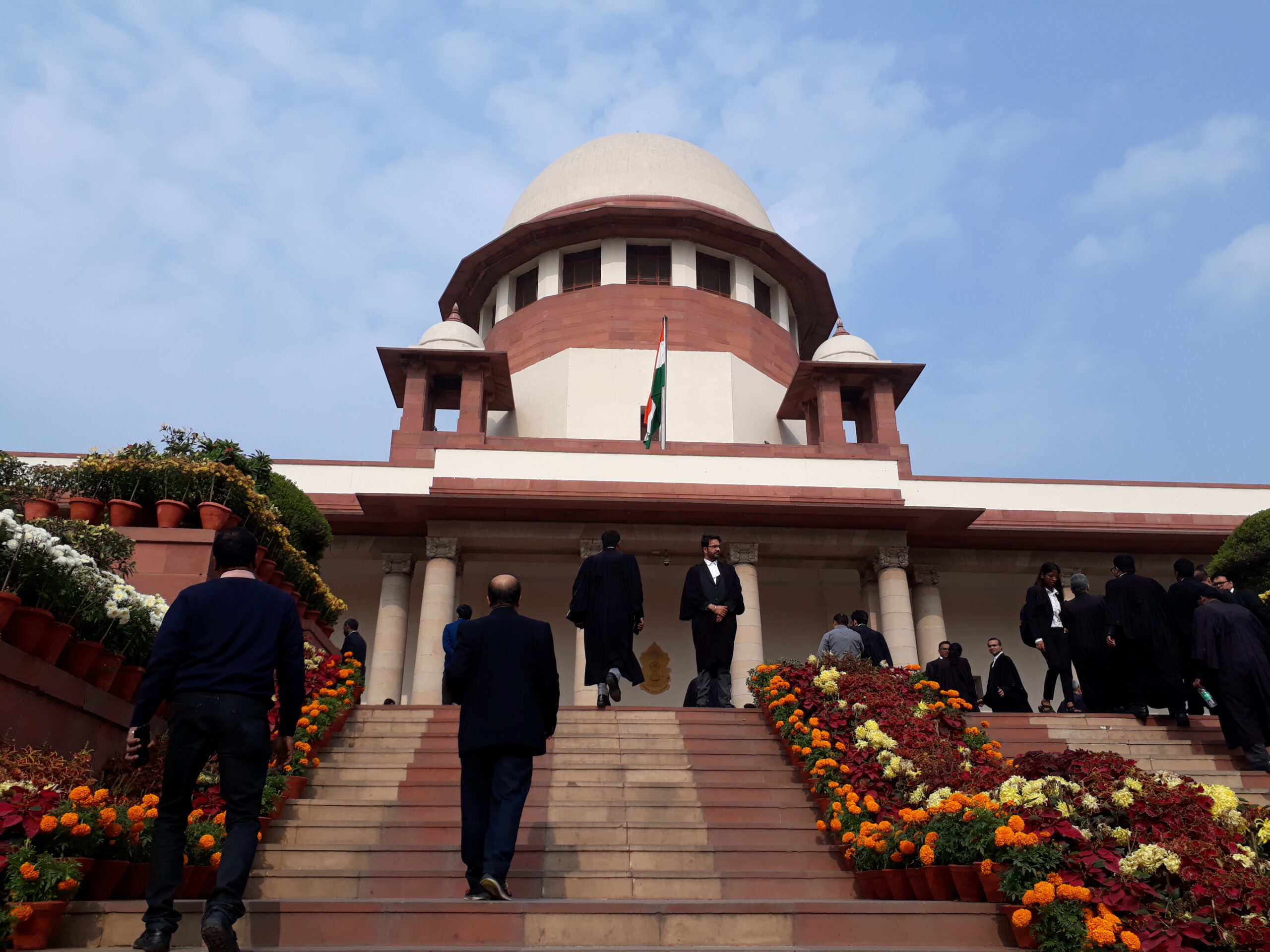
New Delhi, March 11, 2026: In a landmark development concerning the right to die with dignity, the Supreme Court of India on Wednesday permitted the withdrawal of life-sustaining treatment for a 32-year-old man who has been in a permanent vegetative state for more than 13 years. The decision marks the first judicial application of the Court’s passive euthanasia guidelines originally laid down in 2018 and later modified in 2023.
| Written by Anshika Chahuhan |
A bench comprising J. B. Pardiwala and K. V. Viswanathan allowed a plea filed by the father of Harish Rana, who suffered a severe brain injury after falling from the fourth floor of his paying guest accommodation over a decade ago. The accident left him in a Persistent Vegetative State (PVS) with complete quadriplegia, and his condition has shown no medical improvement since.
According to the Court’s order, Rana has been surviving solely through Clinically Administered Nutrition (CAN) delivered through surgically implanted Percutaneous Endoscopic Gastrostomy (PEG) tubes. The bench held that such nutrition constitutes a form of medical treatment and may be withdrawn when it no longer serves the patient’s best interests.
Court’s Observations on Medical Condition
In its judgment, the Court observed that continuing treatment in the present case would merely prolong biological existence without any therapeutic benefit. Medical reports placed before the Court confirmed that Rana’s condition had remained unchanged for 13 years and that there was virtually no possibility of recovery.
Both the Primary Medical Board and the Secondary Medical Board examined the patient and unanimously recommended discontinuation of life-sustaining treatment. Rana’s parents also supported the decision, stating that the ongoing treatment had only prolonged his suffering without hope of improvement.
Directions for Withdrawal of Treatment
Issuing directions to ensure a dignified process, the bench ordered that life-support treatment, including CAN, be withdrawn and waived the mandatory reconsideration period of 30 days.
The Court further directed the All India Institute of Medical Sciences to admit the patient to its palliative care centre and facilitate his transfer from residence so that the withdrawal of treatment could be carried out in a medically supervised and dignified manner.
Administrative Guidelines Issued by the Court
The Court also issued broader administrative directions to ensure smooth implementation of passive euthanasia guidelines across the country.
High Courts were asked to instruct Judicial Magistrates to receive intimations from hospitals when Primary and Secondary Medical Boards unanimously decide to withdraw or withhold life support in accordance with the 2018 guidelines.
Additionally, the Union Government was directed to ensure that Chief Medical Officers in every district maintain a panel of registered medical practitioners who can serve on secondary medical boards.
Call for Comprehensive Legislation
The bench further recommended that the Government of India consider enacting comprehensive legislation governing passive euthanasia and end-of-life care in order to provide greater clarity and uniformity in implementation.
Justice Pardiwala, who authored the main judgment, acknowledged the emotional burden borne by the patient’s family and recorded the Court’s appreciation for the dedication shown by Rana’s parents during years of caregiving. Justice Viswanathan delivered a concurring opinion.
Earlier Proceedings in the Case
The litigation has its origins in earlier proceedings before the Delhi High Court. In 2024, Rana’s father approached the High Court seeking permission for passive euthanasia, but the plea was dismissed on the ground that the patient was not terminally ill.
The matter then reached the Supreme Court, which initially declined to entertain the petition but directed the Government of Uttar Pradesh to bear the treatment expenses.
In 2025, the petitioner filed a miscellaneous application stating that the patient’s condition had further deteriorated and that recovery was impossible. The Supreme Court subsequently ordered the constitution of a Primary Medical Board, which documented severe complications including bed sores and long-term dependency on medical devices.
A Secondary Medical Board later constituted by AIIMS reviewed the case and reached the same conclusion, paving the way for the Court’s final order.
Significance of the Judgment
The ruling represents a major step in operationalizing the Supreme Court’s 2018 recognition of the fundamental right to die with dignity under the Constitution. That judgment permitted passive euthanasia under strict safeguards, including medical board review and advance directives.
With this order, the Court has demonstrated how those safeguards are to be implemented in practice while balancing medical ethics, patient dignity, and family consent.