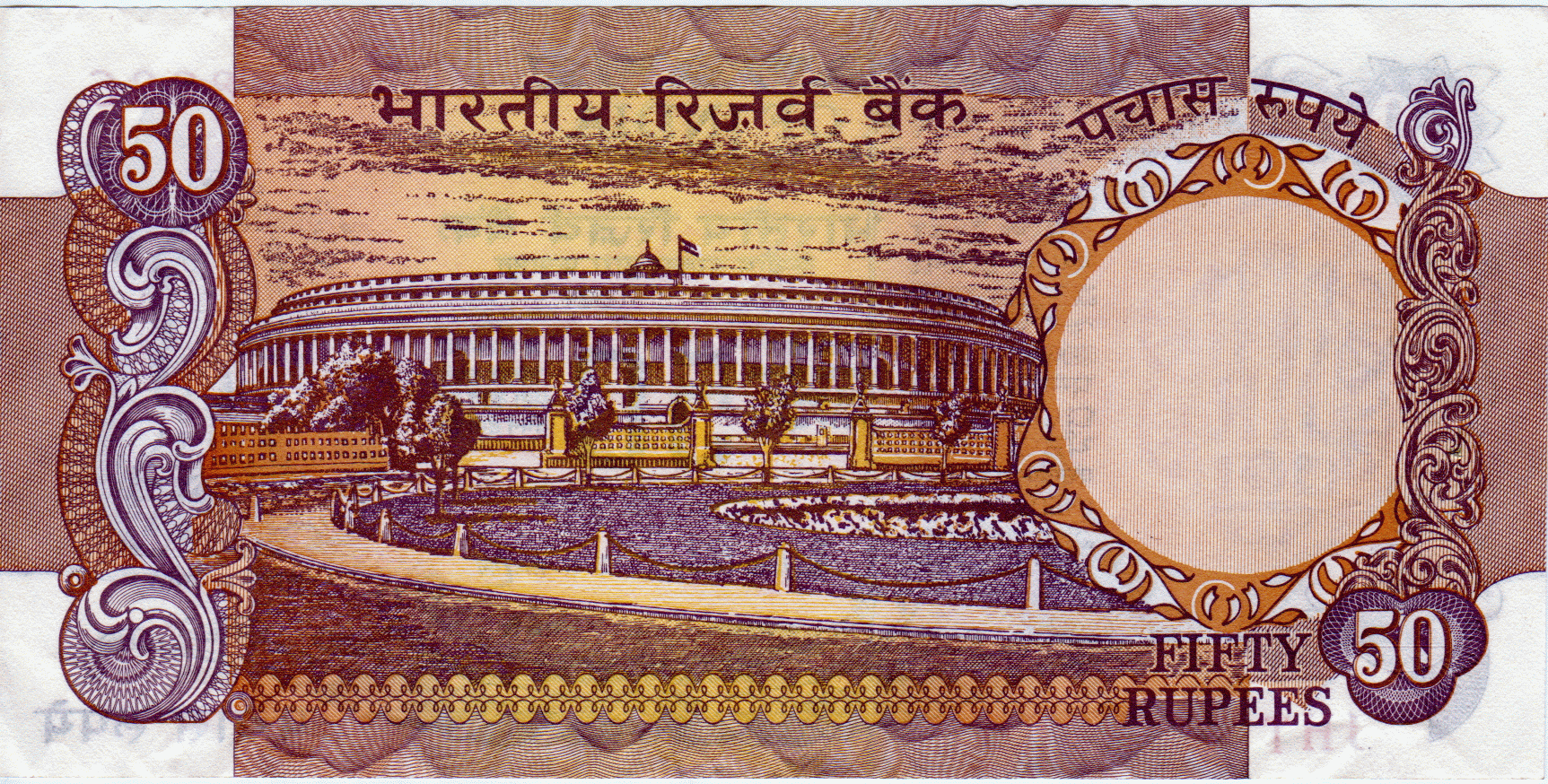
Photo: Reserve Bank of India, GODL-India
As of March 2026, the Indian Rupee has crashed past the terrifying mark of 91.6 against the US Dollar. To stop this bleeding, the Reserve Bank of India (RBI) took drastic measures last year. According to financial reports, the RBI aggressively sold off tens of billions of dollars from our national foreign exchange reserves to artificially pump up the Rupee’s value.
| Written by Ahad Khan |
When the RBI intervenes by selling dollars, it temporarily increases the supply of dollars in the domestic market, hoping to stabilize the exchange rate. However, as we saw last year, this is like putting a band-aid on a bullet wound. The underlying problems were too massive, and the intervention had no lasting impact. The reserves were burned, but the currency kept sinking anyway.
The Basics of the Fall
What exactly dictates the value of our money? In simple terms, a currency’s value is a mirror of global trust and basic supply and demand. When global crises, like the recent military attacks in the Middle East, push crude oil prices up, India is in immediate trouble. According to the Economic Times (2026), India imports roughly 85% of its crude oil requirements. To pay this massive, inflated bill, we have to buy US Dollars. This sudden, huge demand for dollars automatically weakens the Rupee. But the current crisis is not just about expensive foreign oil; it is heavily tied to internal fear.
The Trust Deficit and Fear of the Regime
Beyond global wars, a major reason for the Rupee’s fall is a severe loss of investor trust. Foreign Portfolio Investors (FPIs) are pulling thousands of crores out of the Indian market at a record pace. Why? Because money loves stability, and investors are increasingly fearful of the current political regime’s unpredictability.
When a government focuses heavily on aggressive political campaigns rather than solid, predictable economic reforms, foreign businesses get nervous. They fear sudden policy changes, aggressive taxation rules, and a lack of transparency in how rules are enforced. If international investors feel that the political environment is unstable, hostile to free business, or driven by unpredictable agendas, they lose trust. When this trust evaporates, they pack up their capital and leave. This massive outflow of foreign money drains the life out of the Rupee, leaving the economy highly vulnerable.
The “Weaker” Nation Paradox: Why Are Their Currencies Stronger?
Looking at the Rupee’s fall, many students and readers ask a very logical question: Why do the currencies of geographically smaller or economically “weaker” nations often have a higher numerical value than the Indian Rupee?
For example, the Kuwaiti Dinar is the highest-valued currency in the world, where just 1 Dinar equals over 290 Indian Rupees. Even the Omani Rial or Jordanian Dinar are incredibly strong against the Dollar. Does this mean these small countries have stronger, more diverse economies than India?
The simple answer is no. A high currency value does not automatically mean a country is richer or more powerful. The secret lies in how they manage their money. These smaller nations deliberately “peg” (or tie) the value of their currency strictly to the US Dollar or a basket of rich currencies. They also strictly control their money supply, printing very little of it. Because the supply is kept artificially low, the value stays high.
The Indian Rupee, on the other hand, floats freely based on daily global trading. Furthermore, having a “cheap” currency can sometimes be a deliberate strategy. Japan is one of the largest economies in the world, yet its currency (the Yen) has a lower numerical value than the Rupee. Japan intentionally keeps its currency value low to make its exported goods cheaper and more attractive to global buyers. Therefore, comparing currency values is a complex game of strategy and government control, not just a simple scoreboard of national strength.
The Hypocrisy of Political Agendas
The way our politicians discuss the falling Rupee is perhaps the most frustrating part of this entire crisis. The narrative completely changes depending on who is in power.
Back in the early political campaigns of 2013 and 2014, when the Rupee fell to around 60 against the Dollar, the opposition leaders led by the current Prime Minister relentlessly attacked the ruling UPA government. In famous rally speeches, the falling Rupee was directly blamed on corrupt and weak domestic leadership. The leaders mocked the government, claiming the Rupee was “in the ICU” and that there was a competition between the government and the Rupee to see who could fall faster.
Fast forward to today. The Rupee has crossed 91 under the current NDA regime. But instead of taking responsibility, the political agenda has completely flipped. Today, a falling Rupee is no longer called a failure of leadership. Instead, it is conveniently blamed entirely on “global headwinds,” “external wars,” and the “strong US Dollar.”
When doing a comparative analysis, the data speaks volumes. Under the previous UPA government, the Rupee depreciated from roughly 45 to 63 against the Dollar over ten years. Under the current NDA government, it has gone from around 59 to over 91. Both eras faced massive global crises, yet the absolute drop has been significantly steeper in recent years. The exact same arguments the current leaders laughed at a decade ago are now their primary defense. It proves that political parties will quickly change their economic theories the moment they switch from the opposition to the ruling party.
Conclusion
The crash of the Indian Rupee is a complex disaster. It is driven by high global oil prices, a severe loss of foreign investor trust due to political fear, and desperate but failed attempts by the RBI to save the currency by selling off our dollar reserves. While smaller nations use clever pegging strategies to make their currencies look exceptionally strong, India’s freely floating Rupee exposes the harsh reality of our economy. Ultimately, while politicians spin clever narratives to protect their image, it is the common citizen who pays the real price through inflation and the rising cost of living.
As future intellectuals, and policymakers, do you think the RBI should continue burning through our national dollar reserves to temporarily save the Rupee, or should the government focus entirely on building long-term investor trust? Drop your thoughts in the comments below!