Photo: Ministry of Parliamentary Affairs (GODL-India)
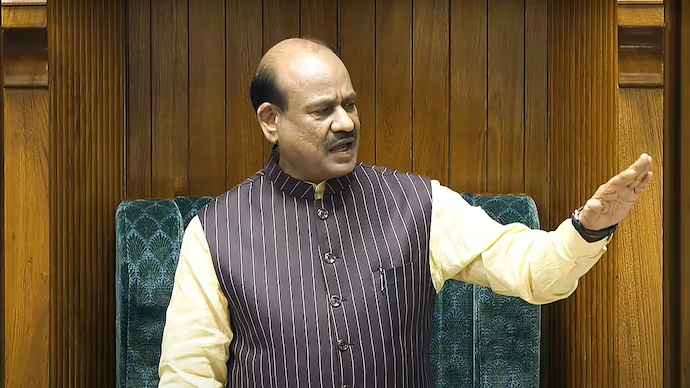
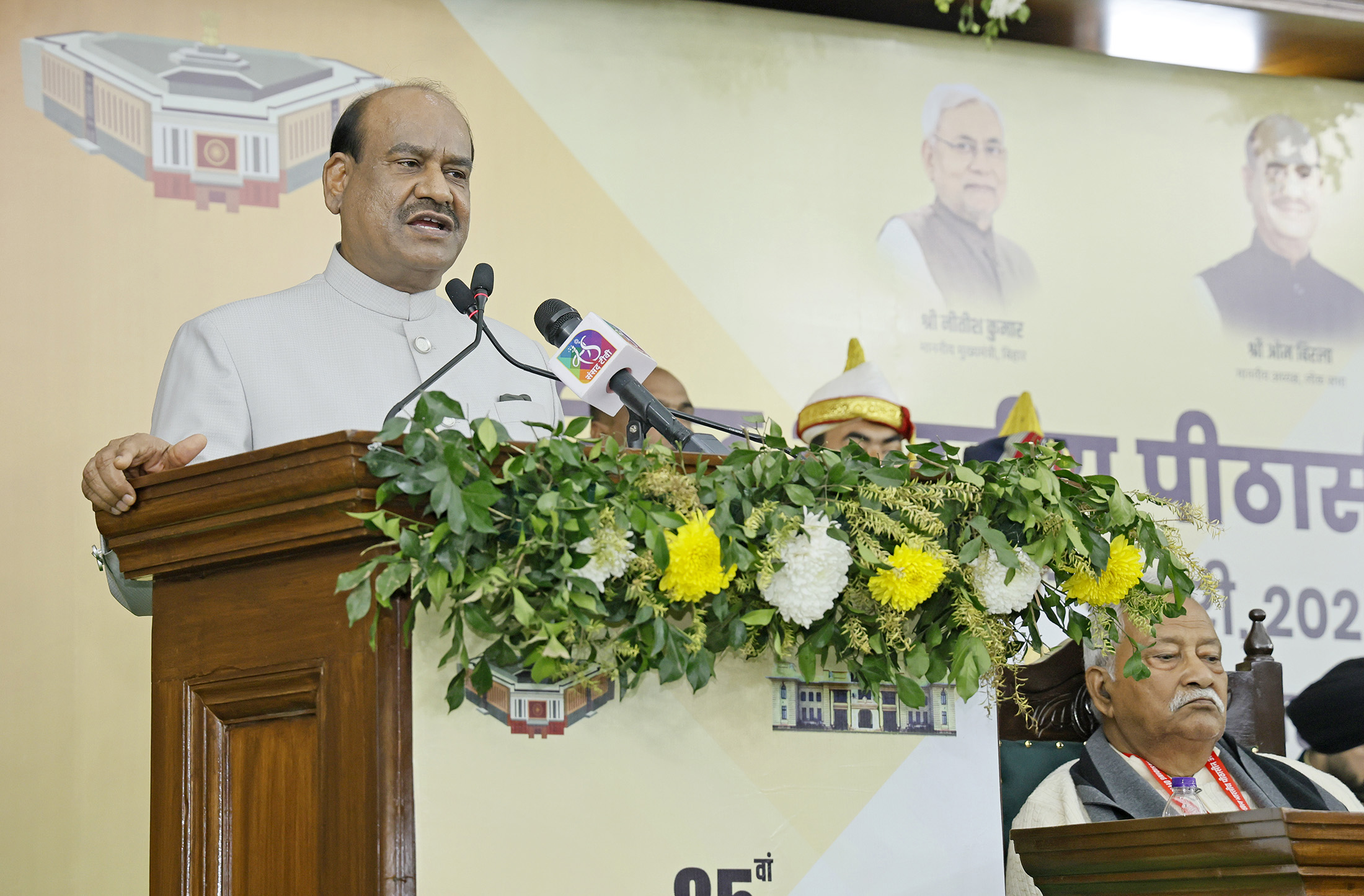
At the age of 17, he became the President of the Student Association in his school. From that day on, his political graph has only gone up. He consecutively won the MLA election from Kota South three times, defeating heavyweights. Then, he moved to national politics and won the MP election from Kota three times. He even became the Speaker of the Lok Sabha twice, something that hasn’t happened in 20 years. He is a man who does not know what losing an election feels like.
| Written by Ahad Khan |
The opposition has brought a strong, united No-Confidence Motion against him. The big question we need to answer is: Will his winning streak end here? And is this No-Confidence Motion against Om Birla actually strongly grounded?
Opposition’s Stand for the motion
In February 2026, the Parliament witnessed pure chaos. The INDIA bloc decided they had had enough. Over 100 MPs signed a notice to remove the Speaker. The opposition has put forward a clear “charge sheet” against Om Birla. They claim he is no longer acting like a neutral referee. The Speaker is supposed to be unbiased. He belongs to the whole House, not just the ruling party. The opposition says Birla has forgotten this golden rule.
Here are the main grounds for their anger:
1. Silencing the Leader of the Opposition: The biggest flashpoint happened when Rahul Gandhi, the Leader of the Opposition, was stopped from reading excerpts from an unpublished memoir by former Army Chief Gen MM Naravane. The opposition felt this was a direct attack on their right to speak and ask tough questions about national security and border clashes.
2. The Suspension of 8 MPs: During the heated debates of the Budget Session, eight Congress MPs were suspended from the House for creating disruptions. The opposition argues this was an unfair, dictatorial, and one-sided punishment meant to crush their voices while ruling party leaders were let off easily.
3. The PM Security Claim: Things got worse when the Speaker advised the Prime Minister not to come to the House. The Speaker claimed he had secret information that opposition MPs might rush the PM’s seat and create an unprecedented incident. The opposition called this a shocking, baseless, and defamatory insult to their elected members.
Because of these events, the opposition believes the motion is strongly grounded. They argue that if the Speaker acts like a spokesperson for the ruling party, democracy itself is in danger. From an ethical and moral standpoint, their argument carries a lot of weight.
Following Incidents Questioning the Neutrality of Om Birla
To be fair, this is not the first time the opposition has pointed a finger at the Speaker’s chair. For the INDIA bloc, the recent drama in the Budget Session is just the tip of the iceberg. Over the last few years, a growing list of controversies has fueled their narrative that the referee is wearing the ruling party’s jersey. The opposition frequently points to the historic Winter Session of 2023, where a staggering 146 opposition MPs were suspended, clearing the floor for massive, country-changing criminal laws to be passed with almost zero debate. Then came the lightning-fast expulsion of TMC MP Mahua Moitra and the rapid disqualification of Rahul Gandhi earlier that year. Add in the constant, stinging complaints of opposition microphones being mysteriously turned off during crucial debates alleged by the senior leader Shashi Tharoor forcefully repeated just recently, and images of the Speaker visibly bowing to the Prime Minister. For the opposition, this No-Confidence Motion is not just about a few incidents in February 2026; it is the boiling point of years of pent-up frustration over a democratic space they feel is slowly shrinking.
Procedure of No-Confidence Motion
In order to remove the Speaker of the House, the Opposition must follow Article 94(c) and Article 96 of the Constitution, along with Rules 200 to 203 of the Lok Sabha rulebook.
The rules clearly state that the opposition must give a formal, written notice to the Secretary-General of the Lok Sabha at least 14 days in advance. After the 14 days, the motion is brought to the floor. For the House to even accept the motion for debate, and the motion can be introduced by any of Member of the House but it must be backed by at least 50 Members.
Once the motion is admitted, a date is fixed (within 10 days) for a debate. During the debate, the Speaker is not allowed to sit in the high chair to run the House (usually the Deputy Speaker or a panel member takes over). However, the Speaker is not forced to stay silent. They have the right to sit with the other MPs, speak in their own defense, and even cast a vote like a regular member.
Under Article 94(c), the opposition cannot win with just a simple majority of whoever is present. They need an “Effective Majority”. This means more than 50% of the total strength of the House (excluding empty seats) must vote against him.
Where Does the Motion Stand Right Now?
In mid-February, the opposition submitted their written notice. Since they have over 119 signatures, the 50-MP test was easily cleared with a strong united move, showing that the opposition stands united against alleged partiality by the chair. In a massive move, Om Birla has decided not to wait for the debate to leave his chair. Citing Naitikta (parliamentary morality), he has voluntarily stepped down from running the House, stating he will not sit in the Speaker’s chair while his neutrality is being questioned. The grand debate and the final vote are officially scheduled for 9th March, 2026.
In the entire history of independent India, a no-confidence motion against a Speaker has only been moved three times in 1954, 1966, and 1987. However, None of them succeeded.
1954 (G.V. Mavalankar): The very first time was against India’s first Speaker. The opposition accused him of acting like a party man instead of a neutral judge. However, Prime Minister Jawaharlal Nehru fiercely defended him, stating that an attack on the Speaker was an attack on the dignity of the House itself, and the motion was crushed.
1966 (Sardar Hukam Singh): The second attempt came when the opposition angrily claimed the Speaker was blocking their tough questions to save the government from embarrassment. This move also failed to get enough support.
1987 (Balram Jakhar): The third and final time before the current storm was in 1987. Once again, the opposition felt their rights to raise urgent issues were being completely suppressed. The ruling government, led by Prime Minister Rajiv Gandhi, easily defeated the motion with a simple voice vote.
Is this No-Confidence Motion Strongly Grounded?
Politics is ultimately a game of numbers, and the numbers heavily favor Om Birla. The Lok Sabha has 543 seats. To win the vote, the opposition needs to cross the halfway mark of around 272 votes.
The ruling National Democratic Alliance (NDA) has a solid majority of around 293 seats. As long as the NDA stays united and no one unexpectedly changes sides, Om Birla is completely safe. Statistically speaking, it is almost impossible for the opposition to win this vote.
So, if the opposition knows they are going to lose the final vote, why are they putting in so much effort?
This No-Confidence Motion is not about math; it is about sending a very loud, very bold message. By bringing this motion, the opposition has achieved three massive goals:
1. Showing Unity: They have proven that the opposition bloc can stand together, look the government in the eye, and take them on head-to-head.
2. Grabbing Public Attention: They have forced the entire country to look at how the Parliament is being run. They are broadcasting a clear message to the voters: “Look, our microphones are being turned off, and your elected leaders are not being allowed to speak.”
3. Putting the Speaker on the Defensive: The motion puts a permanent question mark on the Speaker’s legacy and neutrality.
In a surprising twist, Om Birla has decided to take the moral high ground. After the motion was filed, he announced that he would not sit in the Speaker’s chair until the final vote happens on March 9. He stated that it would be against parliamentary morality (Naitikta) to preside over the House while his own conduct is being questioned.
Conclusion:
So, to answer the central question: Is the No-Confidence Motion strongly grounded?
Morally and politically, yes, it is. The opposition has listed serious, clear, and focused complaints about fairness and the suppression of their voices. They have built a strong narrative that the referee of the House is playing for the ruling team.
But legally and mathematically? No. The numbers are simply not there. The ruling coalition has a thick protective wall of 293 MPs, and Om Birla is sitting comfortably behind it.
When the voting day arrives, Om Birla will almost certainly win. His undefeated election record will stay perfectly intact. He will not lose this battle, and he will not lose his chair.
However, in the bold world of politics, sometimes you don’t need to win the vote to win the argument. The opposition might lose the motion on paper, but they have successfully dragged the highest office of the Parliament into a fierce, public debate. Om Birla can keep his job, but the echoes of this motion, the tough questions about his fairness, and the bold fight put up by the opposition will be remembered in Indian political history for a very long time.
Is this No-Confidence Motion a true masterstroke by the Opposition, or will it just create a hurdle that distracts leaders from the main issues? Comment your opinion below!