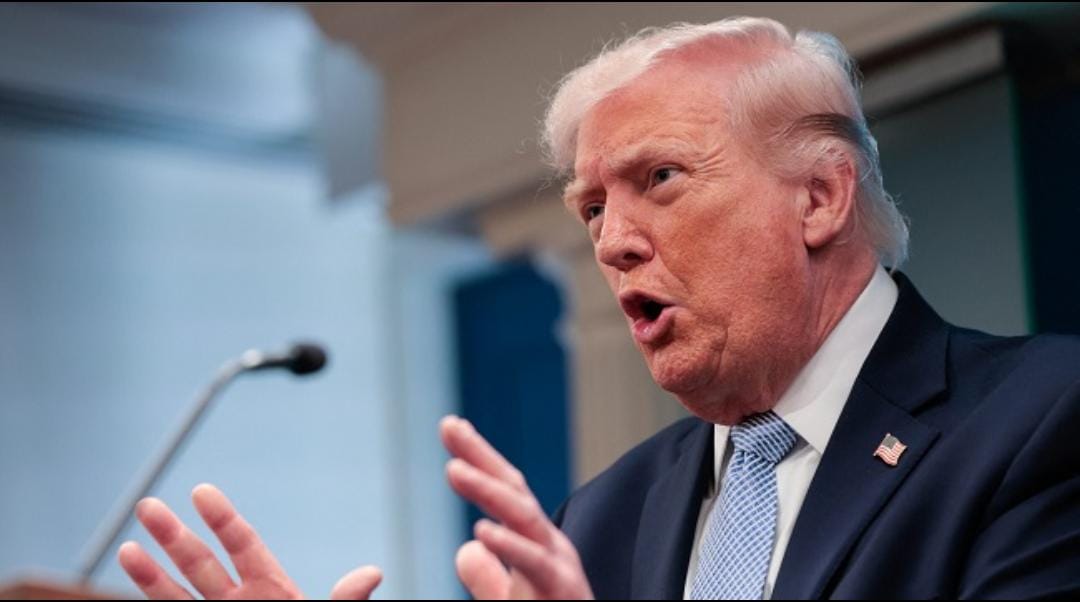

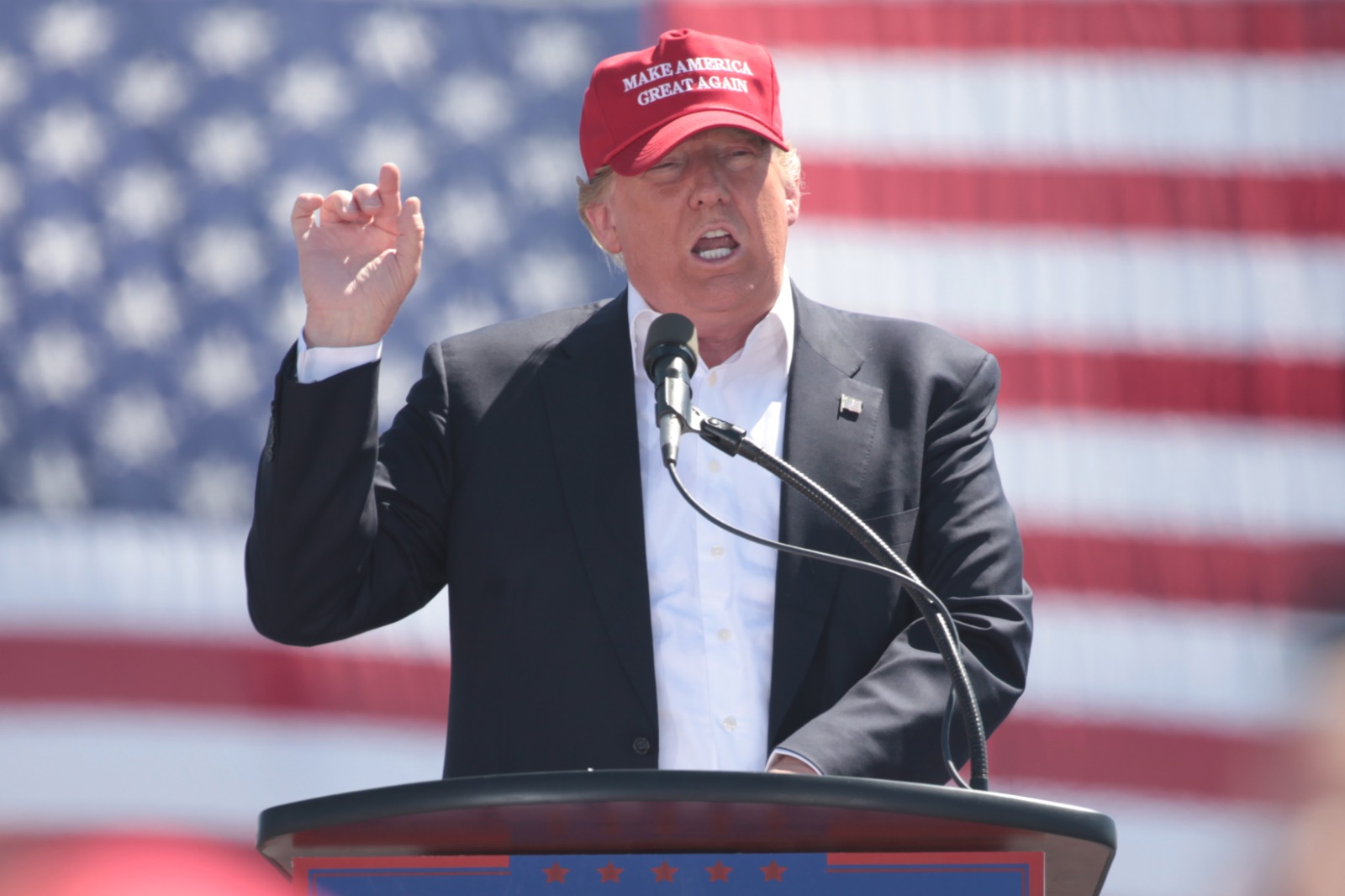
Photo: Donald Trump speaking with supporters at a campaign rally at Fountain Park in Fountain Hills, Arizona, Skidmore from Peoria, AZ, United States of America, CC BY-SA 2.0,
When political leaders rally crowds with the slogan “Make America Great Again,” the public perception is almost entirely focused on domestic revival. For the common voter, the MAGA campaign promises a return to physical industrial strength: the reopening of dormant steel mills, the restoration of blue-collar manufacturing jobs, stricter immigration controls, and a booming local service sector. In his campaign speeches, Donald Trump frequently emphasizes sweeping tariffs and border security, painting a vision of an America that builds its own products and protects its own workers.
While a robust domestic workforce is vital for internal stability, local factories are not what established the United States as the world’s undisputed superpower.
Post-War Power Shift
The true foundation of American dominance was poured in the aftermath of global conflict. Following World War I, the United States started investing heavily in defense production while slowly paying other countries to manufacture everyday consumer goods. This strategy hit overdrive during World War II.
While the cities and economies of Europe were physically devastated by years of warfare, the U.S. mainland remained completely safe. America essentially became the primary factory for the Allied forces. Because of this, the U.S. ended the war not only intact but holding an unprecedented amount of the world’s wealth.
This advantage was made official in 1944 at the Bretton Woods Conference. Because the U.S. held the vast majority of the world’s gold reserves, allied nations agreed to a new global financial system. The U.S. dollar was tied directly to gold, and every other major currency was tied to the dollar. In a single diplomatic move, the U.S. dollar became the world’s default money.
Petrodollar System
However, financial systems have to adapt to survive. By the early 1970s, the U.S. government was facing mounting domestic debt and the massive costs of the Vietnam War. They were forced to abandon the gold standard. The dollar was suddenly just paper, backed by nothing but trust in the U.S. government. To make sure the world continued to rely on American money, Washington pulled off a brilliant strategic pivot.
In 1974, the United States struck a historic deal with Saudi Arabia. The U.S. provided top-tier military protection and security to the Saudi royal family. In exchange, Saudi Arabia agreed to do one crucial thing: price and sell its oil exports exclusively in U.S. dollars.
This birthed the “petrodollar” system. Think about the math: every modern country needs oil to keep the lights on and the economy running. Because of this deal, every nation on earth was suddenly forced to stockpile massive reserves of U.S. dollars just to buy energy. This guaranteed a permanent, worldwide demand for American money. It gave the U.S. unmatched influence over global trade, allowing America to benefit from millions of transactions without even being directly involved.
Guarding the Monopoly
When you hold a financial monopoly of this magnitude, you have to defend it. Historically, the United States has consistently used its political and military strength to protect the supremacy of the dollar. In Washington, economic interests and national security are often the exact same thing.
We can see this alignment in recent history. Before the Iraq War, there were intense international debates surrounding the Iraqi government’s plan to transition its oil sales from the U.S. dollar to the Euro. Similarly, during the height of the Venezuelan political crisis, rumors circulated that a deal was being brokered to sell Venezuelan oil to China using the Chinese Yuan. In both scenarios, any threat to the dollar’s dominance coincided with severe U.S. diplomatic pressure, sanctions, or military intervention to protect the established financial order.
Catalyst for Global Pushback
Today, however, the American financial monopoly is facing coordinated, state-level resistance. The BRICS coalition (originally Brazil, Russia, India, China, and South Africa) is actively expanding its membership. Their shared goal is no secret: they are aggressively exploring alternatives to the global reserve currency.
This pushback gained massive momentum following the escalation of the Russia-Ukraine war. When the U.S. Federal Reserve and allied institutions froze roughly $300 billion in Russian sovereign assets, it served as a stark wake-up call for the developing world.
Other nations watched this happen and realized a harsh truth. Heavy reliance on the U.S. dollar meant their own national savings could be confiscated overnight during a diplomatic dispute. This fear has rapidly accelerated international efforts to bypass Western financial networks entirely.
Testing the Exits
We are now seeing countries actively test new ways to trade. Facing strict U.S. sanctions, Iran recently proposed a direct trade agreement with India. Iran offered heavily discounted crude oil if India paid in Indian Rupees rather than dollars. The framework even included a barter-like settlement where Iran would use those Rupees to purchase Indian goods, taking only the leftover value home. While India remains cautious due to its ties with the West, the proposal proves that non-dollar trade is becoming a reality.
This resistance extends far beyond the energy sector and into global technology. For years, Western tech dominance was maintained simply by acquiring foreign competition, like the early buyouts of Hotmail or Instagram. Today, foreign governments are stepping in. The Chinese government, for instance, actively blocked Meta from acquiring Manus AI, a key technological asset. This regulatory shield shows a deliberate shift away from allowing Western monopolies to control future digital infrastructure.
Reinterpretating MAGA
When we analyze the world through the lens of international finance, the campaign to “Make America Great Again” requires a profound reinterpretation.
The true stakes of modern American policy extend far beyond reopening domestic factories or managing border crossings. The actual core of American geopolitical leverage is its absolute control over the global financial system.
By maintaining the dominance of the dollar, the United States secures the leverage necessary to remain the world’s primary superpower. As the international landscape continues to shift, the defining issue for Washington is clear. The question is not just whether America can rebuild its internal industries, but whether the dollar-centric system that made it dominant can survive a growing wave of global resistance.
Yeh article aapko kaisa laga?