

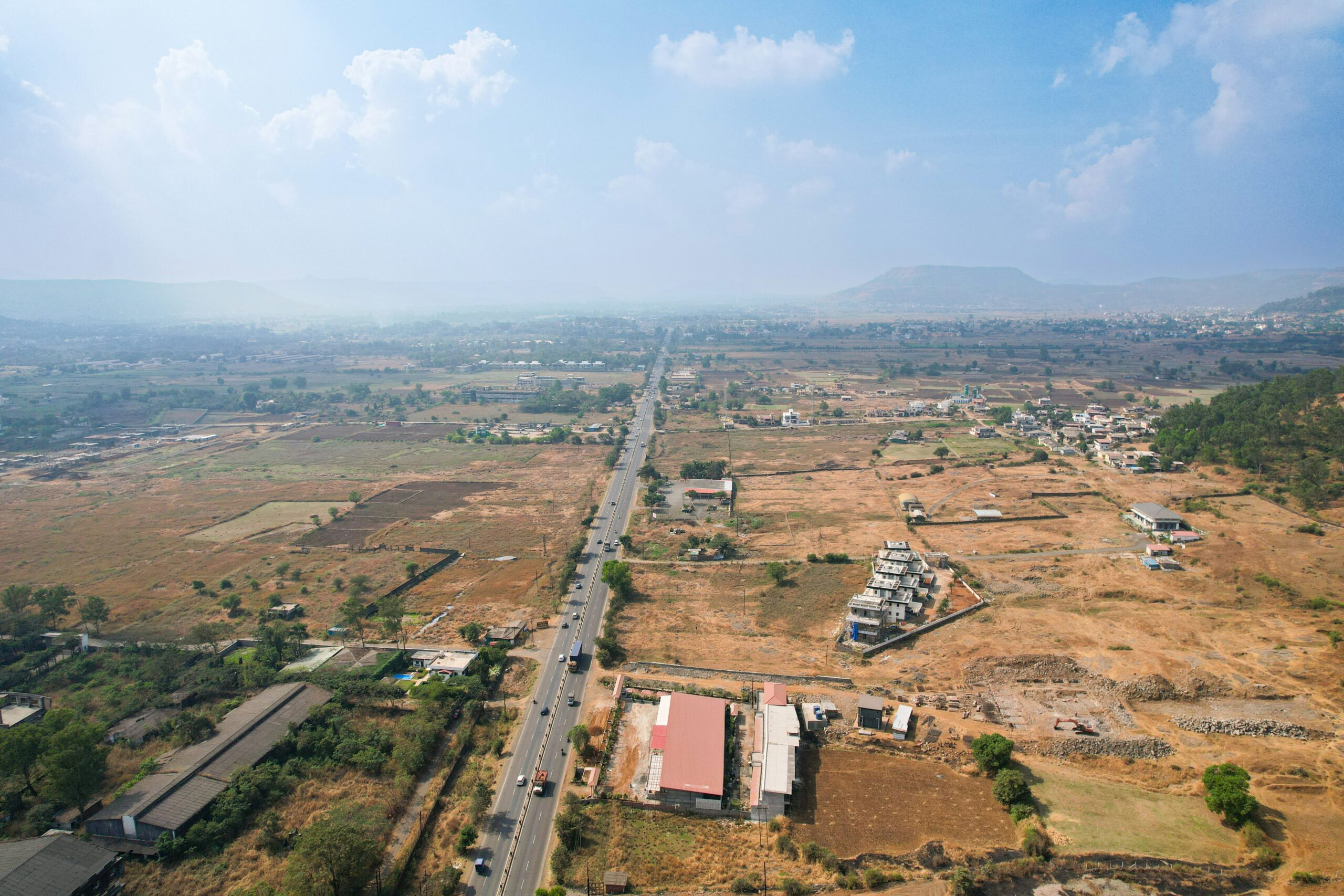
Photo by Zoshua Colah on Unsplash
When Governance and Private Gain Appear to Collide
India’s bureaucracy is often described as the steel frame of governance, an institution expected to function with neutrality, integrity, and public accountability. Civil servants, particularly members of the IAS and IPS, occupy positions that give them access not merely to administration, but to information, policy direction, and developmental planning long before such decisions reach the public domain.
That is precisely why the recent land acquisition controversy emerging from Bhopal has triggered such intense public scrutiny.
Reports indicating that nearly 50 IAS and IPS officers collectively purchased agricultural land near Guradi Ghat in 2022, only for a ₹3,200-crore bypass project to later emerge near the same area, have raised difficult questions about institutional ethics, conflict of interest, and the transparency of bureaucratic functioning. The subsequent conversion of the land from agricultural to residential use and the dramatic increase in its market value have further deepened concerns.
Legally, the transactions may still undergo scrutiny and verification. But politically and ethically, the controversy has already opened a larger debate: when public officials possess privileged access to future developmental information, where does investment end and influence begin?
The Land Deal That Triggered the Controversy
According to reports based on Immovable Property Returns (IPR) filed by officers, approximately 2.023 hectares, roughly five acres of agricultural land in Guradi Ghat village near Bhopal’s Kolar region, were purchased through a single transaction on 4 April 2022.
The land was reportedly acquired collectively by nearly 50 IAS and IPS officers, including officers posted in Delhi and officers belonging to cadres such as Maharashtra, Telangana, and Haryana. The transaction, executed through a single registration document, involved 41 individual buyers with 50 shares attached to the property. The purchase value was recorded at approximately ₹5.5 crore, while the reported market valuation stood higher.
What transformed an ordinary bureaucratic property disclosure into a national controversy was what followed next.
Within 16 months of the acquisition, the Madhya Pradesh Cabinet approved a ₹3,200-crore Western Bypass project whose proposed alignment reportedly passed within 500 metres of the same land parcel. Less than a year later, the land classification itself was altered from agricultural to residential.
The economic consequences were immediate and dramatic. Land reportedly purchased at around ₹81 per square foot witnessed a rapid escalation in value after the bypass approval and land-use diversion. Current market estimates reportedly place the land’s worth between ₹55 crore and ₹65 crore.
Individually, each administrative decision may appear procedurally explainable. Collectively, however, the sequence has generated an unavoidable perception problem.
The Bureaucratic Ethics Question: Information, Influence, and Institutional Trust
At the centre of the controversy lies a deeper issue than real estate speculation; it concerns the ethical architecture of bureaucracy itself.
Senior bureaucrats are not ordinary investors. By virtue of their office, they often possess access to sensitive developmental plans, infrastructure proposals, zoning changes, and policy discussions before such information enters the public domain. This asymmetry creates an inherent ethical responsibility.
The controversy, therefore, raises an uncomfortable question: can public officials privately invest in areas potentially affected by future state decisions without undermining public trust?
Even if no direct illegality is ultimately established, the optics are deeply problematic. Bureaucratic institutions derive legitimacy not merely from legality, but from public confidence in impartiality. When administrative officers appear positioned to benefit from state-driven developmental changes, the distinction between governance and privileged advantage begins to blur.
The issue becomes even more sensitive because these were not isolated transactions by individual officers. The collective nature of the investment described in filings as an acquisition by “like-minded officers” creates the perception of coordinated confidence in future appreciation.
In democratic governance, perception itself carries institutional consequences.
Transparency, Accountability, and the Limits of Disclosure
One reason this controversy surfaced at all was because of the Immovable Property Return mechanism, which requires civil servants to disclose property acquisitions. On paper, this reflects transparency within the administrative system.
Yet the controversy also exposes the limitations of disclosure-based accountability.
Disclosure does not automatically resolve conflict-of-interest concerns. A bureaucrat may declare an asset properly and still face ethical questions if that asset later benefits from government decisions linked to privileged information or administrative influence.
This incident has therefore revived calls for stronger safeguards within the bureaucracy. Critics argue that India’s administrative framework lacks sufficiently robust “cooling-off” or conflict-management mechanisms governing land purchases by serving officials in areas likely to undergo state-led development.
The issue is particularly significant in India, where infrastructure announcements routinely transform surrounding land into high-value real estate. Highways, industrial corridors, bypasses, metro projects, and urban expansions often generate enormous private windfalls for those positioned early enough.
The larger concern is whether governance structures are equipped to ensure that insider access does not gradually evolve into insider advantage.
Development Politics and the Real Estate Economy
The Bhopal controversy also highlights how infrastructure development has increasingly become intertwined with speculative land economics.
Modern infrastructure projects do more than improve transportation; they reshape entire urban geographies. A bypass project worth thousands of crores can instantly alter land demand, commercial viability, and future residential expansion patterns. This makes early land acquisition around proposed infrastructure corridors extremely lucrative.
In such an environment, information itself becomes power.
This is why controversies surrounding land acquisition near future development projects consistently attract public attention. The concern is not merely about property appreciation, but about whether access to governance structures creates unequal economic opportunity.
The Guradi Ghat episode, therefore, reflects a broader structural issue within India’s development model where public infrastructure often generates massive private enrichment for those positioned closest to state decision-making.
The Institutional Consequences: Why This Case Matters Beyond Bhopal
The significance of this controversy extends far beyond one bypass project or one group of officers.
India’s administrative system depends heavily on public trust. Bureaucrats exercise enormous influence over policy execution, urban planning, land regulation, and infrastructure approvals. If citizens begin to perceive that such authority can indirectly translate into private economic gain, institutional credibility suffers.
This is particularly damaging at a time when demands for transparency and administrative accountability are intensifying across the country.
The controversy also arises amid growing public frustration over unequal access to opportunity. Ordinary citizens often struggle with zoning restrictions, land acquisition disputes, and bureaucratic hurdles, while allegations of privileged access among powerful officials create a perception of systemic imbalance.
Whether investigations ultimately establish wrongdoing or not, the case has already triggered a broader debate about ethics in governance, administrative accountability, and the boundaries between public office and private interest.
Conclusion: The Crisis of Perception May Be Bigger Than the Land Deal
The Bhopal land controversy is not merely about real estate. It is about the fragile relationship between power and public trust.
Infrastructure development is essential for economic growth. Investment by public officials is not illegal by itself. But when developmental decisions, land conversion, and enormous value appreciation appear to converge around individuals occupying powerful state positions, questions become inevitable.
The real danger for institutions is not only corruption but also the erosion of credibility.
Because once citizens begin to believe that governance benefits insiders before the public, trust in the system itself begins to weaken.
And no administrative structure can function effectively once that trust collapses.
Yeh article aapko kaisa laga?