

Image credit: VedSingh/ X
Introduction
The Taxation and Other Laws (Amendment) Bill, 2026 has brought renewed attention to two areas of economic policy tax incentives for electronics manufacturing and the possibility of allowing transaction charges on digital payments, including the Unified Payments Interface (UPI).
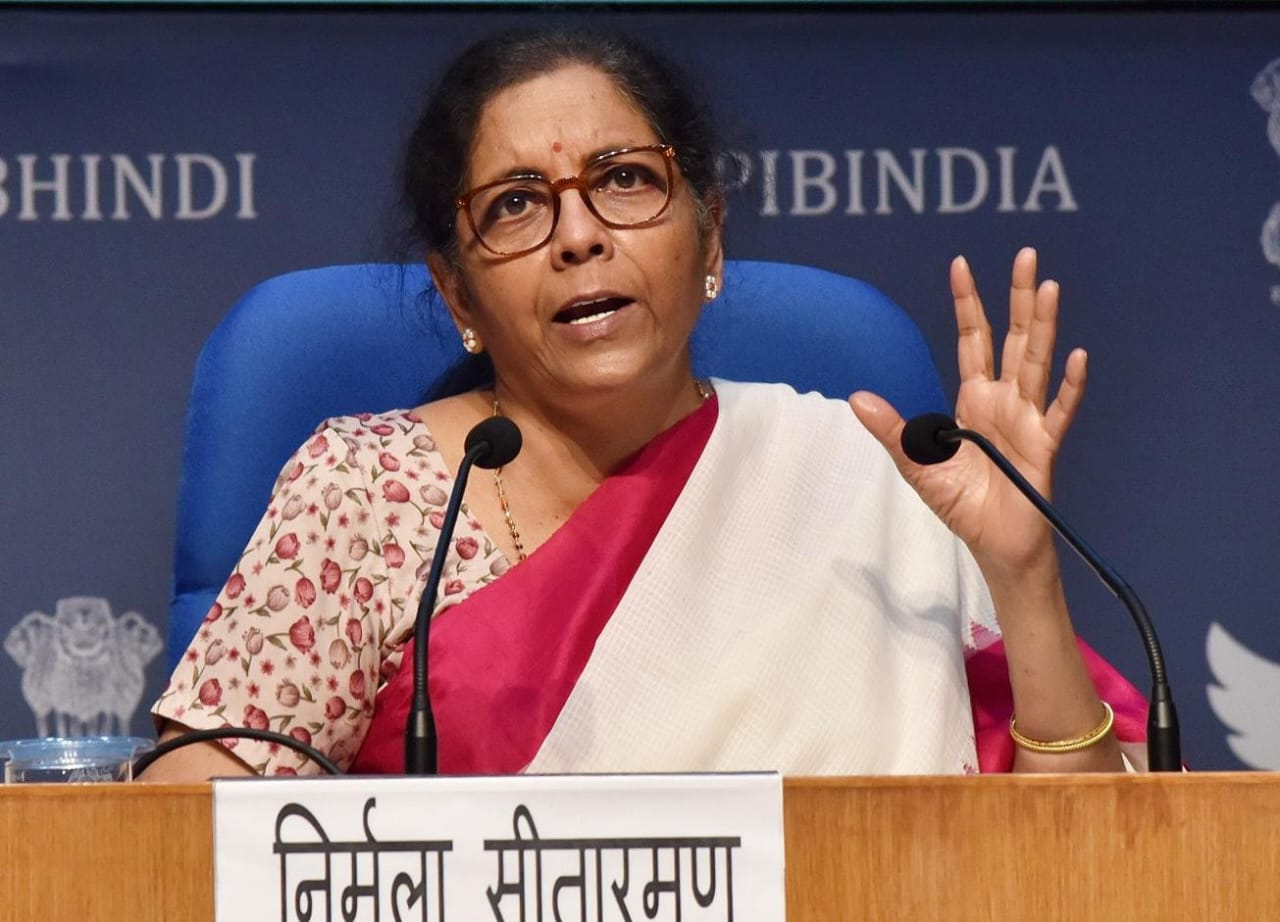
Finance Minister Nirmala Sitharaman introduced the Bill in the Lok Sabha on 4 August 2026, and the Lok Sabha passed it on 6 August 2026. One of its proposed changes concerns the statutory framework governing charges on specified electronic payment modes.
The development has led to discussion about whether UPI will no longer remain free. Legally, however, the position needs to be stated more carefully. The Bill does not itself impose a universal Merchant Discount Rate (MDR) on every UPI transaction. Instead, it proposes to alter the existing statutory restriction, thereby creating scope for a future charging framework.
Background
The present framework can be traced to the Finance Act, 2019, through which Section 10A was inserted into the Payment and Settlement Systems Act, 2007. The provision restricted banks and system providers from imposing charges on prescribed electronic payment modes.
UPI and other prescribed modes were subsequently brought within the relevant framework under Section 269SU of the Income-tax Act, 1961. The Central Board of Direct Taxes also clarified that MDR would not be applicable to the prescribed transactions from 1 January 2020.
The Government has also supported the UPI ecosystem through financial incentives. In a parliamentary response in August 2025, the Ministry of Finance stated that approximately ₹8,730 crore had been provided between FY 2021-22 and FY 2024-25 for promoting and maintaining UPI transactions.
The 2026 Bill represents a shift from this approach. Instead of maintaining the existing statutory restriction in its present form, the proposed amendment seeks to provide greater flexibility regarding charges associated with prescribed electronic payment modes.
Legal Framework
The Payment and Settlement Systems Act, 2007 is the principal legislation governing payment systems in India. The Reserve Bank of India has the central regulatory role under the statutory framework.
Section 10A is particularly relevant because it created the statutory protection against charges on prescribed electronic payment transactions. Any amendment to this provision therefore directly affects the legal position governing UPI-related charges.
The Constitution also provides an important framework. Article 265 states that no tax shall be levied or collected except by authority of law. MDR, however, should not automatically be described as a tax. It is generally a transaction-related charge associated with payment processing and is conceptually different from a compulsory tax imposed by the State.
Article 14 may become relevant if a future MDR framework creates different categories of transactions, merchants or payment participants. Article 19(1)(g) may also arise where a regulatory burden substantially affects the carrying on of business.
Judicial Position
The Supreme Court has consistently recognised that economic and fiscal legislation deserves a degree of judicial restraint.
In R.K. Garg v. Union of India, the Court observed that laws dealing with economic matters require greater latitude because such legislation often involves experimentation and policy choices.
This judicial deference, however, does not place economic legislation beyond constitutional review. In K.T. Moopil Nair v. State of Kerala, the Supreme Court held that taxation legislation remains subject to Article 14 and cannot create an inherently discriminatory scheme.
The question of legal certainty is also relevant. In Govind Saran Ganga Saran v. Commissioner of Sales Tax, the Supreme Court explained the essential components of a tax levy and emphasised the need for certainty in fiscal legislation.
Although MDR is not itself necessarily a tax, the principle is relevant where legislation creates a framework for imposing a future financial burden.
Analysis
The central legal distinction is between permitting a charge and imposing a charge.
The 2026 Bill should not therefore be described as imposing a “UPI tax”. Its proposed amendment changes the statutory framework under which charges on prescribed electronic payment modes have been restricted. The actual rate, transaction categories and persons responsible for any future charge would depend on the final legal and regulatory framework.
MDR is also different from a tax in its legal character. It is generally associated with the cost of processing a payment within the payment ecosystem. Depending on the structure ultimately adopted, the cost may fall upon merchants or other participants and may indirectly affect consumer prices.
The proposed amendment nevertheless marks a policy change. For several years, the Government has relied upon incentives to support an ecosystem in which prescribed UPI transactions could operate without MDR. Permitting charges could provide another mechanism for financing payment infrastructure.
At the same time, the design of such a system matters. A uniform charge on every transaction could have a different effect from a framework limited to particular categories or transaction values. Small merchants and low-value transactions may be particularly sensitive to additional payment costs.
The constitutional question would therefore be more appropriately examined after the actual charging framework is notified. At that stage, issues of classification under Article 14, the reasonableness of restrictions affecting business under Article 19(1)(g), and the scope of delegated regulatory power may become relevant.
Conclusion
The Taxation and Other Laws (Amendment) Bill, 2026 is better understood as a legislative step towards changing the existing framework governing digital-payment charges rather than as an immediate imposition of MDR on UPI.
Its practical effect will depend upon the final legislation and the rules, notifications or regulatory measures that follow. The most important questions will concern the rate of any charge, the transactions covered, exemptions, the entities liable and the safeguards against excessive or discriminatory burdens.
For the present, describing the development as a “UPI tax” would therefore be legally inaccurate. The more precise position is that Parliament is considering a change that could permit a future MDR framework while also pursuing broader tax-policy objectives relating to electronics manufacturing.
Yeh article aapko kaisa laga?