
Image credit: Channels Television/ X
Washington/Tehran, August 7, 2026: Tensions between the United States and Iran have risen again after US President Donald Trump warned that Iran could face a “very hard” military response if the Strait of Hormuz is not opened. The warning came as diplomatic efforts involving Iran and Oman continued but failed to produce a final agreement, leaving the future of one of the world’s most important shipping routes uncertain.
Trump has repeatedly said that reopening the Strait of Hormuz is a priority. Earlier this week, he said an agreement could be reached within days. However, the deadline passed without a clear final deal, and the two sides remain divided over who should control shipping through the waterway and whether vessels should pay fees to Iran.
Trump’s Strong Warning to Tehran
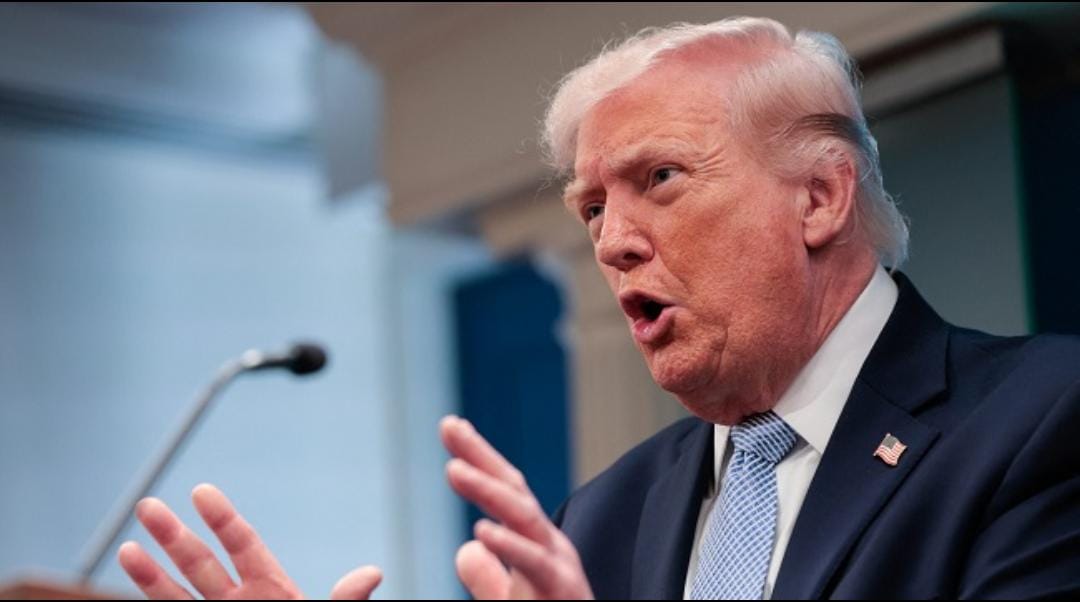
Trump told reporters that the Strait of Hormuz would be opened “very soon” or Iran would be “hit very hard.” He also warned that if Tehran backed away from negotiations, the United States could respond with an even stronger military action.
The US president has argued that continued restrictions on the waterway cannot be allowed because the strait is essential to international trade and energy supplies. He has also linked the broader negotiations to Iran’s nuclear programme, insisting that Tehran must not be allowed to develop a nuclear weapon.
At the same time, Trump has shown that he is still willing to give diplomacy another chance. US Secretary of State Marco Rubio said talks between Iran and Oman had made progress, although there was still “no finality.” Washington hopes the discussions can create a short-term arrangement for safer shipping while broader negotiations continue.
“Iran Rejects Washington’s Version of the Talks”
Tehran, however, has presented a very different picture. Iranian Parliament Speaker Mohammad Bagher Ghalibaf accused the United States of using what he described as “theatre diplomacy” and rejected Washington’s suggestion that a major negotiation was already underway.
His comments show how far apart the two sides remain. Iran wants its sovereignty and influence over the waterway to be recognised, while the United States wants unrestricted commercial movement without Iranian approval or additional charges.
Iran has also been discussing a new framework with Oman for managing shipping through the strait. Reports indicate that Tehran wants greater control over vessels passing through the waterway and has considered charging transit fees. Reuters reported that Iranian demands could involve fees of around 5–7% of cargo value, while Oman has reportedly discussed a lower figure of around 3%. The United States opposes such charges.
Why the Strait of Hormuz Matters So Much ?
The Strait of Hormuz connects the Persian Gulf with the Gulf of Oman and the wider Indian Ocean. It is one of the most important energy routes in the world, with roughly one-fifth of global oil supplies passing through the area.
Any serious disruption can therefore affect countries far beyond the Middle East. Higher shipping risks can increase insurance costs, delay tankers and push up prices of crude oil and other energy products.
That is exactly what financial markets have been watching. Oil prices rose sharply earlier this week because of uncertainty surrounding the strait, although prices fell on Friday as investors again saw a possibility of an agreement. Brent crude was reported around $81.79 a barrel, while US West Texas Intermediate was around $76.76.
Shipping Remains Risky Despite Diplomatic Efforts
The biggest problem is that even if Iran and Oman reach an understanding, shipping companies may not immediately return to normal operations.
Recent security incidents have continued to create fear among tanker operators. Reports on Thursday referred to fresh explosions in the area, while the US naval blockade also remained in place. The situation has made shipping companies extremely cautious.
Insurance is another major problem. Even if a temporary route is declared open, companies may hesitate to send extremely expensive tankers through an area where military activity and the threat of mines or attacks remain.
Trump himself has acknowledged that the waterway may be “sort of open,” but warned that even a single mine could make shipping companies unwilling to risk billion-dollar vessels.
A Deal Still Looks Difficult
Iran and Oman have held several rounds of technical discussions in recent months. Oman has tried to act as a bridge between Tehran and Washington, while Iran has continued to emphasise its sovereign rights over its territorial waters. Oman and Iran have previously stated their commitment to safe passage through the Strait in accordance with international law.
But the latest disagreement shows that a final settlement remains difficult. Iran wants security guarantees, economic benefits and recognition of its position, while Washington wants the waterway opened without restrictions or tolls.
For now, diplomacy remains alive, but Trump’s warning has made clear that the military option has not disappeared. The coming days could therefore be crucial. If negotiators find common ground, the Strait of Hormuz could gradually return to normal and pressure on global energy markets could ease. If talks collapse, however, the risk of further US-Iran confrontation and another sharp shock to global oil supplies could rise quickly.
Yeh article aapko kaisa laga?