
Image credit: X /Dr.Anna.
A major strategic realignment on the border
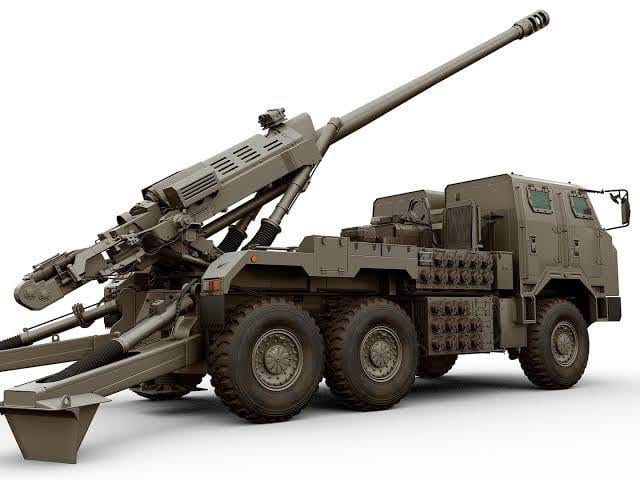
In a notable escalation of border militarization, the Pakistan army has deployed approximately 250 Chinese origin SH-15 self-propelled howitzers across key sectors facing India. Primarily positioned in key border sectors such as Sialkot, Gujranwala, and Jalalpur Jattan, opposite the vulnerable Shakargarh bulge, these high-tech artillery units signify one of Islamabad’s most significant conventional firepower upgrades in recent years. Manufactured by China’s state-owned Norinco (where it is known as the pcl-181), these 155mm/52-calibre wheeled systems reflect the deepening Defence integration between Beijing and Islamabad.
How the SH-15 enhances Pakistan army’s power
The introduction of the SH-15 provides a substantial operational leap for Pakistan’s artillery corps. Historically dependent on legacy towed guns, the Pakistan army now gains elite mobility and rapid-strike capability. Mounted on a robust 6×6 Armoured chassis, the SH-15 can hit road speeds of up to 90 km/h, allowing for rapid movement across various terrains.
Its chief tactical advantage lies in its “shoot and scoot” capability. Equipped with automated fire-control systems and hydraulic stabilizing spades, a crew can pull up, fire up to six rounds per minute, and relocate before counter-battery radar can lock onto their position. Firing standard ammunition, the system reaches targets 30 to 40 km away, while rocket-assisted projectiles push its maximum range beyond 50 to 70 km. Inducting 250 units, enough to outfit multiple artillery regiments, gives Pakistan a flexible, long-range fire support network that complements its rocket forces and alters local tactical math.
India’s response
India’s response to these border deployments has been measured yet resolute. India’s ministry of external affairs affirmed that the nation remains vigilantly deployed and will do “whatever is necessary” to safeguard its territorial integrity and national interests.
Operationally, the Indian army is well into its own artillery overhaul under the field artillery rationalisation plan (FARP). To counter enemy artillery along diverse border terrains, India relies on proven platforms, including the tracked k9-vajra t self-propelled guns (ideal for desert and mechanized warfare), the m777 ultra-light howitzers (optimized for high-altitude transportability), and the indigenous Dhanush guns. Furthermore, India has approved the procurement of 307 advanced towed artillery gun systems (ATAGS) and is fast-tracking its own wheeled mounted gun system (MGS). Backed by superior aerial surveillance, drone swarms, and precision counter-battery radars, India’s Defence architecture is designed to neutralize long-range artillery threats swiftly, ensuring that strategic equilibrium along the frontier remains firmly intact.
Yeh article aapko kaisa laga?