Photo: Tasnim News Agency, CC BY 4.0
According to Lebanon’s health ministry, at least 31 people were killed and 149 wounded in Israeli strikes on Beirut’s southern suburbs and other parts of southern Lebanon. The Israeli military signaled further escalation, with Major General Rafi Milo, head of its Northern Command, stating that the intensity of operations against Hezbollah would increase.
The conflict between Iran and Israel intensified on Monday as Israeli airstrikes targeted Beirut’s southern suburbs and southern Lebanon, while Iran and its regional allies continued retaliatory attacks across West Asia.
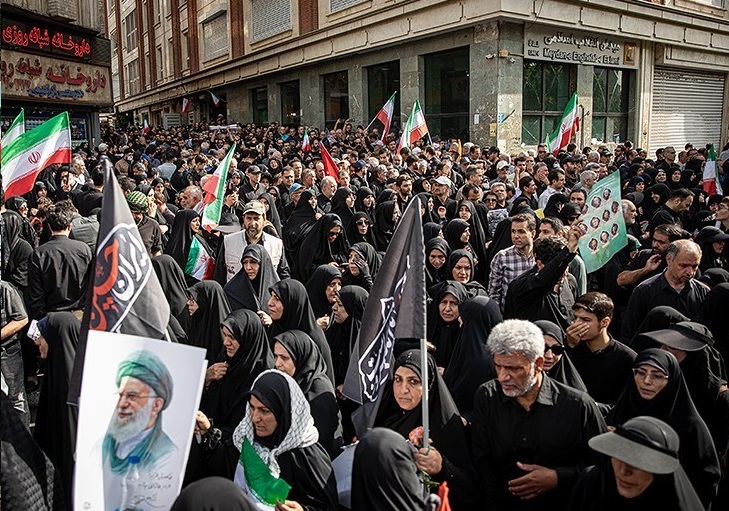
Hezbollah said it launched rockets and drones toward Israel in response to the killing of Iran’s Supreme Leader, Ayatollah Ali Khamenei, in a joint U.S.-Israeli strike on Sunday.
U.S.-Israel Strikes on Iran
On March 1, U.S. and Israeli forces carried out coordinated strikes across Iran, targeting ballistic missile facilities and naval assets. Iranian authorities said more than 200 people have been killed since the beginning of the campaign, including senior political, military and scientific figures.
Iran responded by launching missiles and drones at Israeli and Gulf Arab targets. The United States, in a joint statement with Bahrain, Jordan, Kuwait, Qatar, Saudi Arabia and the United Arab Emirates, strongly condemned Iran’s retaliatory attacks.
In Washington, Trump administration officials acknowledged during closed-door briefings to congressional staff that there was no intelligence indicating Iran was preparing to attack U.S. forces prior to the strikes, according to sources familiar with the discussions.
Iran’s Supreme National Security Council chief, Ali Larijani, said Tehran would not negotiate with the United States.
Explosions in Gulf Cities
Loud explosions were reported in Dubai and Doha on Monday, according to Reuters, though further details were awaited at the time of reporting.
Kuwait said it intercepted hostile drones for the third consecutive day amid Iran’s retaliatory operations. State media reported that air defenses neutralized most of the drones near the Rumaithiya and Salwa neighborhoods, with no injuries reported.
Lebanon Tensions Deepen
Israeli forces expanded operations into Lebanon following Hezbollah’s cross-border rocket fire. Lebanese President Michel Aoun expressed concern over Hezbollah’s missile attacks on Israel, warning that Lebanon risked being drawn deeper into a widening regional war.
Israel’s military accused Hezbollah of prioritizing alignment with Iran over Lebanon’s national interests and vowed that the group would “pay a heavy price.”
Kashmir Restrictions After Protests
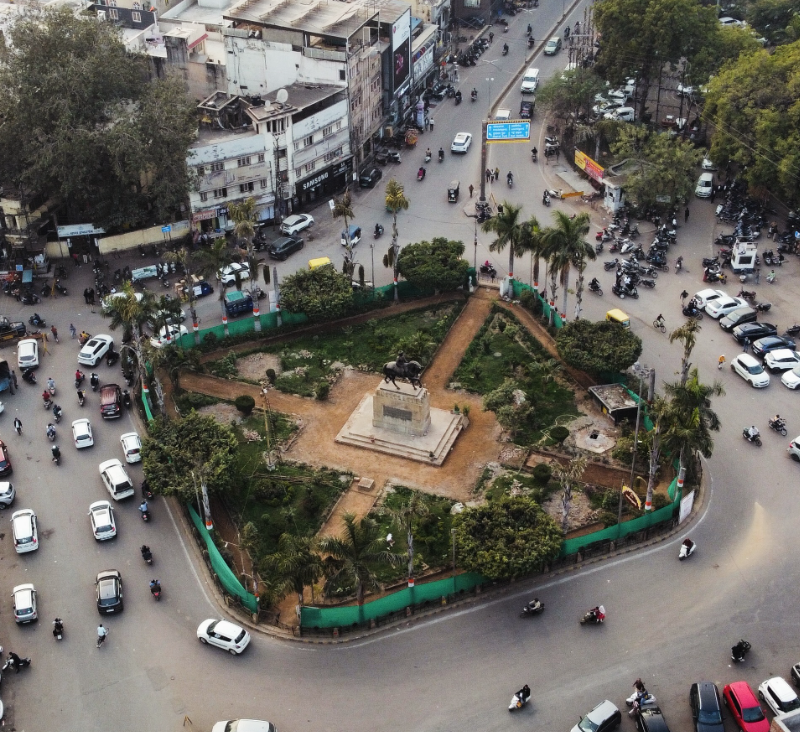
In India, authorities imposed restrictions in parts of Kashmir following protests over Khamenei’s killing. Security forces sealed off Lal Chowk’s Ghanta Ghar and deployed additional police and paramilitary personnel to prevent gatherings.
Markets Reel; Oil Prices Surge
Global markets reacted sharply to the escalating hostilities. U.S. futures fell in early trading, with contracts for the S&P 500 and Dow Jones Industrial Average down about 0.8% by mid-morning in Bangkok. Asian markets also opened lower, while crude oil prices surged before moderating later in the session.
In India, benchmark indices Sensex and Nifty declined sharply in early trade, tracking the spike in oil prices and heightened geopolitical uncertainty.
Shares of aviation and travel-related companies were among the hardest hit. InterGlobe Aviation dropped 7.5%, SpiceJet fell 7.27%, Yatra Online tumbled 11.14%, Easy Trip Planners declined 9.39%, TBO TEK slid 8.19%, and Thomas Cook fell 5.40%.
Indians Stranded in Gulf
Airspace closures across parts of West Asia have disrupted international flight operations, leaving at least 109 people from Karnataka stranded in the region.
According to official data from the state government, 100 individuals are stranded in the United Arab Emirates and nine in Bahrain. District-wise figures show the highest number of stranded passengers from Ballari (32), followed by Bengaluru (25) and Davanagere (9). Others are from Kodagu, Vijayapura, Chikkamagaluru, Dakshina Kannada, Shivamogga, Raichur, Chikkaballapura, Chitradurga, Kalaburagi, Udupi and Tumakuru.
In Bahrain, four stranded passengers are from Hassan, three from Udupi, and one each from Kodagu and an unspecified district.
Have an outlook
With Iran vowing further retaliation and Israel indicating expanded military operations, the confrontation risks broadening into a wider regional conflict involving Gulf states and non-state actors. Diplomatic efforts appear stalled, as Tehran ruled out negotiations with Washington even as U.S. President Donald Trump said he had agreed to talks with Iran.
The situation remains fluid, with markets volatile and security alerts in place across multiple countries in the region.
Yeh article aapko kaisa laga?