
Image credit: Mr.kashyap/X
Introduction
For millions of Indian students, competitive examinations are gateways to education, employment, and economic mobility. Yet in recent years, repeated paper leak scandals have shaken public confidence in the integrity of recruitment and entrance examinations. The nationwide protests that followed, culminating in the resignation of Union Education Minister Dharmendra Pradhan, forced the government to respond with stronger legislative measures.
The Public Examinations (Prevention of Unfair Means) Amendment Bill, 2026, introduced in Parliament during the Monsoon Session, seeks to significantly tighten India’s anti-paper leak framework through stricter punishments, fast-track investigations, and specialised courts.
The central question, however, is whether harsher laws alone can solve what is fundamentally an institutional problem.
What Does the Bill Propose?
The Amendment Bill substantially strengthens the existing Public Examinations (Prevention of Unfair Means) Act, 2024.
Among its major provisions are:
- Increasing punishment for paper leaks and organised examination fraud to up to 10 years’ imprisonment.
- Raising monetary penalties from ₹10 lakh to ₹50 lakh for individuals involved in unfair means.
- Enhancing penalties against organised crime syndicates, including fines of up to ₹10 crore.
- Establishing Special Task Forces to investigate examination fraud within a fixed timeframe.
- Creating Special Fast Track Courts and appointing Special Public Prosecutors for speedy disposal of cases.
The government has described the legislation as a “milestone” aimed at restoring the credibility of India’s public examination system.
Why the Bill Became Politically Necessary
The legislation cannot be viewed in isolation.
Its introduction follows months of public outrage over examination irregularities and one of the largest student-led protest movements in recent years. Demonstrators demanded accountability, systemic reforms, and political responsibility for repeated failures in conducting fair examinations.
The resignation of the Education Minister transformed the debate from an administrative issue into a national governance challenge. The Amendment Bill is therefore as much a political response to declining public trust as it is a legal reform.
A Stronger Law, But Is It Enough?
There is little disagreement that organised paper leak networks deserve stringent punishment. Examination fraud undermines merit, damages public institutions, and unfairly disadvantages honest candidates.
However, criminal law alone addresses only one part of the problem.
Paper leaks often occur because of weak administrative systems, poor cybersecurity, inadequate oversight of examination agencies, insider collusion, and insufficient digital safeguards. Increasing prison terms may deter offenders, but it does not automatically eliminate institutional vulnerabilities.
A secure examination system requires preventive governance as much as punitive legislation.
The Missing Dimension: Institutional Accountability
One notable feature of the Amendment Bill is its emphasis on investigation and prosecution. While these measures strengthen enforcement, critics argue that they pay comparatively less attention to administrative accountability.
Important questions remain:
- What happens when negligence occurs within examination authorities?
- How will officials responsible for security failures be held accountable?
- Are there independent audit mechanisms to regularly assess examination infrastructure?
- How will students receive timely relief when examinations are cancelled?
Without addressing these governance issues, legal reforms risk becoming reactive rather than preventive.
Parliamentary Debate Reflects a Larger Political Divide
The Bill has also become the centrepiece of a broader political confrontation.
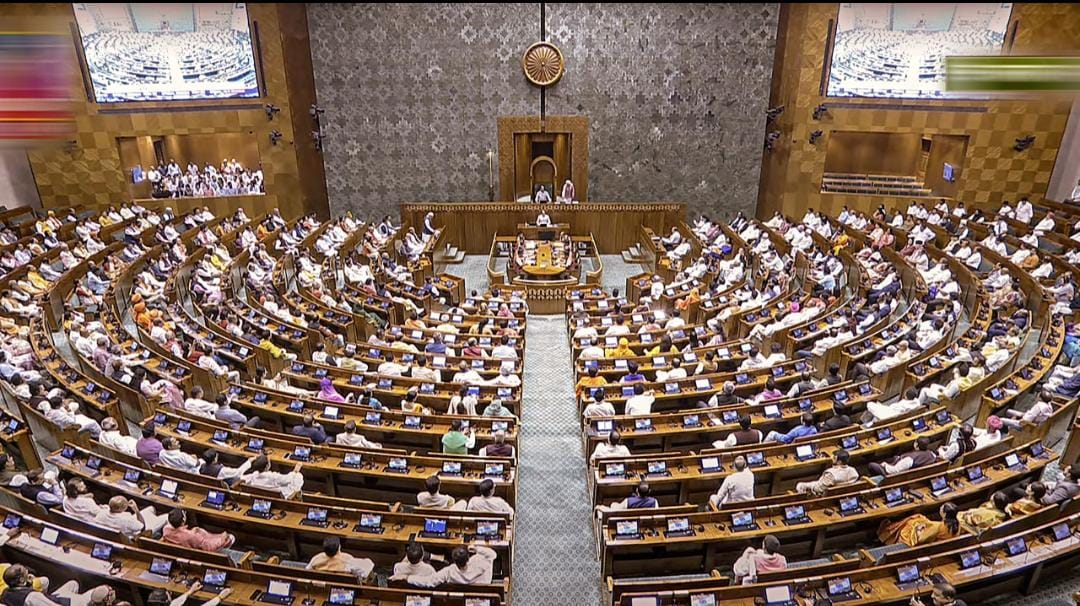
The government has defended it as a decisive response to examination fraud, while Opposition parties argue that stronger punishments alone cannot compensate for repeated administrative failures that allowed paper leaks to occur in the first place. Parliamentary proceedings witnessed sharp exchanges over both the legislation and the government’s handling of student protests.
This debate reflects two competing visions of governance: one focused on deterrence through stricter criminal law, and another emphasising institutional reform and executive accountability.
The Way Forward
The Amendment Bill is undoubtedly a significant step towards strengthening India’s legal framework against organised examination fraud. Fast-track investigations, specialised courts, and enhanced penalties can improve enforcement and discourage criminal networks.
Yet restoring public trust requires more than punitive legislation.
India’s examination system will need stronger cybersecurity, transparent recruitment processes, independent oversight, technological safeguards, regular audits, and clear accountability within examination agencies. Equally important is rebuilding students’ confidence that merit not manipulation determines success.
The effectiveness of the new law will therefore be measured not by the severity of its punishments but by its ability to prevent future paper leaks.
Conclusion
The Public Examinations (Prevention of Unfair Means) Amendment Bill, 2026 represents one of the government’s most significant legislative responses to the examination crisis. It signals a tougher stance against organised cheating and acknowledges the seriousness of recent controversies.
However, legislation should not merely punish failure; it should also prevent it.
If implemented alongside institutional reforms and greater administrative accountability, the Bill could become a turning point in restoring confidence in India’s examination system. If not, harsher penalties may simply address the consequences while leaving the underlying causes untouched.
Yeh article aapko kaisa laga?