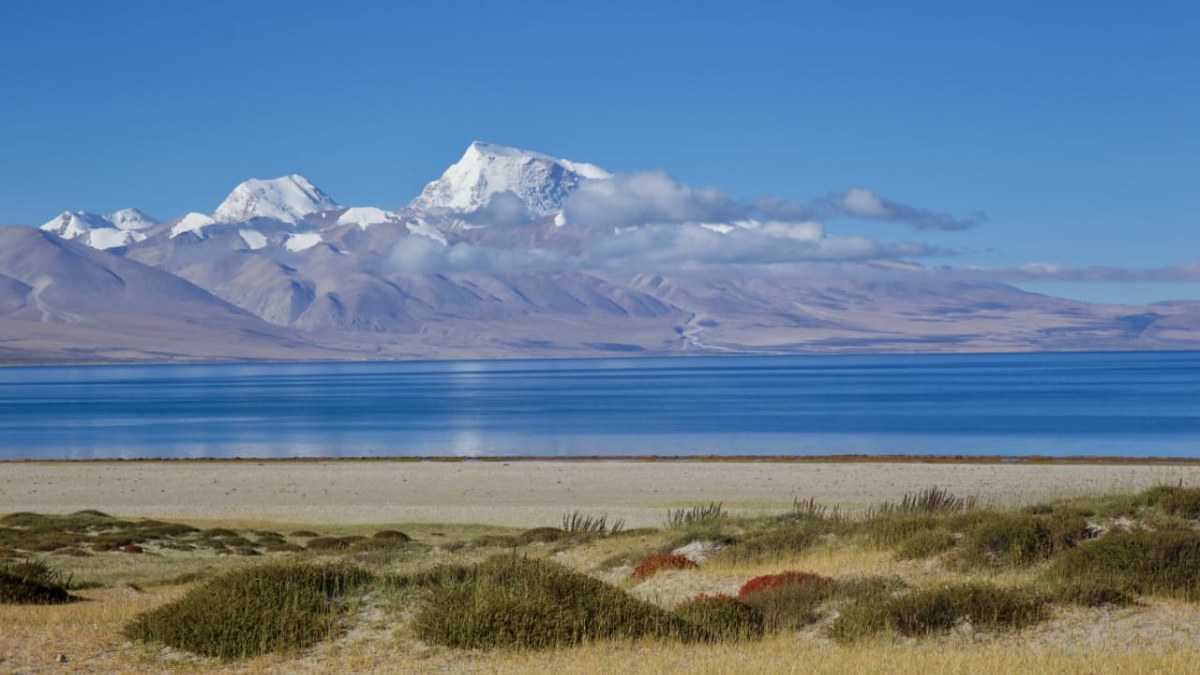
Photo: Gurla Mandhata and Lake Manasarovar near Selung Gompa.
Sacred Journey Turns into Political Flashpoint
Tensions have resurfaced between India and Nepal over the route of the Kailash Mansarovar Yatra, a sacred pilgrimage that holds deep religious importance for Hindus, Buddhists, and Jains. The disagreement centres around the Lipulekh Pass, a high mountain pass in the Himalayas that has long been used as a route for the pilgrimage.The issue came into focus after Nepal formally objected to the use of the Lipulekh route. Kathmandu sent diplomatic protests to both India and China, stating that the area through which the route passes is part of its territory. This move has once again highlighted the long-standing border dispute between India and Nepal.
India Rejects Nepal’s Claims
Responding to Nepal’s objection, India made it clear that its position has not changed. The Ministry of External Affairs said that the Lipulekh Pass has been used for the Kailash Mansarovar Yatra since 1954 and that this is not a new development.
India rejected Nepal’s claims over the region, saying they are not supported by historical facts or evidence. It also described Nepal’s position as an “artificial enlargement” of territorial claims and called it “untenable.”
At the same time, India signalled that it is open to resolving the issue through peaceful means. The government said it is willing to engage in constructive dialogue and diplomacy to address any outstanding boundary concerns between the two countries.
Nepal Stands Firm on Territorial Rights
On the other side, Nepal has maintained a firm stance on its territorial claims. According to Nepal’s Ministry of Foreign Affairs, the regions of Limpiyadhura, Lipulekh, and Kalapani are integral parts of Nepal.
Kathmandu bases its claim on the 1816 Sugauli Treaty, an agreement signed between the Kingdom of Nepal and the British East India Company, which defined the boundaries of Nepal at the time.
Nepal’s Foreign Ministry spokesperson, Lok Bahadur Paudyal Chhetri, confirmed that the country had communicated its concerns to both India and China through official diplomatic channels. Nepal also informed China that it considers the Lipulekh area to fall within its own territory.
Formal Protest After Political Consultations
Nepal’s Foreign Minister, Shishir Khanal, said that the decision to formally protest was taken after discussions with various political parties. He emphasised that the government’s position reflects a national consensus and has now been officially conveyed to both neighbouring countries.
In addition to raising objections, Nepal has also urged India to stop all activities in the disputed region. This includes road construction, infrastructure expansion, border trade, and even pilgrimage-related arrangements. Nepal described the situation as sensitive and said it has repeatedly raised concerns about such activities in the past.
Call for Dialogue Despite Rising Tensions
Despite the strong statements from both sides, Nepal has also expressed its willingness to resolve the dispute peacefully. The government said it remains committed to finding a solution through dialogue, based on historical facts and evidence.
It stressed the importance of maintaining the spirit of close and friendly relations between Nepal and India.
“A Long-Standing Dispute Back in Focus”
The Lipulekh-Kalapani-Limpiyadhura region has been a source of disagreement between the two countries for many years. The dispute became more prominent in recent times after both nations released new political maps that included the contested areas within their own borders.
The Kailash Mansarovar Yatra itself is an important annual pilgrimage, with thousands of devotees travelling to Mount Kailash and Mansarovar Lake, located in Tibet, China. The route through Lipulekh Pass is one of the main paths used by Indian pilgrims, making the issue not just a political matter but also one with religious and cultural significance.
What Lies Ahead
The latest developments have brought the border dispute back into sharp focus. While both India and Nepal have firmly defended their positions, they have also indicated that dialogue remains the best way forward.
For now, the situation remains sensitive, with diplomatic efforts expected to continue as both sides try to find a mutually acceptable solution while preserving their long-standing relationship.
Yeh article aapko kaisa laga?