For decades, the Indian education system has been described as a “sleeping giant” a massive, complex machinery that holds the potential to power a global superpower but often remains entangled in its own traditional gears. As we move through 2026, the landscape of Indian education is witnessing a radical, albeit polarizing, metamorphosis.
While the National Education Policy (NEP) 2020 promised to dismantle the colonial-era “factory model” of learning, the ground reality reflects a deepening chasm between the shimmering private “edu-cities” and the crumbling walls of rural primary schools, or in leftist term ‘‘Jumla’’.
Historical Objectives vs. Modern Realities
Historically, the objective of the post-independence Indian education system, guided by the Kothari Commission (1964-66), was to create a “national system of education” that would promote social integration and bridge the gap between the elite and the masses. It was designed to produce a workforce capable of building a young democracy. Today, the objective has shifted toward the NEP 2020 vision of making India a “Global Knowledge Superpower.”
The current system aims for a 5+3+3+4 curricular structure, moving away from rote memorization toward critical thinking. However, the data suggests a significant lag in public investment. While the NEP recommends spending 6% of the GDP on education, the actual combined expenditure of the Centre and States remains stagnant around 4.1%. This fiscal gap is the primary reason why the “historical objective” of equitable education remains an unfulfilled promise.
The Privatization Surge: Quality at a Cost
Privatization in Indian education is no longer a trend; it is the dominant reality. As of 2026, private universities account for over 35% of all Higher Education Institutions (HEIs). In the K-12 sector, the market size has reached a staggering $76.8 billion.
While private institutions have introduced “phygital” learning a blend of physical classrooms and digital tools like AI tutors and AR/VR labs they have also birthed a form of “educational apartheid.” Quality has become a commodity. High-net-worth families opt for International Baccalaureate (IB) or Cambridge boards, while the middle class exhausts their savings on private coaching for hyper competitive exams like JEE and NEET. This commercialization often overrides academic rigor, leading to a “mushrooming” of substandard private colleges that sell degrees without delivering skills.
The Philosophical Crisis: Who is Abstaining India?
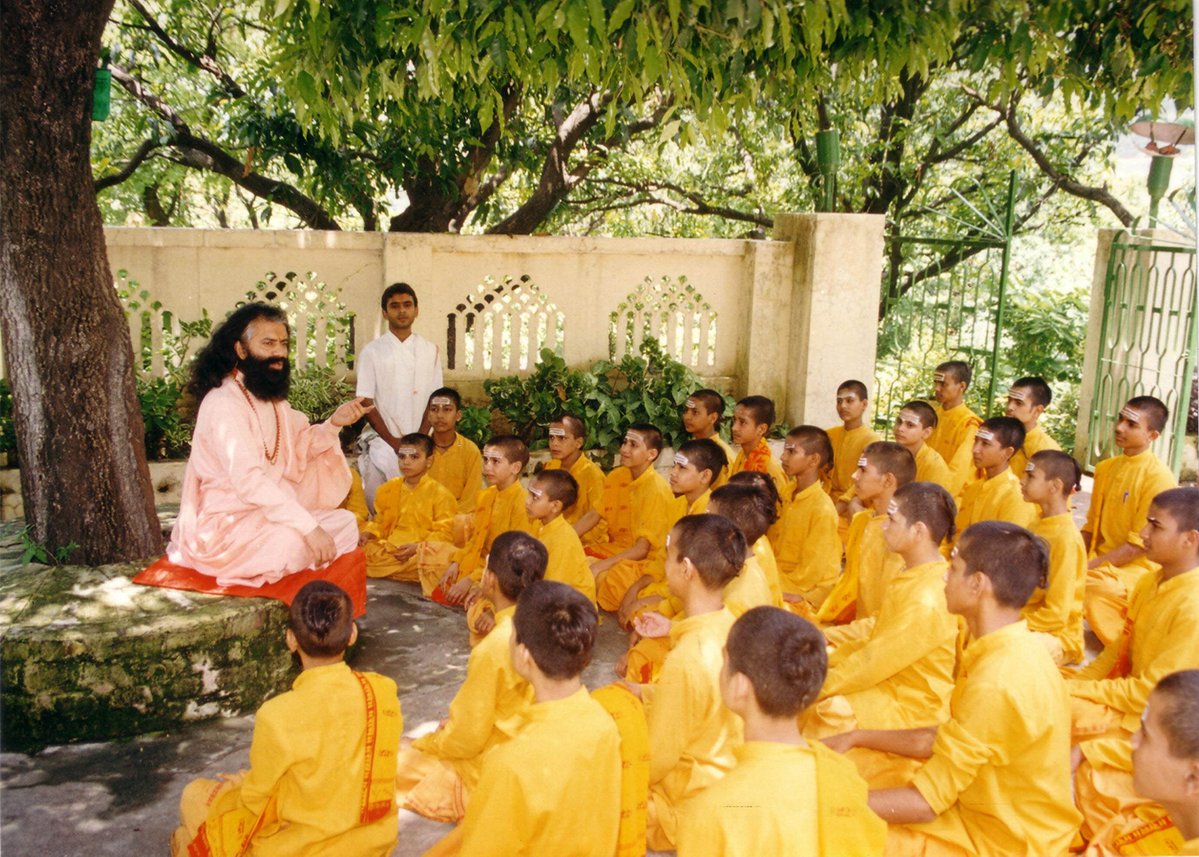
There is a profound disconnect between India’s ancient philosophical roots and its modern pedagogical practices. Historically, the Indian “Gurukul” system emphasized a triad of the Scientific (Vigyan), the Logical (Tarka), and the Spiritual (Adhyatma).
The entity “abstaining” India from reclaiming this balance is a combination of Colonial Hangover and Bureaucratic Inertia. Our system remains obsessed with “English-medium” proficiency as the sole metric of intelligence, effectively sidelining the logical depth found in vernacular traditions. Furthermore, a rigid, secularized version of science often divorced from ethical or spiritual inquiry prevents students from seeing the universe as a holistic entity. We produce “technicians” who can code but “philosophers” who cannot question the ethics of the code they write. The lack of a “Scientific Temper,” as enshrined in the Constitution, is often replaced by a “Credential Temper“ the pursuit of certificates over curiosity.
Ground Level Report: The Future of the Marginalized
On the ground, the impact of these shifts on the poor and the children of laborers is sobering. While the Mid-Day Meal Scheme has successfully boosted enrollment by 12%, the “quality” of learning remains abysmal.
• The Literacy Gap: According to recent audits, nearly 32.5% of rural students still lack high-speed internet, making the “digital revolution” a distant dream for them.
• The Labor Trap: For the children of migrant laborers, education is often “schooling without learning.” They fall into the trap of Credential Inflation, where even a BA degree from a neglected state university fails to secure them a job better than manual labor.
• The Graduate Paradox: In 2026, the unemployment rate for graduates under the age of 25 stands at nearly 40%. This mismatch between a theoretical curriculum and an evolving labor market is pushing the poor back into a cycle of intergenerational poverty.
The Impact in the Near Future
In the near future, if the current trajectory continues, we will see a stratified society. One tier will consist of the “Global Indian” skilled in AI, proficient in English, and globally mobile. The other tier will be the “Local Indian“ the laborer’s child, who has a degree but no skill, left to navigate an economy that no longer requires “unskilled” educated workers.
However, the NEP’s focus on Vocational Education from Grade 6 offers a glimmer of hope. If implemented at the ground level with honesty, it could restore the “Dignity of Labor,” allowing a plumber’s son to become a certified hydraulic engineer rather than an unemployed graduate.
Conclusion: Toward a Unified Vision
The Indian education system stands at a crossroads. We have the technology to reach the remotest village and the ancient wisdom to nurture the most profound minds. To truly become a “Vishwa Guru,” India must bridge the gap between the “Ivory Tower” of private education and the “Mud Hut” of the government school. We need an education that is as scientific as a laboratory, as logical as a mathematical proof, and as spiritual as a meditation accessible not just to those who can pay, but to every child who dares to dream. The future of India’s demographic dividend depends not on how many degrees we print, but on how many minds we truly ignite.
Yeh article aapko kaisa laga?