

Photo: The White House
New Delhi, March 6, India has received a temporary boost to its energy security after the United States granted a 30-day waiver allowing Indian refiners to purchase Russian crude oil, as global markets face mounting supply disruptions due to escalating tensions in the Middle East.
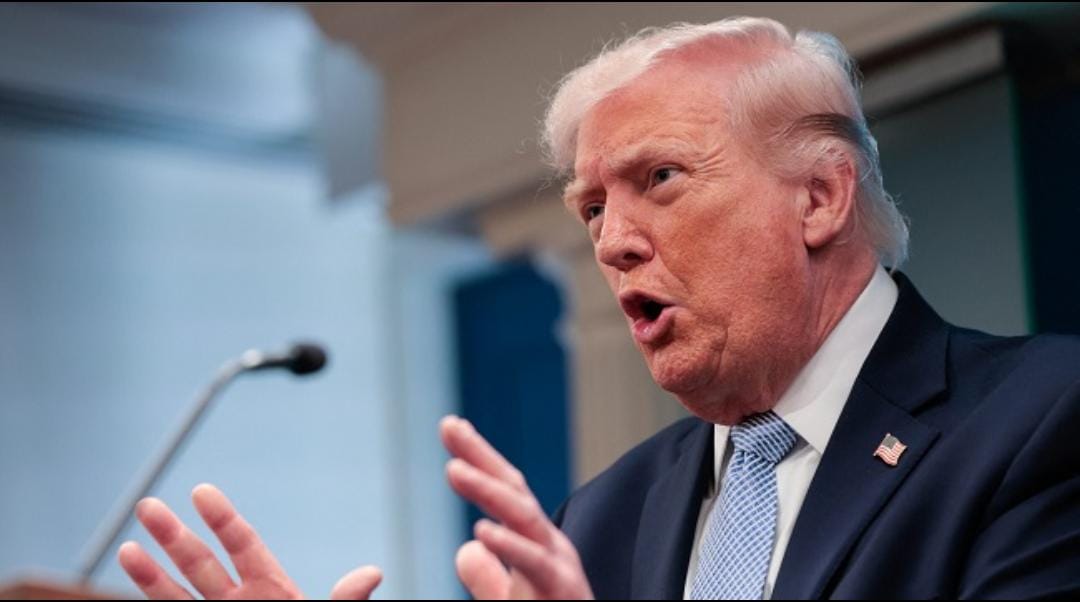
The waiver was announced by Scott Bessent, who said the move is intended to stabilise global energy markets during the ongoing conflict involving Iran, Israel, and the United States. Bessent on X said today’s morning “President Trump’s energy agenda has resulted in oil and gas production reaching the highest levels ever recorded.”
He further stated “To enable oil to keep flowing into the global market, the Treasury Department is issuing a temporary 30-day waiver to allow Indian refiners to purchase Russian oil.” This deliberately short-term measure will not provide significant financial benefit to the Russian government as it only authorizes transactions involving oil already stranded at sea.
In his post on X he emphasized on India’s relations with US by stating “India is an essential partner of the United States, and we fully anticipate that New Delhi will ramp up purchases of U.S. oil. This stop-gap measure will alleviate pressure caused by Iran’s attempt to take global energy hostage.”
“According to the U.S. Department of the Treasury, its Office of Foreign Assets Control (OFAC) issued a Russia-related licence authorising the delivery and sale of crude oil and petroleum products of Russian origin that were loaded on vessels as of March 5, 2026, specifically for shipment to India.”
The authorisation permits transactions including those involving vessels previously affected by sanctions regimes until April 3, 2026.
Temporary Measure to Stabilise Energy Markets
In a statement posted on X, Bessent said the decision aligns with the energy agenda of Donald Trump, which aims to maintain steady global oil flows.
He described the waiver as a short-term, stop-gap measure, emphasising that it only allows the sale of Russian oil already stranded at sea and therefore will not significantly benefit the Russian government.
Bessent also highlighted India’s importance to Washington, calling it “an essential partner of the United States.” He added that the US expects New Delhi to increase imports of American oil in the near future.
Sanctions and India’s Russian Oil Imports
The waiver comes months after the Trump administration imposed sanctions on major Russian oil companies Lukoil and Rosneft in November 2025, as part of pressure on Russia over its invasion of Ukraine.
Following those sanctions, India’s imports of Russian crude declined to around 1.1 million barrels per day in January 2026, the lowest level since November 2022. Russia’s share of India’s total crude imports fell to 21.2%, although it rebounded to about 30% in February, according to industry data.
Middle East Conflict Driving Oil Price Volatility
Global oil markets are under pressure due to escalating conflict in the Middle East. Production across the region has been disrupted following strikes on major energy infrastructure, while Strait of Hormuz a critical maritime chokepoint handling nearly 20% of the world’s oil supply has been blockaded by Iran.
Major facilities affected include the Ras Tanura Refinery operated by Saudi Aramco in Saudi Arabia, and the Rumaila Oil Field in Iraq. The ongoing conflict between the United States and Israel against Iran has driven up global oil prices, with Brent crude rising to $83.07 per barrel.
No Immediate Fuel Price Hike in India
Despite the rise in international crude prices, sources indicated that petrol and diesel prices in India are unlikely to be increased for now, offering temporary relief to consumers.
Yeh article aapko kaisa laga?