
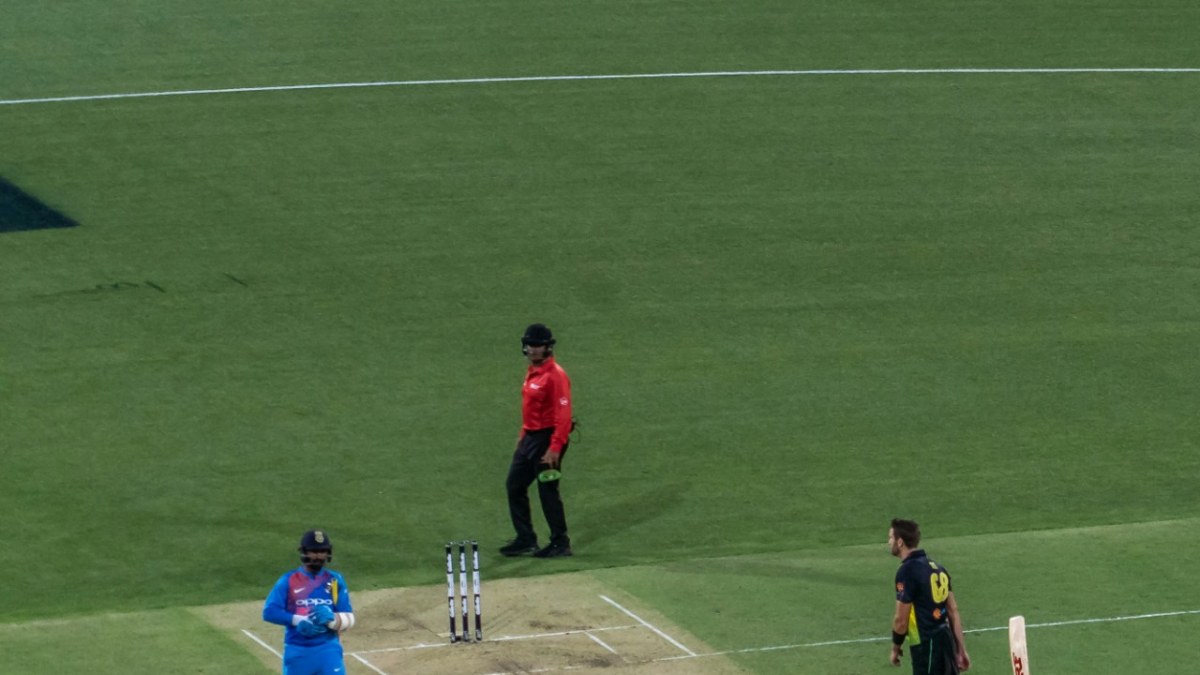
Photo: Mudassir Ali on Unsplash
I Written by Hency Kushwah I
When the Game Looks Perfect, Too Perfect
The Indian Premier League is not just a cricket tournament. It is a billion-dollar spectacle where sport, entertainment, business, and politics intersect. Packed stadiums, celebrity owners, and global broadcasting have turned it into one of the most valuable sporting leagues in the world.
But beneath this glitter lies a shadow that refuses to disappear allegations of match-fixing, spot-fixing, and illegal betting networks. Every few years, a controversy resurfaces, reminding viewers that the line between sport and manipulation is thinner than it appears.
The 2013 Turning Point: When the Scandal Became Public
The biggest dent to the IPL’s credibility came in 2013, when players like S. Sreesanth were arrested for spot-fixing. The scandal did not stop at players. It reached team officials, bookmakers, and franchise owners.
The involvement of individuals linked to franchises such as Chennai Super Kings and Rajasthan Royals shook the foundation of the league. The fallout was severe teams were suspended, officials banned, and the governance structure of Indian cricket came under scrutiny. This moment exposed something critical: fixing was not an isolated act. It was part of a network.
Understanding Match-Fixing vs Spot-Fixing
To understand the issue, one must distinguish between match-fixing and spot-fixing.
Match-fixing involves manipulating the result of the entire game. Spot-fixing, however, is more subtle and more dangerous. It involves fixing small, seemingly insignificant moments like a no-ball, a wide, or a number of runs in a specific over. Why is spot-fixing harder to detect? Because the overall result of the match may still appear genuine. The manipulation happens in fragments, making it difficult to prove intent.
This is where betting syndicates operate most effectively. They don’t need to control the entire match just moments within it.
The Betting Nexus: Cricket Meets Underground Economy
Illegal betting is the backbone of match-fixing. In India, betting on cricket is largely illegal, but that has not stopped it from flourishing. A massive underground network of bookmakers operates across cities, often with links to international syndicates. These networks handle transactions worth thousands of crores during IPL seasons. The problem is not just illegality it is lack of regulation. Because betting is not fully legalised and monitored, it operates in secrecy, making it easier for corruption to thrive.
Many experts argue that regulated betting could reduce illegal activity. But others warn that legalisation may simply expand the scale of the problem.
Role of Players, Insiders, and Pressure Points
Match-fixing does not begin with players it begins with access. Young or financially insecure players are often targeted first. They are approached through intermediaries, offered money, and gradually drawn into the network. Once involved, they are vulnerable to blackmail.
But the system is not limited to players. Team insiders, support staff, and even individuals connected to management can become part of the chain. The IPL’s structure with frequent matches, high stakes, and intense pressure creates multiple points where manipulation can occur without immediate detection.
Legal and Institutional Response: Strong Laws, Weak Enforcement?
India has laws dealing with cheating, fraud, and criminal conspiracy, but there is no dedicated legislation specifically addressing match-fixing in sports. Committees like the Justice Lodha Committee were formed to reform cricket governance after the 2013 scandal. Recommendations included structural changes, conflict-of-interest rules, and transparency measures.
While reforms have been implemented, enforcement remains a challenge. Investigations are complex, evidence is difficult to gather, and proving intent beyond reasonable doubt is often nearly impossible.
The Credibility Crisis: Can Fans Still Trust the Game?
The biggest casualty of match-fixing is not just the integrity of the sport it is the trust of the audience. Cricket in India is not merely entertainment. It carries emotional, cultural, and national significance. When fans begin to question whether what they are watching is genuine, the damage goes beyond one tournament. Each controversy leaves behind a lingering doubt. Was that dropped catch a mistake or something else? Was that no-ball accidental or planned?
Once suspicion enters the game, it is hard to remove.
The Way Forward: Reform or Recurrence?
The IPL continues to grow despite controversies. Its commercial success shows that the league remains resilient. But resilience is not the same as credibility. Stronger monitoring systems, stricter anti-corruption units, better player education, and possibly a regulated betting framework are often suggested as solutions. However, none of these can fully eliminate the problem.
Because match-fixing is not just a legal issue it is a systemic one. It thrives where money, secrecy, and opportunity intersect.
Conclusion: A Game Bigger Than the Game
The IPL represents modern cricket fast, glamorous, and immensely profitable. But it also represents the risks that come with that scale. The question is no longer whether corruption exists. It is whether the system is strong enough to prevent it or merely react after the damage is done.
Because in the end, the real contest is not between two teams on the field. It is between the integrity of the sport and the forces that seek to control it.
Yeh article aapko kaisa laga?