
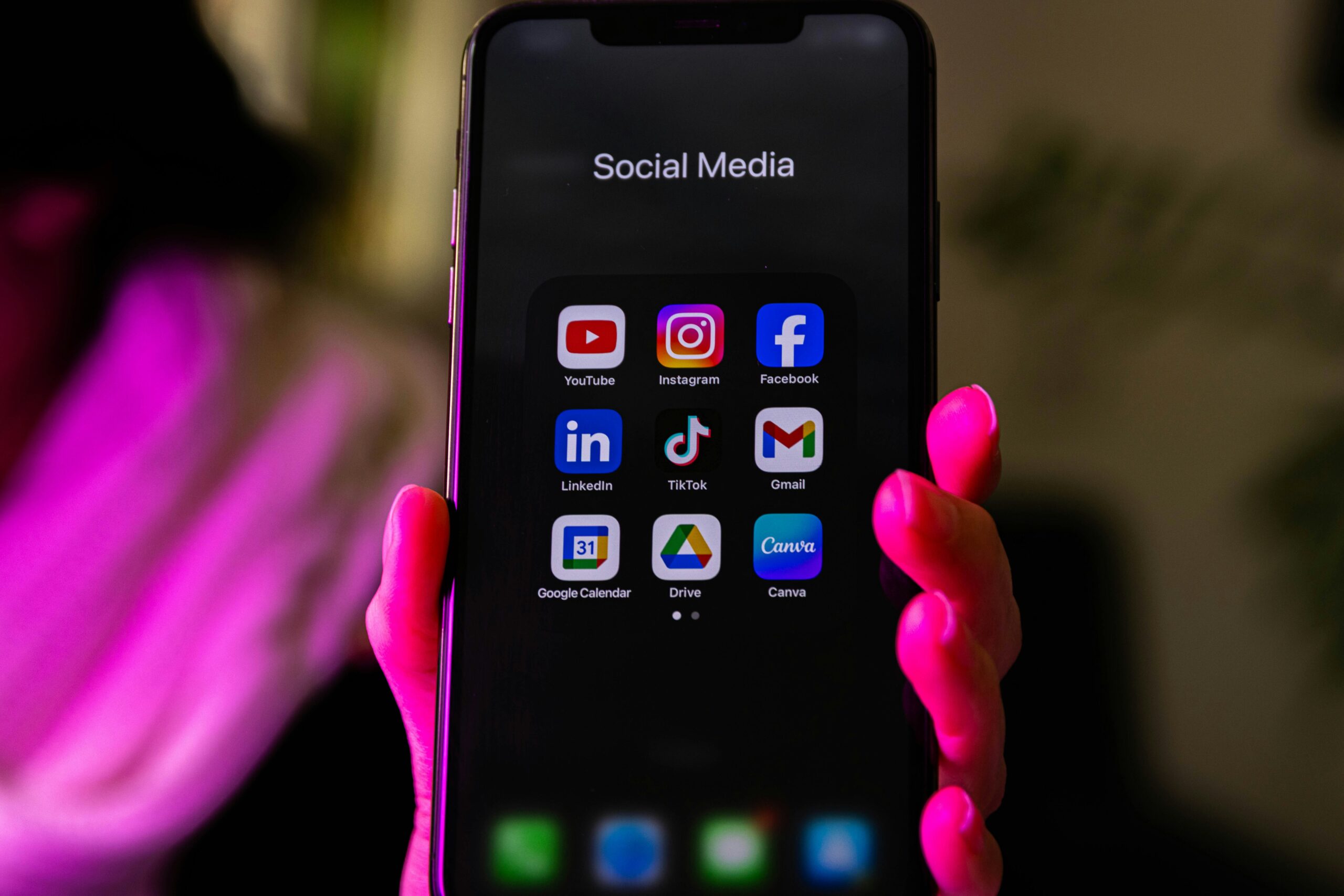
Photo by dlxmedia.hu on Unsplash
|Author: Hency Kushwah|
During the state’s recent budget presentation, Chief Minister Siddaramaiah announced that the government is considering restrictions on social media use for children below the age of 16. The proposal, still in its early stages, is framed as an attempt to protect young people from the growing harms of digital addiction, cyberbullying and mental health distress linked to excessive online exposure. If implemented, Karnataka could become the first Indian state to attempt such a sweeping limitation on teenagers’ access to social media platforms.
But the proposal has also triggered a much larger conversation about digital freedom, constitutional rights and whether governments can realistically regulate how young people interact with the internet.
The Mental Health Argument
The state government’s reasoning is rooted in concerns about adolescent mental health. Over the past decade, researchers across the world have increasingly linked excessive social media use with anxiety, depression, sleep disruption and declining attention spans among teenagers. Social media platforms are designed to keep users engaged through endless scrolling, algorithm-driven content feeds and instant feedback mechanisms such as likes and comments. For adolescents navigating identity, peer pressure and self-image, this environment can quickly become overwhelming. Educators and psychologists have also raised concerns about rising cyberbullying incidents and exposure to explicit or harmful content online.
From the government’s perspective, the policy is a preventive measure: if children cannot legally drive or vote until a certain age, limiting their access to potentially harmful digital spaces may also be justified.
A Generation Raised Online
Yet the scale of the issue makes regulation extremely complex. India has hundreds of millions of social media users, and teenagers form a large part of that digital ecosystem. For many young people, social media is not merely entertainment it is where friendships form, interests develop and cultural trends spread.
A typical teenager today uses social platforms to share photos, watch tutorials, follow influencers or simply stay connected with friends after school. Removing access to these spaces could fundamentally alter how young people communicate and socialize. This raises a critical question: can a government realistically regulate something that has become so deeply embedded in daily life?
The Enforcement Problem
Even if the government proceeds with the proposal, enforcing it will be far from simple. Age verification remains one of the biggest challenges in digital regulation. Most social media platforms currently rely on self-declared age information, which can easily be manipulated.
Introducing stricter verification systems such as ID-based authentication would raise privacy concerns and technical difficulties. Meanwhile, tech-savvy teenagers could potentially bypass restrictions using alternative accounts or virtual private networks. Without a clear enforcement framework, the proposal risks becoming difficult to implement in practice.
The Legal Question
Beyond the technical challenges lies a deeper legal issue.
Internet regulation in India largely falls under the authority of the Union government through laws such as the Information Technology Act. A state-level restriction on social media use could therefore invite constitutional scrutiny over whether Karnataka has the legislative competence to impose such rules.
There are also questions surrounding freedom of expression. While minors do not enjoy the full scope of adult rights, courts have recognized that young people still possess constitutional protections, including elements of free speech.
Any sweeping restriction on digital access could eventually be tested against these constitutional principles.
Industry Pushback and Global Trends
Technology companies have also expressed concern about such bans.
Industry representatives argue that restricting access to mainstream platforms could push teenagers toward less regulated digital spaces where monitoring harmful content becomes even more difficult.
At the same time, Karnataka’s proposal reflects a growing global trend. Countries including France, Australia and Spain have begun debating similar measures aimed at limiting children’s exposure to addictive digital environments.
These debates reflect a broader shift in how governments are approaching the regulation of social media and its influence on young users.
A Debate Bigger Than One State
For now, the Karnataka proposal remains under discussion and detailed implementation guidelines have not yet been released.
But the announcement has already sparked a nationwide conversation about the role of the state in regulating the digital lives of young people. At its core, the issue is not just about teenagers and social media. It is about the evolving relationship between technology, freedom and governance.
As governments attempt to respond to the mental health challenges of the digital age, they face an uncomfortable dilemma.
How far should the state go to protect young users from the risks of the online world?
And when does protection begin to look like control?
Yeh article aapko kaisa laga?