
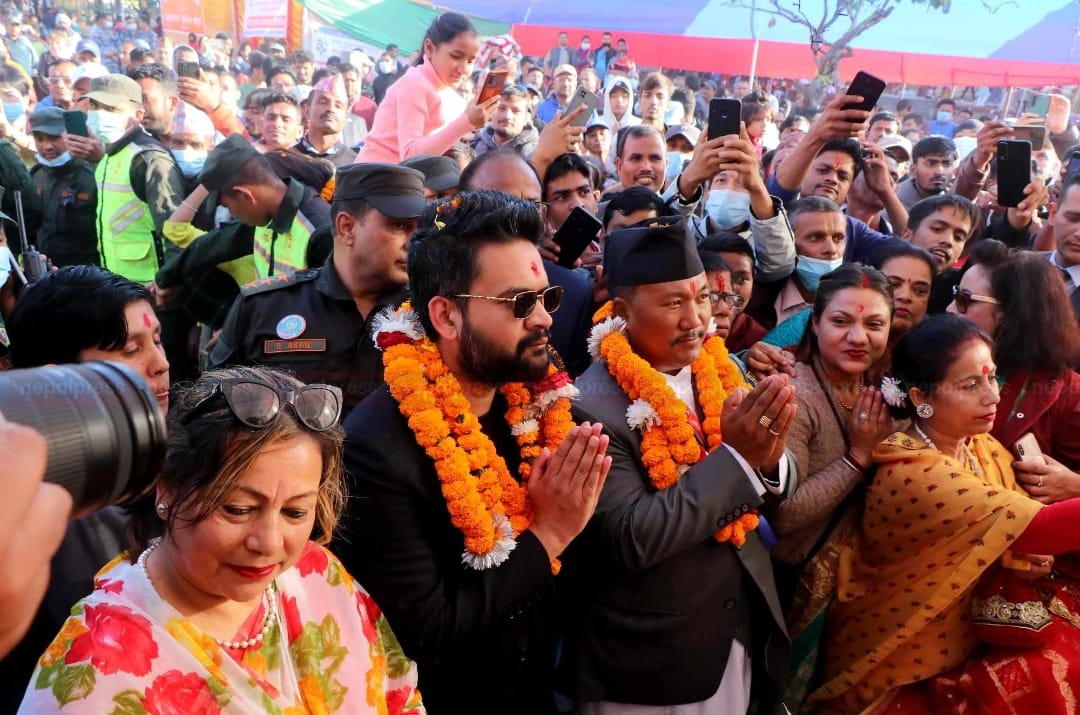
Photo: X/ShahBalen
Nepal is currently experiencing a massive political transition. Balendra “Balen” Shah, a 35-year-old structural engineer and former hip-hop artist, has successfully led his party to a historic victory. Relying on the support of young voters and digital campaigning, he has unseated the traditional political establishment. This election marks the beginning of a youth-led nation, but it also raises serious questions about whether this new generation is prepared for the harsh realities of national governance.
For decades, the political landscape of Nepal was controlled by a small group of veteran politicians. The same leaders routinely swapped alliances and rotated through the Prime Minister’s office, while the broader population struggled with economic stagnation. However, the results of the March 2026 general elections have fundamentally changed this reality.
The Shift in Political Power
To understand the scale of this generational shift, one must look at the election data. Balen, running as the face of the Rastriya Swatantra Party (RSP), directly challenged the traditional power structures. He contested the election from the Jhapa-5 constituency, which has long been the political stronghold of 74-year-old former Prime Minister K.P. Sharma Oli.
The results were unprecedented. Balen secured over 68,000 votes, defeating the veteran politician by a margin of nearly 50,000 votes. This pattern repeated across the country, with the RSP securing a commanding majority in the parliament. As a result, Balen is set to become the youngest Prime Minister in Nepal’s history. This victory clearly demonstrates that the traditional voting blocks have been broken, replaced by a younger demographic demanding immediate change.
A Campaign Driven by Digital Organization
This historic change in leadership was not built through traditional political methods. It was heavily driven by grassroots organization and digital platforms.
The foundation for this victory was laid in September 2025, when Nepal saw widespread, youth-led protests. The citizens were frustrated by systemic corruption, a lack of job opportunities, and an economy that forced millions of young Nepalis to migrate to the Middle East for basic labor. When the previous government attempted to limit these protests by restricting social media access, the younger generation simply organized more efficiently online.
Unlike traditional political parties that rely on massive funding and physical rallies, this youth-led movement ran a highly digital campaign. They used social media to bypass the traditional media channels, speaking directly to voters about their daily economic struggles. The youth proved that digital unity could overpower decades of established political influence.
The Critique: Moving from Campaigns to Governance
While the election results are historic, it is necessary to critically analyze the future. Successfully running a political campaign against the establishment is very different from managing a national government.
Balen built his public image on an anti-establishment message and a very controlled public relations strategy. However, public relations cannot fix a broken economy. Critics have raised valid concerns about the new government’s lack of administrative experience. Nepal faces severe challenges, including high youth unemployment, inflation, and a significant brain drain.
Furthermore, the new youth-led government must navigate complex international diplomacy. Nepal is strategically located between two massive global powers: India and China. The new administration will have to negotiate trade deals and balance international pressures without compromising the country’s economic independence. The public will soon see if a leadership built on popular youth support can handle the quiet, complex, and often frustrating work of drafting national policy..
Conclusion
The victory of Balen Shah is a clear message that the youth of Nepal will no longer accept the status quo. They have successfully retired a generation of politicians who failed to improve the national economy. However, replacing the old guard is only the first step. The new, 35-year-old Prime Minister must now prove that this youth-led movement possesses the administrative skills, economic understanding, and diplomatic patience required to govern a sovereign nation effectively.
Do you believe a government led primarily by young, first-time politicians has the necessary experience to stabilize a struggling national economy? Share your perspectives in the comments below!
Yeh article aapko kaisa laga?