
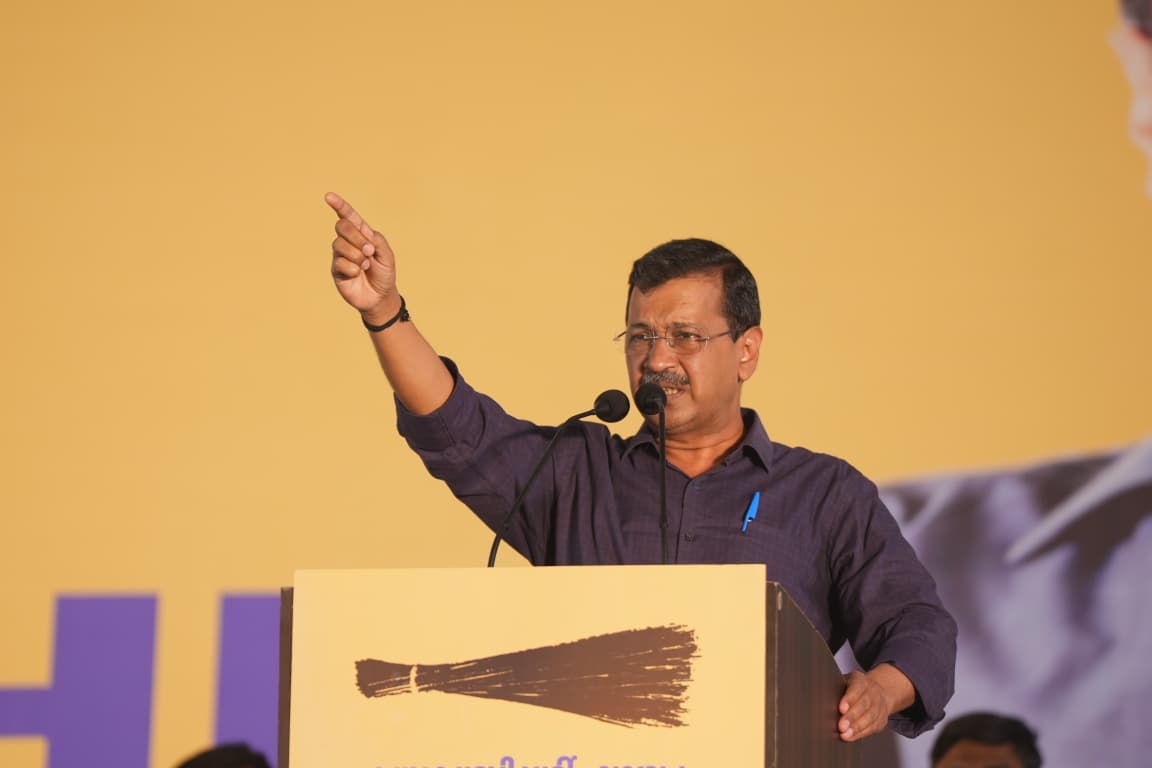
Photo: X/ArvindKejriwal
On March 9, 2026, the High Court formally paused the trial court’s adverse observations against the CBI and its Investigating Officer and sent notice to the accused.
| Written by Ahad Khan |
Recently, a Special Trial Court discharged former Delhi Chief Minister Arvind Kejriwal, Manish Sisodia, and 21 others in the Central Bureau of Investigation’s (CBI) excise policy case. However, the Delhi High Court has now intervened, staying the trial court’s critical remarks against the investigating agency.
The High Court’s Observations
In its detailed 598-page order, the trial court had discharged the accused, labeling the CBI’s investigation as “speculative” because it relied heavily on uncorroborated statements from approvers. The trial court even ordered a departmental inquiry against the Investigating Officer.
However, Justice Swarana Kanta Sharma of the Delhi High Court raised significant legal concerns regarding this approach. The High Court’s primary insights include:
The High Court noted that the trial court’s deep evaluation and rejection of witness statements at the preliminary stage of framing charges appeared “prima facie erroneous.”
The court stated that ordering a departmental inquiry against an Investigating Officer before the evidence is fully tested in a trial is “foundationally misconceived.”
To ensure legal consistency, the High Court directed the trial court to postpone all hearings in the connected Enforcement Directorate (ED) money-laundering case until the High Court decides on the CBI’s current plea.
The Rule of Framing Charges
The central legal friction in this case revolves around the limits of a judge’s power at the charge-framing stage.
The CBI, represented by the Solicitor General, argued that the trial court essentially conducted a “mini-trial.”
Under established criminal procedure, statements recorded by an approver carry legal weight when a court is simply deciding whether to frame charges. The law dictates that the absolute truth or reliability of these statements must be tested later, during the actual trial, through the process of cross-examination.
By rejecting these statements upfront and discharging the accused before cross-examination could occur, the CBI argued that the trial court bypassed standard legal procedure, effectively delivering an acquittal without a trial.
What Happens Next?
The legal proceedings have now shifted to a higher judicial level. The High Court has issued formal notices to Arvind Kejriwal, Manish Sisodia, and the other discharged individuals, requiring them to submit their legal responses by March 16.
This case is no longer just about the Delhi Excise Policy; it has become a significant procedural test regarding the correct application of evidence and the strict boundaries a trial court must observe before a trial officially commences.
Yeh article aapko kaisa laga?