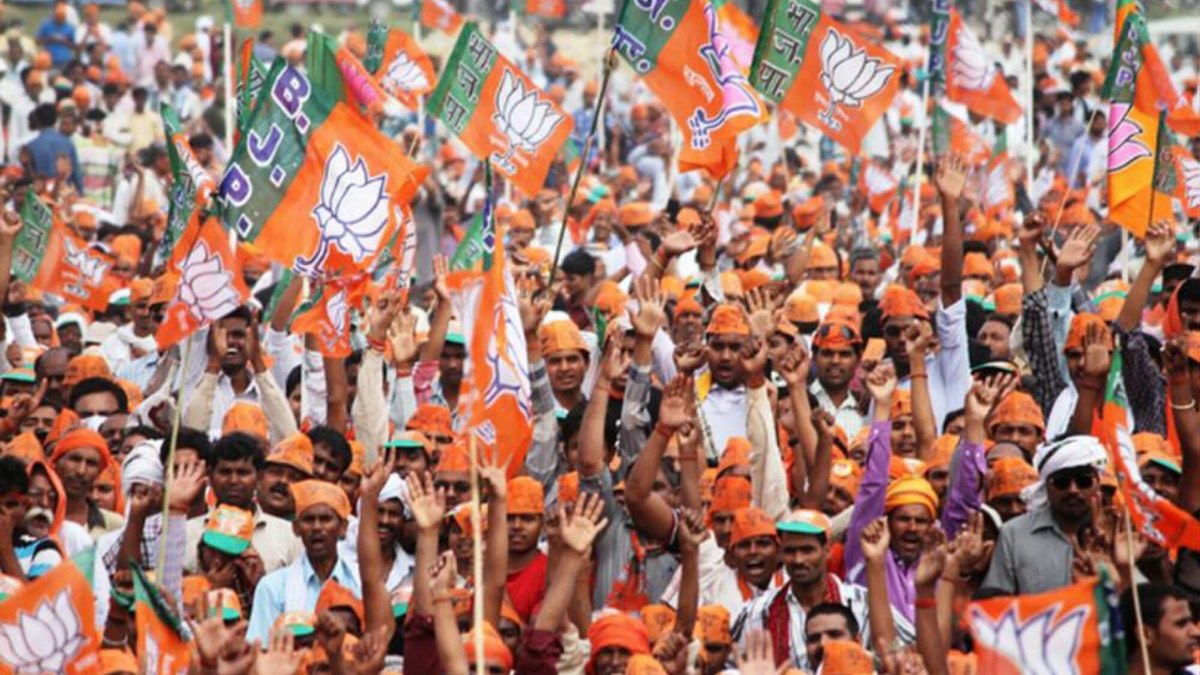
As the heat of the Indian summer intensifies in March 2026, so does the political temperature across the subcontinent.
The Election Commission of India (ECI) having officially sounded the poll bugle on March 15, the nation is currently in the throes of a high-stakes democratic exercise. The 2026 Assembly Elections are not merely local contests; they represent a critical litmus test for the ruling National Democratic Alliance (NDA) and the opposition INDIA bloc, particularly in the cultural and economic powerhouses of West Bengal and the Southern states of Tamil Nadu, Kerala, and the Union Territory of Puducherry.
The Bengal Cauldron: Trinamool’s Fortress vs. BJP’s Surge
In West Bengal, the political landscape remains as polarized and passionate as ever. The elections for the 294-seat Assembly are being conducted in two intense phases April 23 and April 29.
Chief Minister Mamata Banerjee, seeking a fourth consecutive term, continues to lean heavily on her “Ma, Mati, Manush” (Mother, Land, People) slogan and a robust portfolio of social welfare schemes. However, the Bharatiya Janata Party (BJP), led by Suvendu Adhikari, has mounted a formidable challenge, focusing its campaign on issues of governance and anti-incumbency. Bengal’s election is rarely just about policy; it is a battle of cultural identities. While the Trinamool Congress (TMC) frames itself as the ultimate guardian of Bengali pride (Bangaliana), the BJP is attempting to breach the “Final Frontier” of the East by consolidating a diverse voter base.
The Southern Sentinel: Tamil Nadu’s Dravidian Tug-of-War
Moving south to Tamil Nadu, the April 23 single phase election for 234 seats is witnessing a fascinating evolution of the traditional Dravidian duopoly. Chief Minister M.K. Stalin and his DMK-led Secular Progressive Alliance are campaigning on their “Dravidian Model” of development.
The opposition is more fragmented than in previous years. The AIADMK, having recently finalized its candidate lists, is fighting to reclaim its legacy. However, a significant “X-factor” in 2026 is the emergence of new political actors and shifting alliances. With the BJP making aggressive inroads under state leadership and the entry of cinema-icons turned politicians, the ideological purity of Dravidian politics is being tested by a more multi polar contest.
Kerala’s Quest for Continuity
In Kerala, history is often the biggest opponent. Traditionally, the state oscillates between the Left Democratic Front (LDF) and the United Democratic Front (UDF). However, having broken that tradition in 2021, the LDF under Pinarayi Vijayan is now aiming for an unprecedented “three-peat” in the April 9 polls for the 140 seat Assembly.
The UDF, led by the Congress, is banking on a revitalized grassroots campaign to swing the pendulum back in their favor. Meanwhile, the NDA is hoping to transition from a “spoiler” role to a legitimate third force, focusing on specific urban pockets and religious demographics. Kerala’s high literacy and politically conscious electorate make this a battle of nuanced manifestos, ranging from the state’s debt crisis to its globally recognized healthcare successes.
Puducherry: The Microcosm of National Rivalry
Though small with only 30 elected seats, the Puducherry election on April 9 serves as a fascinating mirror to national trends. The contest is a direct face off between the ruling AINRC-BJP coalition and the DMK-Congress alliance. In a territory where personal charisma often outweighs party ideology, the 2026 race is tight, with seat-sharing agreements being finalized just days before the nomination deadlines.
Conclusion: The Road to May 4
The 2026 elections represent more than 800 legislative seats; they represent the soul of regional India. From the tea gardens of North Bengal to the coastal belts of Kanyakumari, the issues remain diverse employment, federalism, and social justice.
As the Model Code of Conduct governs the streets and digital rallies dominate the screens, all eyes are now fixed on May 4, 2026. On that day, the counting of hundreds of millions of votes will decide if the current regional heavyweights can hold their ground or if a new political dawn is beginning to rise over the Ganges and the Ghats alike.
Yeh article aapko kaisa laga?