 Anshika Chauhan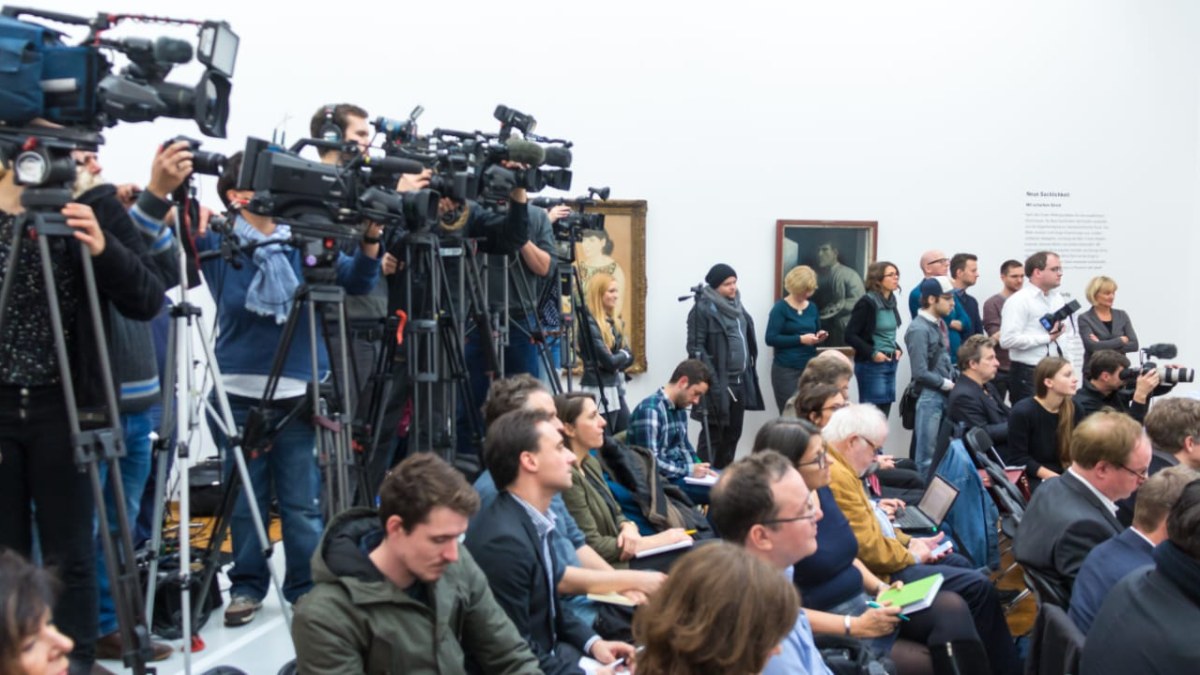
Photo: Pressekonferenz zum Amtsantritt von Henriette Reker als Oberbürgermeisterin von Köln Foto:Fernsehkameras und Journalisten bei der Arbeit
By Staff Reporter | April 2026
India’s democratic framework is facing renewed scrutiny as concerns mount over the state of press freedom and the safety of journalists. A combination of targeted violence, systemic impunity, and increasing state pressure has raised alarms among global watchdogs and rights groups.
According to the Reporters Without Borders, India ranked 161st out of 180 countries in the 2023 Press Freedom Index, an indicator that reflects a steady decline in media independence and safety. The organization has gone so far as to describe the current environment as an “unofficial state of emergency” for the press.
Rising Toll: Journalists Killed with Little Justice
Recent years paint a troubling picture. Between 2014 and early 2024, at least 28 to 30 journalists were killed in India, many while pursuing investigative stories that exposed powerful interests.
Many of these journalists were reporting on high-risk beats such as:
• Illegal mining operations
• Land mafias and forced land acquisitions
• Environmental crimes and corruption
• These areas frequently involve powerful local networks, making journalists especially vulnerable.
Culture of Impunity
Perhaps the most alarming aspect is the near-total lack of accountability. Reports suggest that 96% of journalist murder cases between 2006 and 2023 resulted in no convictions. This culture of impunity not only denies justice but also emboldens perpetrators and discourages investigative journalism.
The Rights and Risks Analysis Group has repeatedly highlighted the systemic failure to protect media professionals, calling for urgent legal and institutional reforms.
Harassment, Legal Pressure, and Digital Abuse
• Beyond physical violence, journalists especially those critical of authorities face a wide spectrum of intimidation tactics:
• Criminal charges, including under stringent laws like anti-terror legislation
• Police questioning and surveillance
• Coordinated online harassment campaigns
• Women journalists are disproportionately targeted, often facing gendered abuse and threats on social media platforms.
A 2022 report documented 194 cases of journalists being targeted, with:
• 103 cases involving state actors
• 91 involving non-state actors
• This dual threat environment underscores the shrinking space for independent journalism.
High-Risk Regions
Certain regions in India present heightened dangers for reporters. Areas such as:
• Jammu and Kashmir
• Chhattisgarh and other central states
Are marked by conflict, insurgency, or resource-based disputes. Journalists working in these regions often face a combination of physical danger, legal scrutiny, and surveillance.
Notable Cases That Shook the Nation
Several high-profile killings have brought attention to the issue:
• Gauri Lankesh (2017): A prominent journalist and outspoken critic of extremism, she was shot dead outside her home in Bengaluru, sparking nationwide protests.
• Shashikant Warishe (2023): A journalist from Maharashtra who was allegedly run over by an SUV driven by a land broker he had reported on, highlighting the risks tied to local investigative reporting.
• Mukesh Chandrakar (2025): A journalist from Chhattisgarh known for reporting on corruption and local governance issues, whose killing further highlighted the dangers faced by reporters working in sensitive regions.
A Democratic Challenge
The deteriorating conditions for journalists raise fundamental questions about democratic accountability in India. A free press is widely regarded as a cornerstone of democracy, yet the current climate suggests increasing constraints on media independence.
Experts argue that without meaningful reforms ranging from stronger legal protections to faster judicial processes the risks to journalists will persist, further eroding public trust and transparency.
The Road Ahead
As India continues to assert itself on the global stage, the condition of its press remains a critical measure of its democratic health. Addressing violence, ensuring accountability, and safeguarding journalistic freedom will be essential steps toward restoring confidence in the system.
Until then, for many journalists across the country, the pursuit of truth remains a dangerous endeavor.