
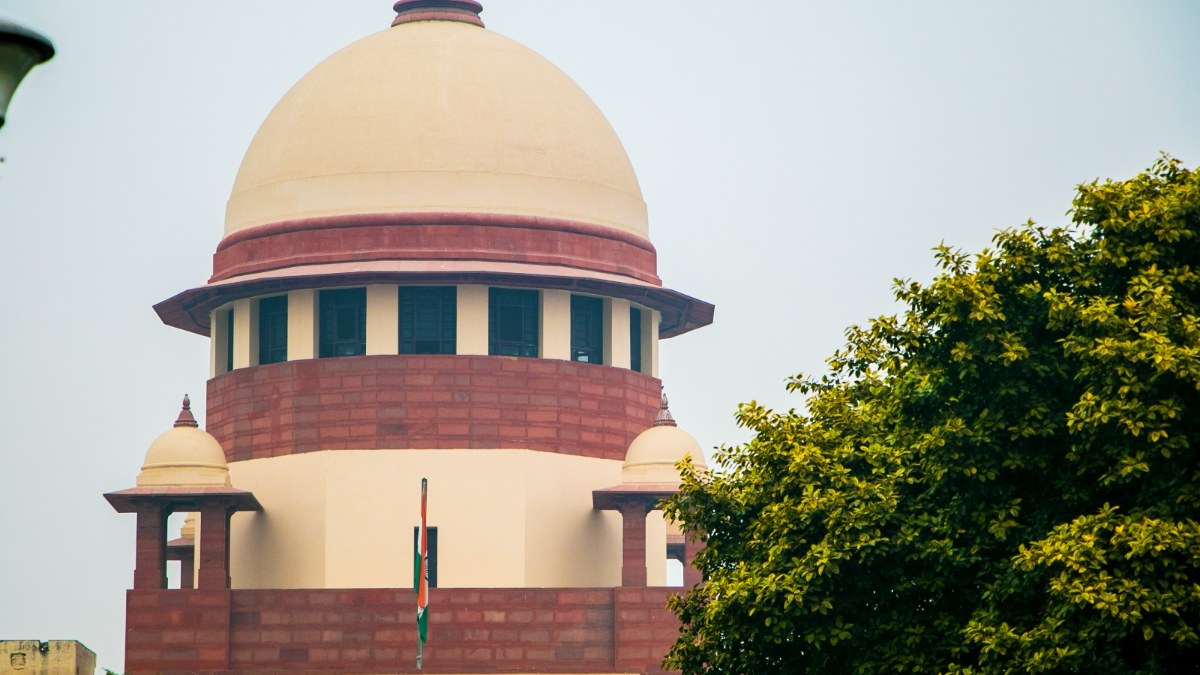
Photo: Subhashish Panigrahi, CC BY-SA 4.0
At the 45th JP Memorial Lecture organized by the People’s Union for Civil Liberties, former Supreme Court judge Abhay Shreeniwas Oka delivered a deeply reflective and candid critique of the Indian judicial system. His address raised pressing concerns about whether the judiciary has truly lived up to the aspirations embedded in the Constitution and, more importantly, in the expectations of ordinary citizens.
Justice Oka’s remarks prompt a fundamental question: Has the Indian judiciary fulfilled its role as the ultimate guardian of justice, or is there a widening gap between constitutional ideals and lived realities?
A Reality Check on Judicial Confidence
Justice Oka began by questioning the judiciary’s tendency toward self-assessment. While courts and legal professionals often express confidence in the system, he argued that such validation should not come from within. Instead, he emphasized, the true measure of public trust must come from litigants and citizens who directly interact with the system.
This raises an important concern: Can a system fairly evaluate itself, or does genuine accountability require external voices and experiences to be heard?
He pointed out that for many citizens, especially those engaged in prolonged litigation, the experience of justice is often marked by delays, uncertainty, and procedural complexity. This disconnect between institutional confidence and public perception, he suggested, needs urgent attention.
Unfulfilled Constitutional Aspirations
Referring to the foundational ideals of justice, social, economic, and political, Justice Oka noted that these promises remain only partially realized. While the Constitution envisions an equitable society, the reality on the ground often falls short.
This naturally leads to a critical question: What does “justice” truly mean if it is not accessible, timely, and effective for all sections of society?
Justice Oka stressed that delivering justice is not merely about pronouncing judgments but ensuring that they are meaningful, timely, and capable of addressing real-world challenges. Without efficiency and accessibility, even the most progressive constitutional ideals risk becoming symbolic rather than substantive.
Reimagining Personal Liberty Under Article 21
A particularly thought-provoking segment of his speech focused on the evolving interpretation of personal liberty under Article 21. Traditionally associated with issues like bail and detention, Justice Oka argued that the scope of liberty must expand to reflect contemporary challenges.
He highlighted environmental degradation as a critical threat to personal liberty. Pollution, deforestation, and the destruction of ecosystems such as mangroves, he argued, directly impact human life and dignity.
This invites a broader reflection: Should environmental protection be seen not just as a policy concern, but as a fundamental rights issue?
And further: Can a citizen truly enjoy liberty in a degraded environment that threatens health and survival?
By linking environmental concerns to constitutional rights, Justice Oka underscored the need for a more holistic understanding of liberty in the modern era.
Structural Deficiencies: A System Under Strain
Justice Oka did not shy away from highlighting systemic challenges within the judiciary. One of the most pressing issues he identified was the inadequate judge-to-population ratio. Despite a 2002 directive recommending 50 judges per million people, the current figure remains around 22–23.
In comparison to developed nations with significantly higher ratios, this shortfall raises an urgent question: Can justice be delivered efficiently when the system itself is understaffed and overburdened?
He also pointed to infrastructural gaps, using Maharashtra as an example. Although thousands of trial court positions have been sanctioned, many lack basic facilities and support systems.
This leads to another critical inquiry: Is appointing judges enough, or must equal emphasis be placed on building the infrastructure that enables them to function effectively?
Justice Oka emphasized that providing adequate infrastructure is not optional, it is a fundamental responsibility of the state.
The Mounting Burden of Litigation
The issue of judicial backlog remains one of the most visible challenges. Justice Oka highlighted that magistrate courts in cities like Mumbai handle an overwhelming number of cases daily often between 100 and 150.
A significant proportion of these cases involve cheque-bouncing disputes under Section 138 of the Negotiable Instruments Act, alongside criminal and matrimonial matters.
This raises a practical concern: Why does the system continue to be flooded with cases that could potentially be resolved through alternative mechanisms?
Justice Oka suggested that better regulatory frameworks and dispute-resolution systems could prevent a large portion of such litigation. This, in turn, would allow courts to focus on more complex and serious matters.
Justice Beyond Courtrooms: The Socio-Economic Dimension
Expanding the discussion beyond court procedures, Justice Oka drew attention to the socio-economic realities that influence access to justice. He highlighted housing insecurity as a major issue, particularly in urban areas where the lack of affordable housing forces many into informal settlements.
These living conditions often lead to legal disputes and raise fundamental rights concerns, especially under Article 21.
This observation prompts a deeper question: Can justice be truly achieved without addressing the socio-economic inequalities that shape people’s lives?
Justice Oka’s remarks suggest that the judiciary cannot operate in isolation from broader societal challenges. Issues like housing, environment, and economic disparity are intrinsically linked to the concept of justice.
A Call for Meaningful Reform
Despite his critical analysis, Justice Oka acknowledged that the judiciary continues to produce landmark judgments that inspire confidence. However, he emphasized that isolated successes cannot overshadow systemic inefficiencies.
He called for a focused approach to reform one that identifies root causes rather than merely addressing symptoms.
This leads to perhaps the most important question of all: What kind of reforms are needed to transform the judiciary into a system that is not only fair in principle but effective in practice?
Conclusion
Justice A.S. Oka’s address serves as both a critique and a call to action. It highlights the urgent need for a judiciary that is more responsive, better resourced, and aligned with the realities faced by citizens.
Ultimately, his reflections compel us to ask: Is the Indian judiciary ready to bridge the gap between constitutional promise and judicial reality or will that gap continue to widen?
His words underscore a simple yet powerful truth: justice must not only exist in law, it must be experienced in everyday life.
Yeh article aapko kaisa laga?