 Ahad Khan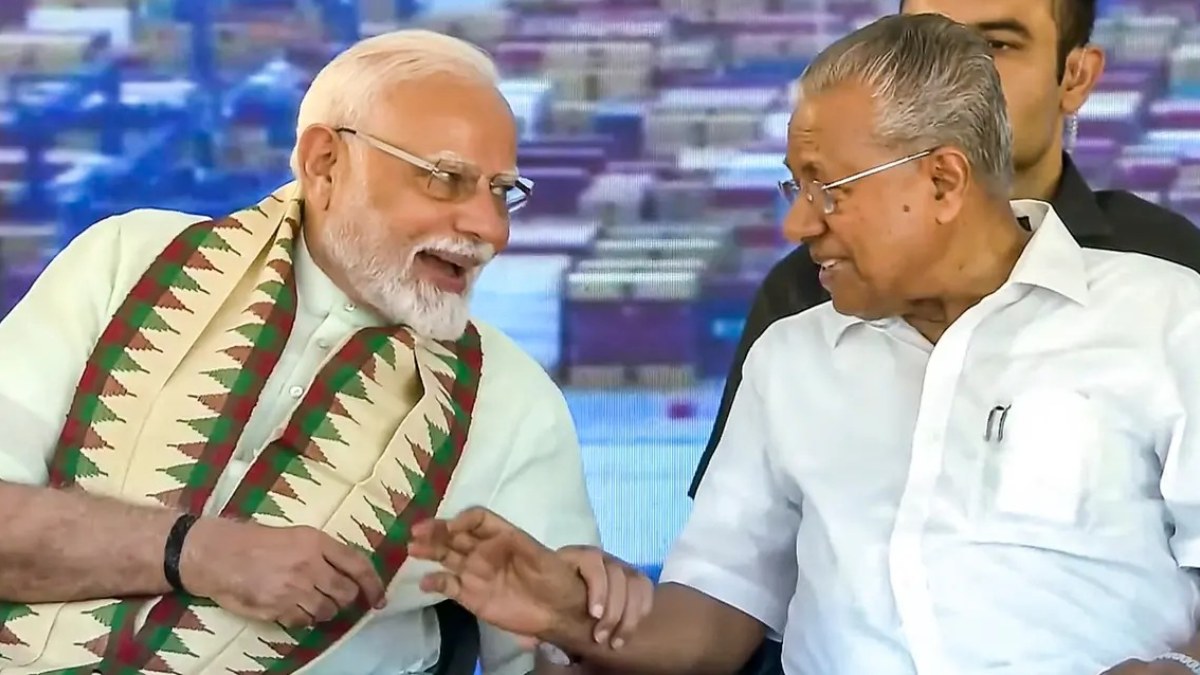
Photo: Narendra Modi and Pinarayi Vijayan at Thiruvananthapuram, C R Sam, CC BY-SA 4.0
When the Indian Parliament unanimously passed the Women’s Reservation Bill in September 2023, the ruling Bharatiya Janata Party presented it as a massive victory for women’s rights. Fast forward to April 2026, and that beautiful promise has turned into a brutal political fight. The current debate is no longer just about giving women a voice.
Political experts and opposition leaders are warning that the BJP is reviving this law to run a highly calculated strategy for the 2029 general elections. In response, the Indian National Congress has launched a massive campaign to expose what they call a deceptive plan designed to permanently rewrite India’s election map.
Strategy to Control the Election Map
The government attached a strict lock to the 33 percent women’s quota. They stated that the quota could only happen after a new national census and a process called delimitation, which means completely redrawing the borders of voting districts. Critics argue that by tying these two vastly different issues together, the ruling party created the perfect cover for a highly controversial goal: expanding the size of the Parliament.
The BJP’s alleged strategy centers on a plan to increase the Lok Sabha from its current 543 seats to a projected 850 seats, based strictly on recent population numbers. Because Northern states have seen massive population growth, this expansion would mathematically hand total control to the Hindi heartland, which is the BJP’s strongest voting base. On the other hand, Southern states that successfully controlled their populations through family planning would see their voting power severely crushed. The trap here is clever. By hiding this unfair seat expansion inside a “pro-women” bill, the ruling party forces regional politicians into an impossible choice. If opposition leaders vote against the new map to protect their states, the BJP will immediately campaign against them on national television, calling them anti-women.
Congress Exposes the Delimitation Trap
Seeing how this plan would hurt the Southern states, the Indian National Congress is aggressively working to expose the truth before the 2029 elections. Leader of the Opposition Rahul Gandhi has led the charge in Parliament, making a very simple and clear argument to the public: the government does not need to redraw the map of India to help women. He has firmly stated that Congress fully supports the women’s quota, noting that it is already part of Our Constitution.
 Photo: RahulGandhi/X
Gandhi has publicly accused the ruling party of trying to steal power. In a sharp criticism of the new plans, he stated, “What the government is proposing now has nothing to do with women’s reservation. This amendment is an attempted power grab using delimitation and gerrymandering.” He called the seat expansion a calculated theft, declaring that the opposition will not allow “hissa chori” (stealing of share) from OBC, Dalit, and Adivasi communities, and they will not let Southern states be treated unfairly.
This strong desire to protect regional fairness was backed up by Congress Parliamentary Party Chairperson Sonia Gandhi. In her public speeches, she warned that this push to redraw the map is the real reason behind the special Parliament sessions. She persuasively argued that any plan to increase the Lok Sabha must be fair to everyone. She stressed that states which did a good job controlling their population must not be punished and pushed aside just to make the election math look good for the ruling party.
Missing Data and Rushed Timeline
The Congress party is also exposing how the government is rushing this law and hiding important population data. Opposition leaders argue that to create true equality, the women’s reservation must include specific quotas for Other Backward Classes (OBCs). By pushing the new election map forward without doing a fresh, proper caste census, the opposition claims the ruling party is purposely hiding data because they do not want to share power with marginalized groups.
 Photo: INCIndia/X
Furthermore, the sudden rush to pass this has drawn heavy criticism. Congress President Mallikarjun Kharge directly challenged the government’s timeline. He wrote a letter to the Parliamentary Affairs Minister asking why this was happening so abruptly. Kharge stated, “I simply fail to understand why the government is in such great hurry to further amend a Constitutional Amendment Act, 30 months after it was initially passed.” Kharge pointed out that this session was called without talking to the opposition while state elections were going on. He argued that the government is just rushing the bill to grab quick votes, rather than truly caring about empowering women.
The Ultimate Battle for 2029
As the country prepares for the next general elections, the Women’s Reservation Bill is no longer just a simple question of fairness for women. It has become the main battleground for the future of India’s democracy.
The ruling party’s actions suggest they are using a universally loved idea of women’s representation to force through an election expansion that could give them total control for decades. Meanwhile, the Congress party is carefully explaining the fine print to the public. They are urging voters to separate the real need for female lawmakers from what they see as a selfish political trick. Ultimately, the voters of 2029 will have to look at the facts and decide if this historic law is a true victory for the women of India, or just a clever blueprint to win an election.