

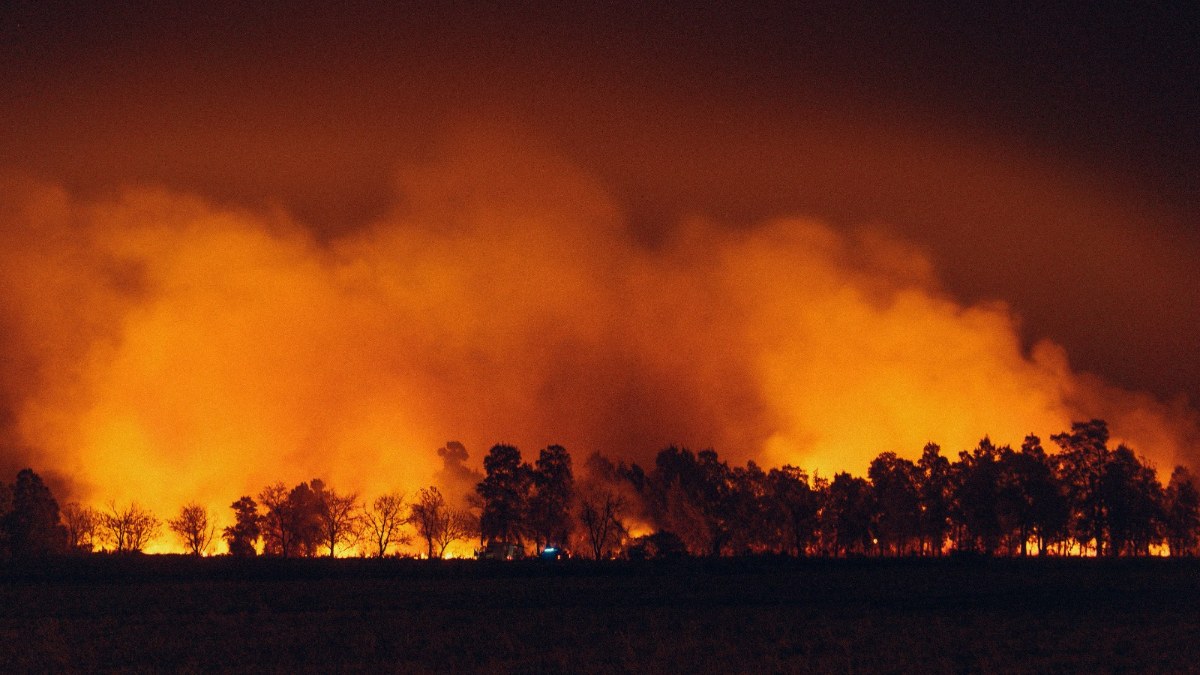
Photo: Fachy Marín on Unsplash
I Written by Hency kushwah I
Introduction: A Warning That Cannot Be Ignored
A recent alert from the National Disaster Management Authority, under the aegis of Ministry of Home Affairs, has placed several forest regions in India under high wildfire risk for the coming days in this current summers. While such advisories are often treated as seasonal warnings, the increasing frequency and intensity of forest fires suggest a deeper, more systemic problem. Wildfires are no longer isolated environmental incidents. They are becoming recurring events, driven by a mix of climatic shifts, human activity, and governance gaps. The current warning, hence also highlights the growing environmental vulnerability.
Understanding the Causes: Climate, Human Activity, and Ecological Stress
Forest fires rarely have a single cause but this case is different in India, they are often the result of a combination of natural and human-induced factors.
Rising temperatures and prolonged dry spells, increasingly linked to climate change, create conditions where forests become highly flammable. Dry leaves, fallen branches, and low moisture levels turn forest floors into fuel beds, ready to ignite with just a minimal trigger. In regions like Uttarakhand and central India, this seasonal dryness has intensified over the last 15 years, as recorded by ISRO.
However, climate alone does not explain the scale of the problem, human activity remains a major contributor. Practices such as slash and burn agriculture, deliberate burning of stubble to clear land, and even carelessly discarded bidis frequently act as ignition points. In many cases, fires are started intentionally for short-term economic gains, without considering long-term ecological damage.
There is also an ecological dimension that is often overlooked such as degraded forests, monoculture plantations, and invasive species also plays an important role in altering the natural fire resistance, making ecosystems more vulnerable. What emerges out of this is a cycle where environmental degradation increases fire risk, and fires further degrade the ecosystem.
Why Wildfires Matter? Beyond the Flames
The impact of forest fires extends far beyond the immediate destruction of trees. They disrupt entire ecosystems, destroy wildlife habitats, which ultimately leads to significant loss of biodiversity. Species that depend on forest cover for survival are often the first to suffer, with some populations taking years, if not decades, to recover.
Wildfires also contribute significantly to air pollution. Smoke and particulate matter released during fires can travel long distances due to their high temperatures, scale of burning, affecting air quality in nearby cities and even across states. This creates a direct public health concern, linking forest fires to respiratory illnesses and other health risks.
There is also a climate feedback loop at play. Forests act as carbon sinks, absorbing carbon dioxide from the atmosphere. When they burn, not only is this capacity reduced, but stored carbon is released back into the atmosphere, accelerating climate change.
Preventive Measures: From Reaction to Preparedness
Addressing wildfire risk requires moving beyond reactive firefighting toward preventive planning. One of the most critical steps is early detection as don e by satellite monitoring, remote sensing, and real-time alerts which can help identify fire outbreaks at an early stage, allowing for quicker response.
Equally important is ground-level preparedness. Forest departments need adequate resources, trained personnel, and coordinated response systems, for this NDRF acts in rapid manner. Regular measures such as fire lines, controlled burning practices, and removal of excess dry biomass can reduce the intensity and spread of fires.
Community involvement is another crucial element as they are the first responders because they are often the first to notice fire outbreaks, yet their role in prevention and response remains underutilised. Awareness programs, coupled with incentives for forest protection, can significantly reduce human-induced fires.
Policy frameworks also need strengthening. Environmental regulations must ensure that forest management prioritises ecological health over short term exploitation. Coordination between disaster management authorities, forest departments, and local administrations is essential for an effective response.
The Larger Challenge: Governance and Long-Term Strategy
The recurring nature of wildfire warnings points to a larger governance challenge. While advisories and response mechanisms exist, long-term strategies for forest management remains fragmented still.
There is a need to integrate wildfire risk into broader climate and environmental policy. This includes better land-use planning, restoration of degraded forests, and investment in climate-resilient ecosystems. Without such structural changes, wildfire management will remain reactive rather than preventive. The current alert should, therefore, be seen not just as a short-term warning but as an opportunity to rethink how forests are managed in a changing climate.
Conclusion: A Test of Preparedness
The warning issued by the National Disaster Management Authority is a reminder of how quickly environmental risks can escalate. But it is also a test of preparedness, of governance, and of collective responsibility.
Wildfires may begin with a spark, but their spread is determined by the conditions we allow to exist. Preventing them is not just about controlling fire; it is about managing the ecosystem that sustains it.
Yeh article aapko kaisa laga?