
Photo: AI Generated Image
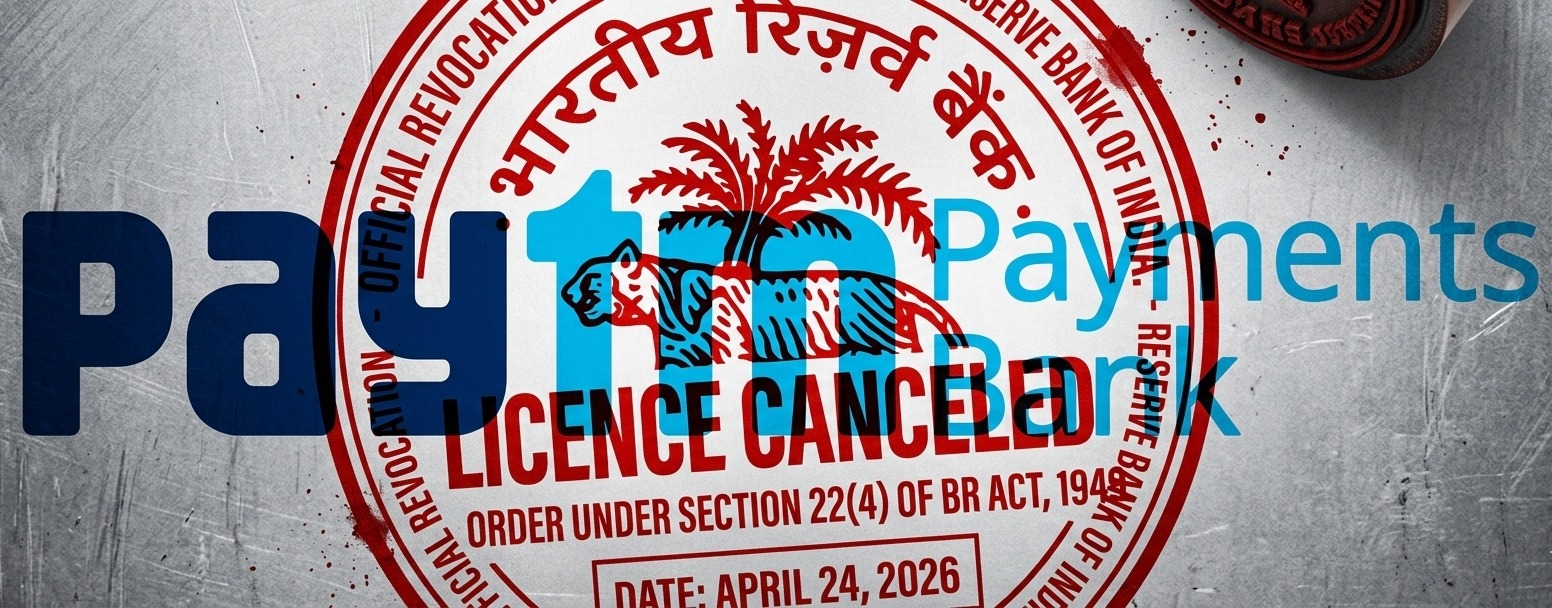
On April 24, 2026, the Reserve Bank of India executed a definitive regulatory action that permanently altered the national financial technology sector. Through an official order, the central bank completely cancelled the banking licence issued to Paytm Payments Bank Limited. This strict intervention immediately prohibits the institution from conducting any banking activities and initiates a formal legal process for its permanent closure.
The decision was not a sudden maneuver, but the direct result of severe, prolonged breaches of foundational banking laws and compliance regulations.
Legal Framework for Cancellation
The central bank executed the cancellation under the strict provisions of Section 22(4) of the Banking Regulation Act of 1949. According to the official regulatory notifications, the decision was grounded in specific, documented legal violations that compromised the integrity of the institution.
The Reserve Bank determined that the daily affairs of the bank were being conducted in a manner deeply detrimental to the interests of its depositors, which violates Section 22(3)(b) of the Act. Furthermore, the regulator cited Section 22(3)(c), explicitly stating that the general character of the bank’s management was prejudicial to the public interest. After evaluating the bank’s persistent failure to adhere to its initial licensing conditions, the central bank concluded under Section 22(3)(e) that allowing the institution to continue operations served no useful public purpose.
Severe Breaches in Customer Identification
The core administrative reason for this drastic regulatory action stems from massive, systemic failures in basic banking compliance, specifically regarding Know Your Customer guidelines. These regulations are globally mandated laws designed to verify the exact identities of account holders. They act as the primary defense against the financial network being exploited for money laundering, fraud, or unauthorized digital transactions.
Based on comprehensive system audits conducted over several years, regulators identified that Paytm Payments Bank permitted a staggering volume of accounts to operate without adequate identification checks. According to central bank observations, a single Permanent Account Number was frequently linked to hundreds, and sometimes thousands, of different user accounts. For a central banking authority, this scale of non-compliance is not a mere administrative oversight. It represents a major breach of law that directly compromises the security protocols of the entire digital payment ecosystem.
Failure of Corporate Separation
Beyond identification failures, the central bank identified severe legal violations regarding the operational relationship between the licensed payments bank and its corporate parent, One97 Communications. Standard banking laws demand a strict operational boundary, often referred to as the arm’s length principle, between a bank and its corporate owners. This legal boundary exists to ensure that public deposits and internal banking data are never improperly accessed or utilized by the parent company for its own commercial metrics.
Regulatory audits revealed that this necessary separation was consistently compromised. Financial routing, technical operations, and data management were heavily intertwined with the parent company’s commercial applications. This failure to maintain independent operations created severe legal concerns regarding data privacy, potential conflicts of interest, and the overall safety of deposited funds, fundamentally forcing the regulator to intervene to protect the financial system.
Timeline of Escalating Restrictions
The final licence cancellation was the conclusion of a long regulatory timeline, dismantling any narrative that the central bank acted abruptly. The Reserve Bank of India first identified these major compliance gaps during an audit in 2018. When the institution failed to adequately rectify its internal operations, the central bank utilized its authority to impose escalating restrictions over the following years.
This regulatory pressure included legally halting the onboarding of new customers in March 2022, and eventually banning all fresh deposits, credit transactions, and wallet top-ups in early 2024. With the licence now officially cancelled in April 2026, the Reserve Bank of India confirmed it will apply to the High Court to formally initiate the winding-up process of the bank. To prevent public panic during this transition, the central bank explicitly clarified that Paytm Payments Bank possesses sufficient financial liquidity to repay its entire deposit liability, ensuring that the funds of everyday citizens remain fully protected while the institution is dismantled.
Yeh article aapko kaisa laga?