
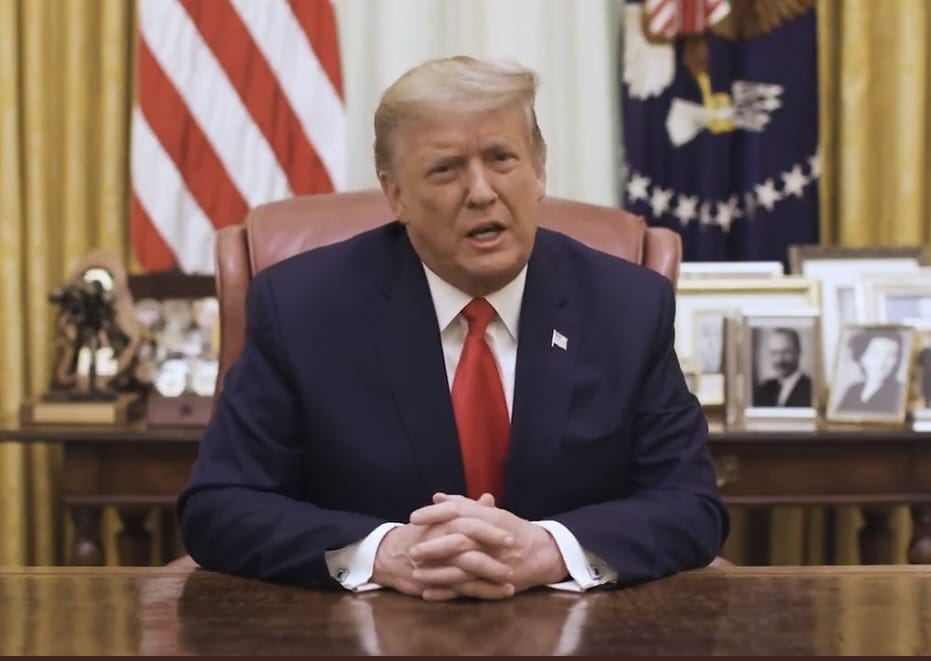
Image credit: U.S. President Donald Trump addresses the nation about the January 6th attack in an address recorded from the Oval Office
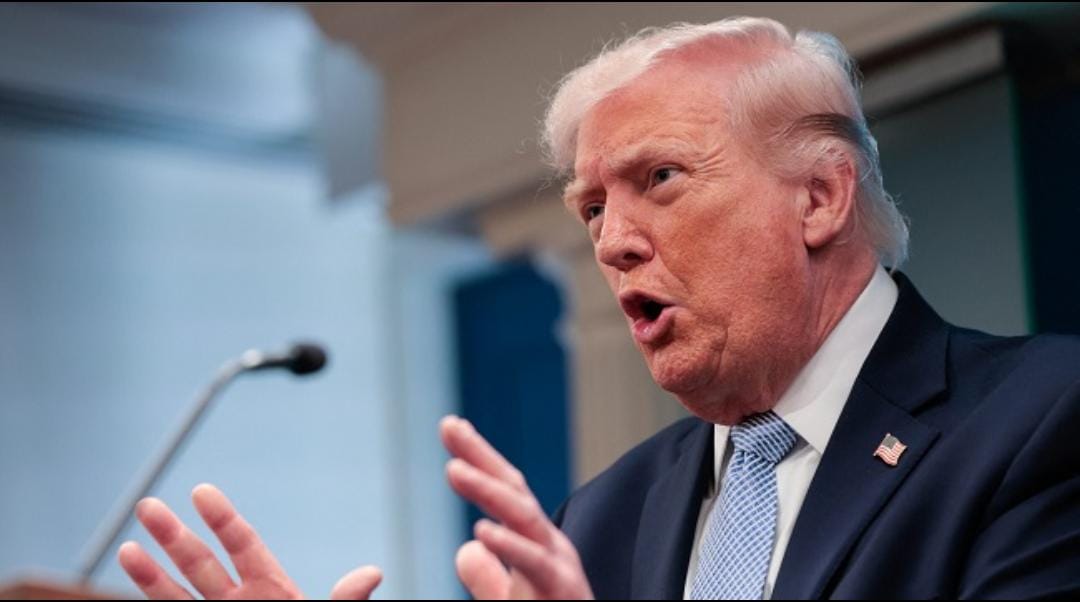
Just weeks after a historic Memorandum of Understanding (MoU) brought a fragile peace to the Persian Gulf, the Middle East is once again engulfed in fire. On July 8 and 9, 2026, the United States military launched a massive wave of airstrikes against 90 Iranian military targets. Shortly before the bombs fell, U.S. President Donald Trump took to social media to abruptly declare that the hard-fought ceasefire with Iran was officially “over.”
Mainstream narratives are quick to point the finger solely at Tehran, citing Iranian attacks on three commercial cargo ships on July 6 and 7 as the spark that reignited the war. However, a deeper investigative look into the exact terms of the June ceasefire reveals a much more complex reality, one where diplomatic ambiguity and unilateral military action by the U.S. may have shattered the truce, plunging the global economy into a renewed crisis.
Who Actually Breached It?
The primary goal of the agreement was to reopen the Strait of Hormuz, the vital chokepoint through which 20% of the world’s oil flows.
The U.S. claims that Iran’s recent firing upon merchant vessels was a blatant violation of the truce, prompting the severe military retaliation. However, the Iranian government argues that the U.S. strikes were an illegal breach of the agreement’s core framework.
Esmaeil Baqaei, spokesperson for Iran’s foreign ministry, explicitly pointed out that under the fifth clause of the MoU, the Islamic Republic of Iran was granted the “responsibility in determining arrangements for the safe passage of ships through the Strait of Hormuz.”
Tehran asserts that its actions in the strait are forcing commercial vessels to use pre-approved routes and follow specific protocols which were an exercise of the rights granted to them under the MoU. When the U.S. disputed this interpretation and responded with overwhelming military force, Iran argued that America unilaterally violated the agreement’s structure.
By launching airstrikes rather than pursuing the 60-day diplomatic negotiation period outlined in the MoU, critics argue the U.S. effectively jumped the gun, prioritizing a military solution over complex conflict resolution.
Military Escalation: A Region on Fire
Following President Trump’s declaration that the ceasefire was dead, the military escalation has been rapid and devastating.
U.S. Central Command (CENTCOM) confirmed striking approximately 90 Iranian targets over two days. The strikes focused on air defense systems, coastal radar sites, and drone storage facilities along Iran’s southern coast, including the port city of Bandar Abbas and the Bushehr province (home to Iran’s civilian nuclear power plant complex).
Promising a “devastating response,” Iran’s Islamic Revolutionary Guard Corps (IRGC) immediately launched retaliatory drone and missile strikes targeting U.S. military installations across neighboring Gulf Arab states. Air raid sirens echoed across Bahrain (home to the U.S. Navy’s 5th Fleet headquarters), while Kuwait’s military was forced to actively intercept incoming projectiles.
Choking the Global Artery
The collapse of the ceasefire is not just a regional geopolitical failure; it is an immediate global economic crisis. The crossfire has effectively turned the Strait of Hormuz back into an active combat zone.
1. A Humanitarian Crisis at Sea
1. A Humanitarian Crisis at Sea
The UN’s International Maritime Organization (IMO) has issued grave warnings to shipowners to avoid the strait. As a result of the sudden escalation, an estimated 6,000 seafarers are currently stranded on hundreds of vessels in tjhe region, trapped in the crossfire of a war they have nothing to do with.
2. Global Energy and Economic Shockwaves
The United Nations Economic Commission for Europe (UNECE) has warned that the resumption of hostilities will have catastrophic consequences for the global economy.
Oil prices have surged globally following the strikes. With strategic oil reserves already at their lowest levels in decades, the disruption of the 130 ships that typically transit the strait daily threatens a massive global supply shortage.
This energy shock arrives precisely as the Northern Hemisphere faces extreme summer heatwaves driven by El Niño. The UNECE warns that the sudden disruption in oil and gas supplies will severely impact power grids just as energy consumption for cooling reaches its peak.
Cost of Failed Diplomacy
The events of July 8 and 9 represent a monumental failure of international diplomacy. UN Secretary-General António Guterres has called the resumption of strikes “alarming,” noting the severe risk of derailing all diplomatic progress made since April.
Whether one views Iran’s aggressive policing of the strait as a provocation or the U.S. airstrikes as a reckless breach of the June MoU, the reality remains the same: the world is now paying the price. As military forces trade blows across the Persian Gulf, the global economy braces for the devastating fallout of a peace deal that died before the ink could fully dry.
Yeh article aapko kaisa laga?