

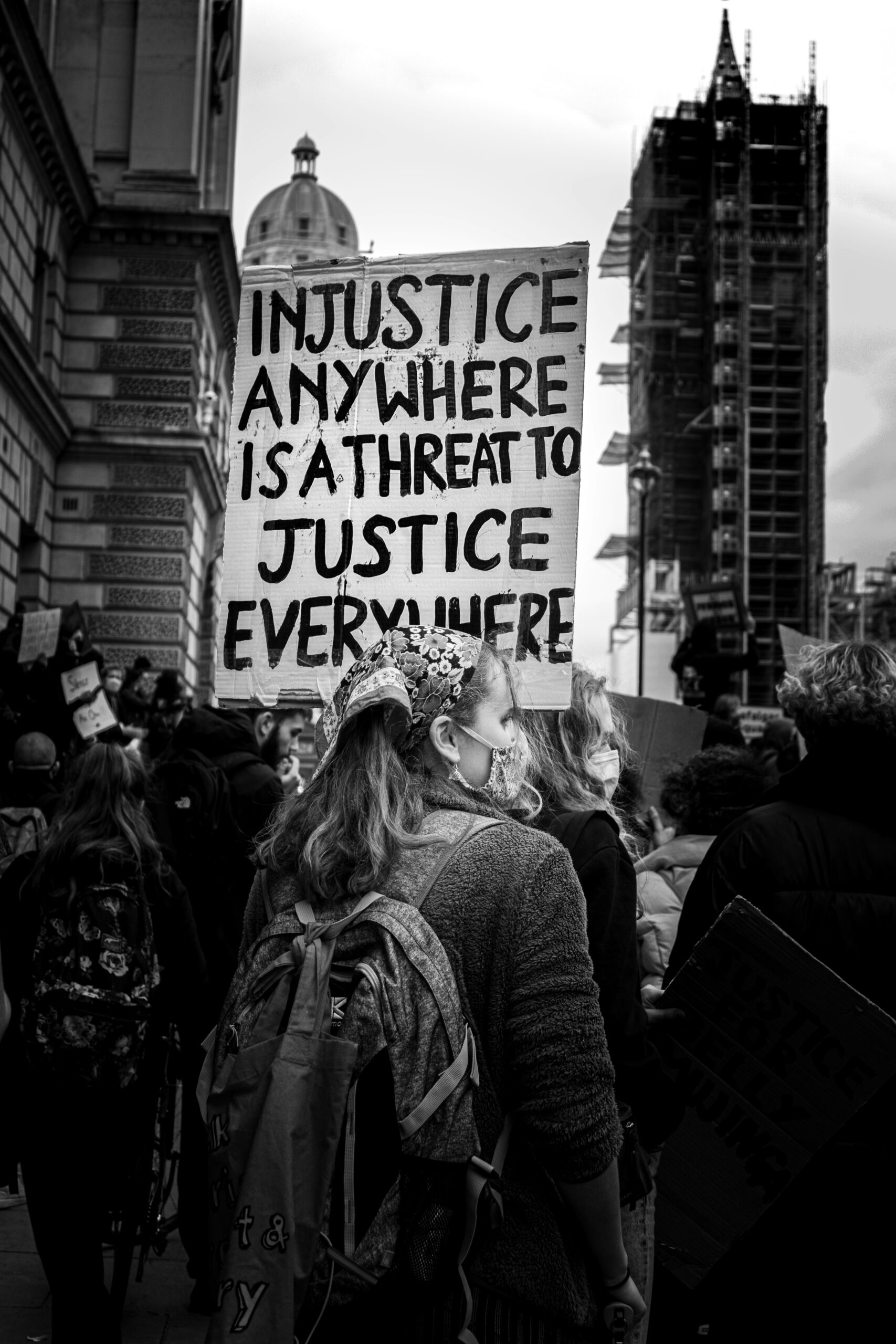
Photo by Jack Skinner on Unsplash
India’s criminal justice system stands at a sensitive crossroads. On one side are stringent laws designed to protect women, Scheduled Castes and Scheduled Tribes, and vulnerable citizens from systemic abuse. On the other is a growing public debate about the alleged rise of false or exaggerated complaints under some of these very laws. The issue is not whether protections are necessary. They are, but the issue is whether safeguards against misuse are keeping pace.
This is not a political argument, it is a structural question about criminal law.
What Does the Data Actually Say?
Public discourse often equates low conviction rates with false cases. That assumption, however, does not withstand legal scrutiny. According to the NCRB’s Crime in India 2022 report, rape cases recorded a conviction rate of roughly 27%, while Section 498A (cruelty by husband or relatives) stood at approximately 14–16% nationally.
Cases registered under the SC/ST (Prevention of Atrocities) Act showed conviction rates of around 36-40% for crimes against Scheduled Castes and 28–30% for Scheduled Tribes. At the same time, pendency rates across these categories exceed 85–90%, reflecting systemic backlog and prolonged trials.
Importantly, NCRB categorises cases separately as “false,” “mistake of fact or law,” “insufficient evidence,” and “charge-sheeted.” The number of cases formally classified as “false” after investigation is significantly lower than the total number of acquittals. An acquittal may result from hostile witnesses, compromised testimony, poor investigation, forensic delays, settlement in matrimonial disputes, or prosecutorial weaknesses and not necessarily fabrication.
The Supreme Court has repeatedly clarified that a case failing to meet the threshold of proof “beyond a reasonable doubt” does not automatically become a false complaint. Criminal law imposes a high evidentiary standard precisely to protect the accused from wrongful conviction.
That said, High Courts have, in specific instances, recorded findings of malicious prosecution, particularly in matrimonial and property-linked disputes. The data, therefore, does not demonstrate systemic falsity, but it also does not deny isolated misuse. The reality lies in a complex middle ground, and public discourse often equates low conviction rates with false cases. That assumption is legally flawed.
What Has the Supreme Court Said About Misuse?
The judiciary has acknowledged misuse concerns, but cautiously. The Supreme Court has acknowledged concerns about misuse of certain penal provisions, but it has done so with restraint and constitutional caution. In Arnesh Kumar v. State of Bihar (2014), dealing with arrests under Section 498A IPC, the Court observed that automatic arrests were contributing to unnecessary incarceration and procedural abuse. It directed police officers to comply strictly with Section 41 CrPC before making arrests and required magistrates to scrutinize detention more carefully. These safeguards are now reflected in the arrest provisions under the BNSS, 2023. Crucially, the Court did not dilute the offence itself but it regulated the procedure.
Similarly, in Subhash Kashinath Mahajan v. State of Maharashtra (2018), the Court introduced safeguards under the SC/ST (Prevention of Atrocities) Act, including preliminary inquiry before arrest. Parliament responded by amending the Act to restore its original rigor, and in subsequent review proceedings, the Supreme Court upheld the amendment, reiterating that the statute protects historically marginalized communities.
The message from the Court has been consistent:
- Misuse cannot justify dismantling protection.
- Procedural safeguards can coexist with substantive protection.
The law must neither be weaponised nor weakened.
Where Courts Have Found Malicious Prosecution
Judicial records across High Courts reveal recurring patterns where criminal law has been invoked strategically rather than substantively.
Matrimonial breakdowns:
In multiple rulings involving Section 498A, courts have noted the tendency to array entire families, including elderly parents and distant relatives, without specific allegations. FIRs have been quashed where complaints appeared omnibus, retaliatory, or filed amid ongoing divorce and maintenance disputes.
Property and inheritance conflicts:
Long-standing civil disputes over land, succession, or business partnerships are sometimes converted into criminal cases alleging cheating, criminal breach of trust, forgery, or even caste-based insult to exert settlement pressure. Courts have emphasised that purely civil disagreements should not be dressed as criminal offences.
Corporate and commercial rivalries:
In business disputes, allegations of fraud, misappropriation, or conspiracy are occasionally used tactically to gain leverage in shareholder or contractual conflicts. Several High Courts have intervened where criminal complaints appeared to be coercive tools in commercial negotiations.
Political and local hostilities:
There have been instances where provisions under the SC/ST Act or public order laws were invoked amid village rivalries or electoral tensions, later found by courts to lack the required caste-based intent.
Yet, courts consistently caution against sweeping generalisations. Each case depends on its evidentiary foundation. False implication exists but so does genuine harm. The deeper structural issue is not frequency alone, but the lack of consistent, early-stage filtering mechanisms that can distinguish abuse of process from legitimate grievance.
The Danger of Over-Correction
Calls for stricter scrutiny before FIR registration risk creating chilling effects. If courts have identified instances of malicious prosecution, the instinctive response is often to demand tighter pre-screening before FIR registration. Yet, that solution carries its own constitutional risks.
Under criminal jurisprudence, the police are duty-bound to register an FIR upon disclosure of a cognizable offence a principle firmly laid down in Lalita Kumari v. Government of Uttar Pradesh (2013). Creating additional layers of pre-approval or discretionary filtering at the threshold could undermine this mandate and introduce subjectivity into the reporting process.
In cases of caste-based violence, delay in registration has historically been linked to intimidation, social pressure, and local power hierarchies. Any procedural hurdle that slows immediate registration risks reinforcing precisely the structural inequalities the law seeks to remedy.
Similarly, in crimes against women, under-reporting remains a documented concern. NCRB figures reflect registered complaints, but national surveys indicate that many instances of domestic abuse and sexual violence never reach police records. Strengthening scrutiny too aggressively could discourage victims who already face stigma and retaliation.
The constitutional challenge, therefore, is not choosing between protection and prevention of misuse. It is designing safeguards that deter malicious prosecution without creating barriers for genuine complainants. Over-correction may solve one problem while silently deepening another.
Possible Reforms for Fairness and Accountability
The conversation must move past outrage and counter-outrage. Weakening protective statutes is neither constitutionally sound nor socially responsible. The real task is institutional refinement.
Several calibrated solutions emerge from judicial reasoning and policy debates, such as:
• Enforcing penalties for malicious prosecution where courts record deliberate fabrication, using existing provisions under criminal law.
• Preliminary scrutiny in clearly civil disputes, particularly commercial, property, or matrimonial matters, without diluting victim-centric statutes or delaying FIRs in genuine cases.
• Strengthening investigation quality, including forensic capacity, digital evidence handling, and accountability for defective charge sheets.
• Time-bound trials, especially in sensitive offences, to prevent prolonged harassment of both complainants and accused.
• Compensation mechanisms for wrongful implication where judicial findings establish abuse of process.
The Bharatiya Nyaya Sanhita, 2023, retains substantive protections in modified form, while the Bharatiya Nagarik Suraksha Sanhita refines arrest safeguards and procedural oversight. The legislative framework attempts to achieve equilibrium. Its success, however, depends on implementation discipline.
The deeper question is not whether false cases exist, they do, in limited but real numbers. The critical issue is whether the justice system can accurately distinguish between malicious prosecution, investigative incompetence, compromise-driven acquittal, and genuine victim testimony.
The debate should move beyond rhetoric and not weaken protective statutes.
Conclusion
India’s criminal law landscape reflects a dual reality where there are vulnerable groups requiring strong statutory protection then there are also instances where criminal law is used strategically in personal conflicts. A mature legal system must hold both truths simultaneously.
The strength of a justice system lies not in denying complexity but in managing it without prejudice. Blanket narratives, either of rampant misuse or universal victimhood, distort reality. The constitutional mandate is not emotional alignment but is calibrated justice. Protection must remain strong, Procedure must remain fair, and misuse, where proven, must face THE CONSEQUENCES.
Yeh article aapko kaisa laga?