

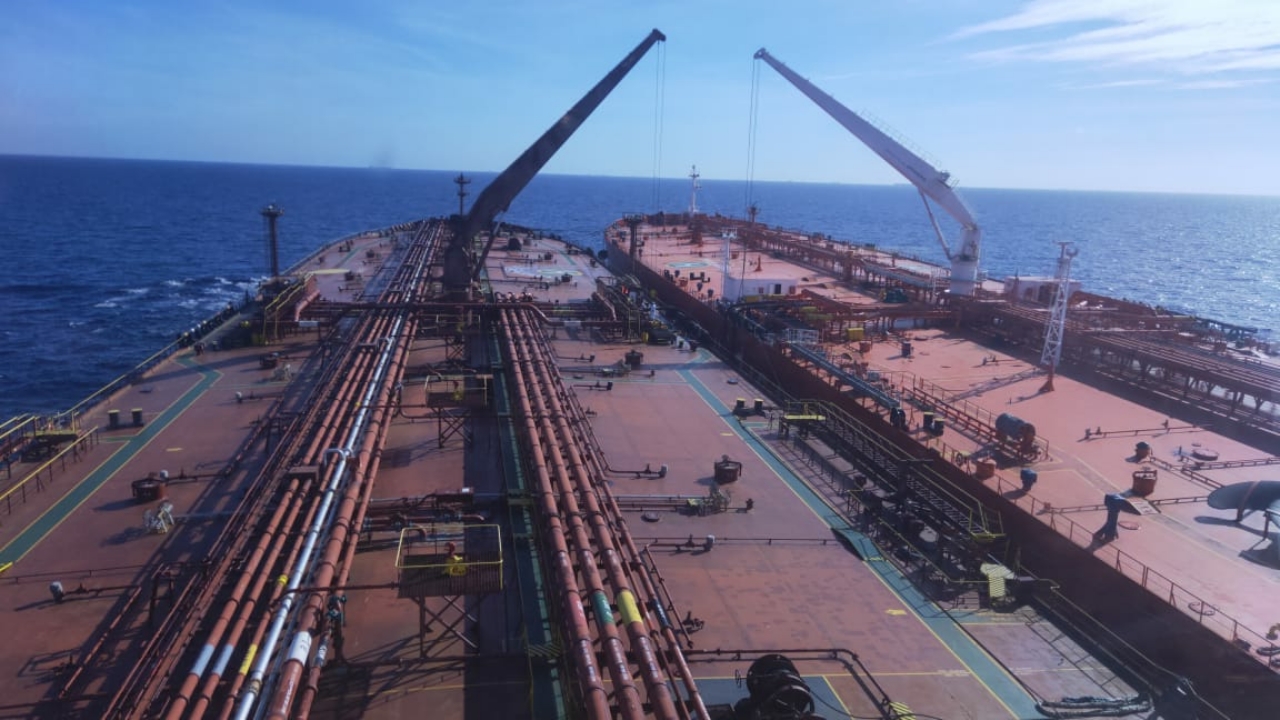
Photo: Martian-2007, CC BY-SA 4.0
Fire in Crude Oil Will Burn the Common Man’s Pocket, Inflation Will Rise. According to a report by Moody’s, rising geopolitical tensions have increased risks for India and other Asian countries. Due to disruptions in energy and trade routes, supply chains have been affected, leading to a sharp rise in the prices of crude oil, gas, metals, and other commodities.
The surge in prices will directly impact the common man’s pocket, as both consumer and wholesale inflation are expected to rise.
The report states that due to actions by Iran and Israel and attacks on ships in the Red Sea, key routes for crude oil and gas supplies have been disrupted.
Situation Will Be More Complex for India
The Red Sea is a major global trade route. About one-third of the world’s seaborne crude oil exports and nearly 20% of liquefied natural gas (LNG) trade pass through this route.
India, the world’s third-largest oil importer, imports nearly half of its crude oil needs through this route. Therefore, the conflict makes the situation more complicated for India. India maintains strong ties with Western Asian countries and also has trade understandings with the United States, under which it has gradually reduced oil purchases from Iran.
Impact Also on China, Japan, and South Korea
Moody’s said in its report that the closure of the Red Sea route has increased risks for West Asia and the broader Asia region. Air travel has also been affected.
Countries like India, China, Japan, South Korea, and Singapore will be impacted, as these Asian nations import more than 80% of their energy needs and are also heavily dependent on food imports.
Import Bill and Trade Deficit Will Increase
According to the report, higher commodity prices may force central banks, including the RBI, to delay interest rate cuts. They may even need to raise rates.
As a result, the import bill and trade deficit will increase. At the same time, pressure may mount on the rupee and other local currencies.
Additionally, prolonged disruptions in maritime transport in the Gulf region could revive concerns over debt in highly indebted countries.
Global Oil Market Reaction
Crude prices have surged sharply following the escalation of hostilities after U.S. and Israeli strikes on Iranian targets, with Brent crude climbing by around 8–12%, at times nearing $80+ per barrel amid heightened supply risk.
Global energy markets are pricing in potential supply disruptions through the Strait of Hormuz, a narrow chokepoint through which about 20% of global crude passes. Analysts fear that prolonged blockage could tighten supply further and propel prices toward or above $90–$100 per barrel if tensions.
Impact on India’s Energy Security and Economy
- Import Dependency & Vulnerability
India is highly dependent on imported oil about 85–90% of its needs with a significant share of crude transported via the Strait of Hormuz.
Analysts say India is now among the most exposed Asian economies to Middle East supply shocks due to comparatively low reserve stocks and heavy reliance on Gulf imports.
- Rising Import Costs
Elevated prices are widening India’s import bill and current account deficit, with every $1 increase in crude potentially adding ~$2 billion annually to import costs.
A sustained $10+ rise per barrel could have material inflationary effects, putting pressure on the trade balance and domestic fuel pricing.
- Domestic Market Response
Indian equities have reacted negatively; major indices such as the Sensex and Nifty fell, reflecting investor concern over rising energy costs and macroeconomic risks.
Shares of domestic oil marketers like HPCL, BPCL, and IOC declined as raw crude costs climbed, highlighting sector-specific vulnerability to higher international oil prices.
- Broader Economic Risks
Higher crude prices can feed directly into inflation, squeezing consumer spending and pressuring the Reserve Bank of India’s policy stance.
Key sectors reliant on crude derivatives aviation, logistics, chemicals and consumer goods face margin pressure if elevated prices persist.
- Strategic and Corporate Concerns
Business leaders like Vedanta’s Chairman have warned that the conflict underscores India’s energy security risks and the need for increased domestic production and diversification.
Outlook and Continuing Risks
The main determinant for crude oil’s future trajectory is duration and severity of the conflict. Short flare-ups could see markets calm, but sustained geopolitical disruption could tighten flows and escalate price pressures further.
While OPEC+ has announced modest production increases to alleviate supply pressure, traders remain cautious because physical access and shipping security are as critical as output quotas for global oil flow.
Summary
The Iran–Israel conflict has already spiked global crude prices and posed real economic risks for India largely through higher import costs, inflationary pressure, and market volatility. The situation underscores India’s structural exposure as a major oil importer and adds urgency to policy discussions around energy security and diversification.
Around 20% of global LNG trade passes through the Red Sea route. In 2025, approximately 8.1 crore tonnes of LNG exports passed through this route, accounting for about 20% of global supply. India imports nearly half of its crude oil requirement through this route. India meets about 80% of its oil needs through imports.
Yeh article aapko kaisa laga?