Image credit: The unknown Man/X
Introduction
The Rawalakot Long March in Azad Jammu & Kashmir has raised serious concerns regarding peaceful assembly, public order and the use of force by law-enforcement authorities. Reports concerning the protest on 27 July 2026 referred to clashes between protesters and security personnel, with injuries and deaths reportedly occurring during the confrontation.
The exact number and circumstances of the casualties remain disputed. According to reports, protesters alleged that excessive force was used against participants, while authorities maintained that violence and firing also came from individuals among the protesters. These competing accounts make independent verification particularly important.
The Human Rights Council of Azad Jammu & Kashmir has condemned the reported use of force resulting in injuries to peaceful participants and has called attention to the protection of fundamental rights.
Background to the Rawalakot Long March
The Long March was associated with the Jammu Kashmir Joint Awami Action Committee (JAAC), which has been involved in a wider protest movement concerning governance, political representation, economic issues and other public demands in AJK.
The movement gained renewed momentum after disagreements between protesters and authorities over several demands. The situation became increasingly tense following the government’s action against the JAAC and the failure of negotiations to resolve the dispute.
The Rawalakot episode must therefore be viewed against a broader background of disagreement between civil protesters and the AJK administration concerning the regulation of public demonstrations.
What Happened During the Protest
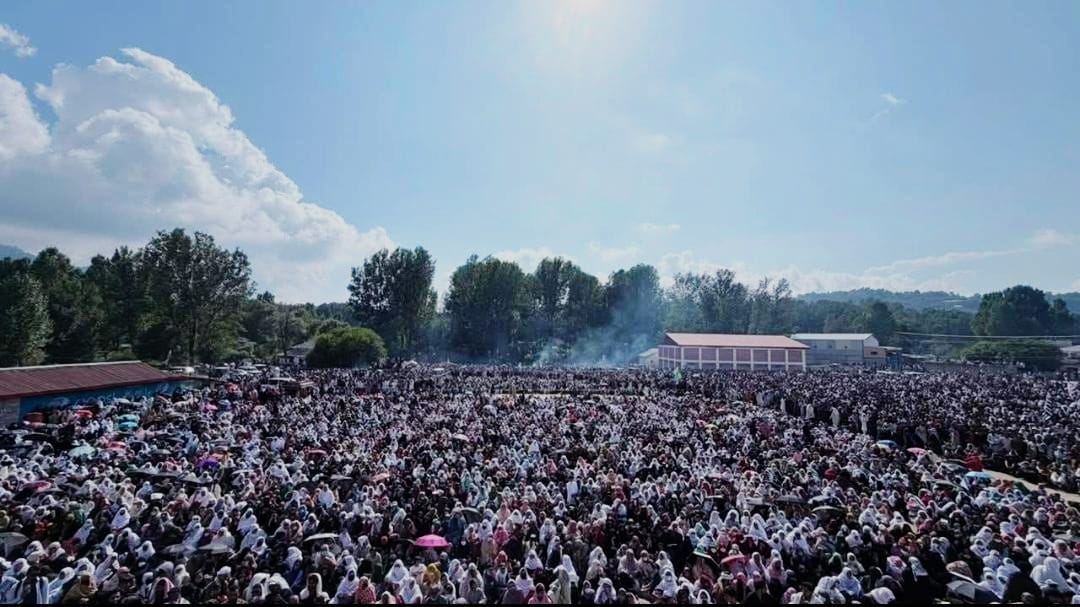
On 27 July, protesters gathered in Rawalakot as part of the march towards Muzaffarabad. Reports subsequently emerged of clashes between protesters and law-enforcement personnel.
Authorities stated that some individuals associated with the protest attempted to enter Rawalakot and that firing took place against police and security personnel. Protest leaders, however, alleged that security forces used excessive force against demonstrators.
Reports of civilian injuries and deaths have therefore been accompanied by conflicting accounts. Because access and communications from the affected areas have been limited, all casualty figures should be treated cautiously unless independently verified.
Human Rights Council’s Response
The Human Rights Council of Azad Jammu & Kashmir has condemned the reported use of force against peaceful participants and expressed concern regarding injuries suffered during the protest.
From a human-rights perspective, the Council’s position raises an important question: whether the force used by authorities was necessary and proportionate to the circumstances.
The Council’s allegations should be distinguished from independently established facts. At the same time, reports of injuries and alleged excessive force warrant proper investigation rather than dismissal without examination.
Legal and Constitutional Framework
The Azad Jammu and Kashmir Interim Constitution Act, 1974 recognises fundamental rights, including freedom of speech and expression and the right to assemble peacefully, subject to reasonable restrictions imposed by law in the interest of public order.
This creates a balance between two legitimate interests. Authorities have a duty to maintain public safety, but protesters also have a constitutional right to express grievances through peaceful assembly.
The fact that a demonstration creates inconvenience or political pressure does not by itself justify excessive force. Any restriction must have a lawful basis and must be reasonable in the circumstances.
Right to Peaceful Assembly and Use of Force
The right to peaceful assembly does not provide protection for violence, attacks on police or other criminal conduct. Authorities may intervene when a genuine threat to public safety arises.
However, force must remain necessary and proportionate. Law-enforcement personnel should, wherever reasonably possible, use non-violent methods before resorting to force. Where potentially lethal force is used, the legal threshold is considerably higher because the right to life is directly engaged.
The central legal question in Rawalakot should therefore be whether the force used in particular circumstances was necessary to deal with an immediate threat or whether less harmful measures could reasonably have been adopted.
International Human Rights Standards
International human-rights law provides similar protections.
Article 20 of the Universal Declaration of Human Rights recognises the right to peaceful assembly, while Article 3 protects the right to life.
The International Covenant on Civil and Political Rights protects the right to life under Article 6, freedom of expression under Article 19 and peaceful assembly under Article 21.
The UN Human Rights Committee, in General Comment No. 37, has emphasised that restrictions on peaceful assemblies must satisfy requirements of legality, necessity and proportionality.
The UN Basic Principles on the Use of Force and Firearms by Law Enforcement Officials also emphasise the use of non-violent means wherever possible and impose strict limitations on the use of firearms.
Accountability and Need for an Impartial Inquiry
Given the conflicting accounts, an impartial inquiry would be the most appropriate way to establish what actually occurred.
Such an inquiry should examine police records, videos, medical reports, eyewitness accounts and other available evidence. The circumstances of each reported injury or death should be independently established.
If excessive or unlawful force is proved, those responsible should face appropriate legal consequences. Likewise, if protesters or other individuals are found to have unlawfully attacked police or civilians, the law should apply to them as well.
Accountability must be based on evidence rather than political affiliation.
Broader Human Rights Implications
The Rawalakot incident highlights the continuing challenge of balancing public order with the right to protest.
Peaceful demonstrations are an important means through which citizens express grievances and demand governmental action. At the same time, authorities have a legitimate responsibility to prevent violence and protect life and property.
The proper legal approach is therefore neither unrestricted protest nor unrestricted state power. The response must remain within the limits of law, particularly where the use of force may result in serious injury or loss of life.
Conclusion
The allegations surrounding the Rawalakot Long March require careful and impartial examination. While the right to peaceful assembly deserves protection, violence or genuine threats to public safety cannot be ignored.
The Human Rights Council of Azad Jammu & Kashmir’s concerns regarding injuries to peaceful participants underline the need for transparency and accountability. At the same time, the allegations made against protesters must also be assessed through evidence.
Ultimately, the rule of law requires both public order and fundamental rights to be protected. Any use of force during a protest must be lawful, necessary and proportionate to the circumstances. An impartial investigation is therefore essential to determine responsibility and ensure that similar incidents are prevented in the future.
Yeh article aapko kaisa laga?