Photo: Sreedhar pillai by X
The Rise of a New Political Era
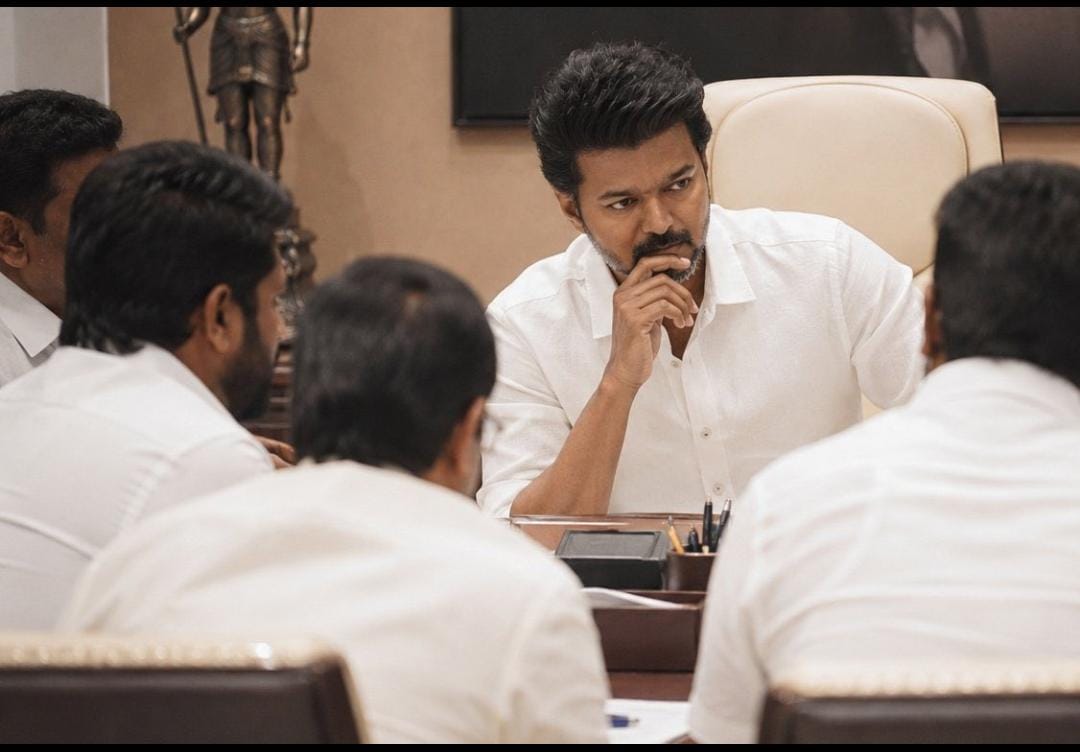
Tamil Nadu politics is witnessing one of its biggest transformations in decades. Actor-turned-politician Vijay has emerged as a major political force, breaking the long-standing dominance of the DMK and AIADMK. His party, Tamilaga Vettri Kazhagam (TVK), has quickly become the centre of political discussion across the state.
What makes Vijay’s rise remarkable is not just the election performance of TVK, but the speed at which he built a strong political movement. In less than three years, he converted his cinema fan clubs into a disciplined political network. Many political observers now believe that Tamil Nadu has entered a completely new political era.
TVK secured nearly 35 per cent vote share in the election, a clear sign that a large section of voters wanted change. Young voters especially appeared frustrated with the DMK government, which was repeatedly accused by opponents of corruption, poor governance, and political arrogance. The election results reflected this anger strongly.
The numbers also showed how deeply the political mood had shifted. The DMK failed to win even a single seat in 11 districts, while the AIADMK could not make an impact in nine districts. On the other hand, TVK itself failed to win in eight districts, showing that the political wave was powerful but not absolute.
Still, the message from voters was loud and clear. The traditional dominance of the two Dravidian giants has been shaken badly. For decades, Tamil Nadu politics revolved mainly around the DMK and AIADMK. But now, many people believe voters are looking for a fresh alternative.
Vijay’s political style has also played a major role in his success. Unlike many aggressive leaders, he has adopted a calm and measured approach. He has avoided unnecessary confrontations and presented himself as a leader willing to work within the democratic system. This image has helped him gain acceptance among both young and middle-class voters.
Another important factor behind TVK’s success was Vijay’s effort to create a broader social coalition. He made sure that leaders from different communities received representation in the Assembly. The inclusion of three Brahmin MLAs, including one minister, was seen as a strategic signal to upper-caste voters who traditionally leaned toward the BJP or Congress.
Vijay also used strong political messaging during the campaign. He borrowed powerful phrases once used by former Chief Minister Jayalalithaa against the DMK and presented himself as someone who could free Tamil Nadu from decades of two-party dominance. Supporters of TVK now openly speak about creating a “Kazhagam-mukt Tamil Nadu,” similar to the “Congress-mukt Bharat” slogan seen in national politics.
Political Drama After the Election Results
Despite TVK’s impressive performance, the road to power was not entirely smooth. TVK won 108 seats, enough to cross the halfway mark, but political uncertainty continued for several days after the results.
Different political combinations were reportedly discussed behind closed doors. One proposal suggested that the DMK could support AIADMK leader Edappadi K. Palaniswami as Chief Minister to prevent Vijay from forming the government. Another proposal floated the name of Viduthalai Chiruthaigal Katchi leader Thol Thirumavalavan as a compromise candidate.
“However, none of these plans succeeded.”
Eventually, Vijay managed to convince Governor Rajendra Arlekar and received the invitation to form the government. Reports suggested that he became deeply frustrated during the political negotiations and even considered asking all 108 MLAs to resign to force fresh elections.
These developments highlighted how nervous the established political parties had become after TVK’s rise.
DMK and AIADMK Facing an Identity Crisis
The election result has also triggered serious introspection within the DMK. Chief Minister M.K. Stalin claimed that TVK benefited mainly from Instagram and social media influence. However, critics quickly questioned this argument. They pointed out that the DMK itself had relied heavily on political consultants, digital campaigns, and survey agencies during the election.
Sabarisan Vedamurthy, founder of political consultancy firm PEN and Stalin’s son-in-law, later admitted that it would be an oversimplification to blame strategy teams alone for the defeat. This statement indirectly acknowledged that deeper political issues may have damaged the DMK’s image among voters.
At the same time, DMK leader Kanimozhi’s comments also attracted attention. She argued that the party should become strong enough to win independently instead of depending too much on alliances. Her move to request separate seating arrangements for DMK MPs in Parliament was viewed by many as a signal of growing political distance from the Congress.
The AIADMK, meanwhile, appears to be facing an even bigger crisis. The party struggled to connect with voters and failed to project a strong alternative leadership. Unless major changes happen within the party, political analysts believe it could continue losing relevance in the coming years.
The Real Challenge: Governance and Long-Term Dominance
For Vijay, however, the real challenge begins now.
Winning elections is only the first step. The bigger test will be governance. Tamil Nadu voters will expect improvements in jobs, infrastructure, education, welfare, and corruption control. If Vijay can deliver effective governance while maintaining his clean and calm political image, he could dominate Tamil Nadu politics for the next decade.
The upcoming civic elections expected in December 2026 will become the first major test of TVK’s organisational strength after forming the government. A strong performance there would further strengthen Vijay’s position before the 2029 Lok Sabha elections.
At present, Vijay appears to have successfully captured the political imagination of a large section of Tamil Nadu’s youth. His supporters believe he represents generational change and a break from old-style politics.
Whether this political momentum turns into long-term dominance will depend entirely on how his government performs in the years ahead. But one thing is already clear: Tamil Nadu politics may never remain the same again.
Yeh article aapko kaisa laga?