 Ahad Khan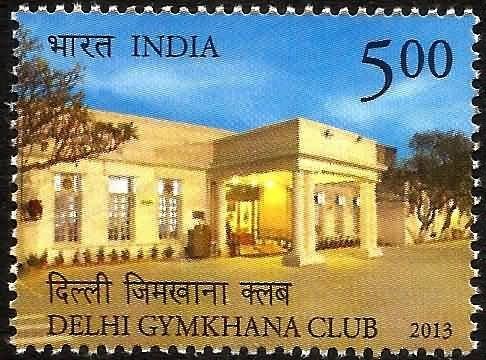
Photo: Post of India, GODL-India https://data.gov.in/sites/default/files/Gazette_Notification_OGDL.pdf
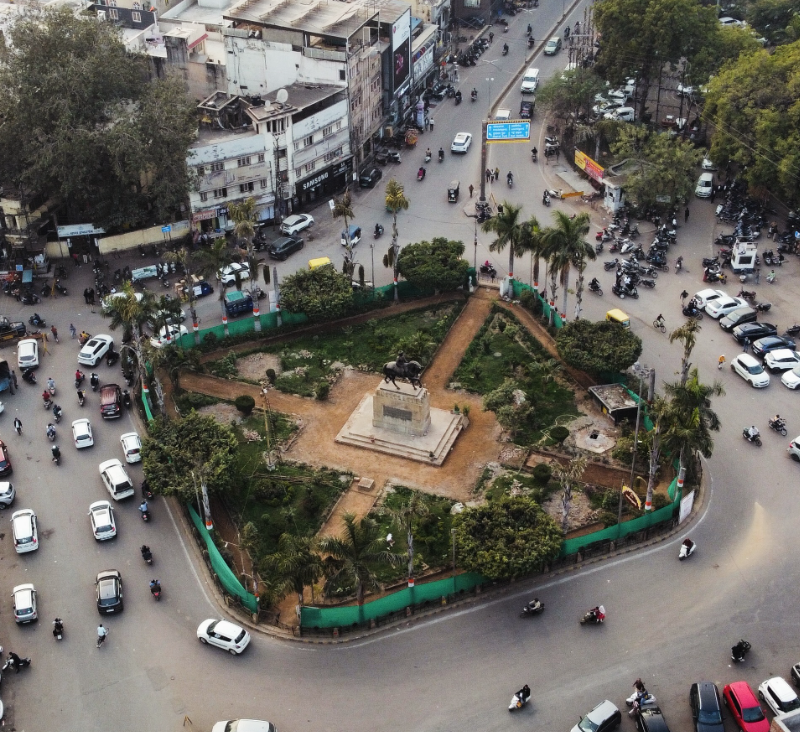
On May 22, 2026, the Land and Development Office (L&DO), running under the Ministry of Housing and Urban Affairs, issued a formal order ending the lease of the Delhi Gymkhana Club. The government directed the management to hand over the 27.3-acre land on Safdarjung Road by June 5, 2026.
Because the government gave a century old institution a strict two-week deadline, the local rumor mill immediately went into overdrive. Whispers inside Delhi’s exclusive social circles claimed that triggering a membership list full of the country’s most powerful insider networks could spark a severe political backlash against the ruling party.
In the world of the high-society elite, rumors are spreading that these influential members have the power to quietly hurt the ruling government by breaking political alliances, pulling financial campaign backing, or heavily funding opposition groups.
What the Gymkhana Club Actually Is
Established in 1913 during the British Raj as the Imperial Delhi Gymkhana Club, the institution was built to serve as a central social venue for the administrative and political elite of the capital.
Located right next to the Prime Minister’s official residence on Lok Kalyan Marg, the club operated as an unmonitored sanctuary. It was a private space where judges, senior civil servants, and top political figures could meet, share insider information, and build connections completely away from the public eye. For generations, it was the informal headquarters of India’s traditional establishment networks.
Political Core
True context behind this friction becomes clear when looking at the political makeup of the club’s membership. Historically, the Gymkhana has been deeply tied to the traditional power structures of the old guard, heavily represented by senior Congress leaders, legacy bureaucrats, and establishment insiders.
A prominent example of this deep alignment is the membership of Rahul Gandhi, whose inclusion in the club reflected the close connection between the institution and the country’s older political networks. Even there were a number of senior Congress Leader having the club’s membership, like the then PM Manmohan Singh, the then Delhi CM Sheila Dikshit, and Congress Leader Murli Deora. On the other hand, the membership has historically seen a distinct lack of deep involvement from alternative political forces. A stark demonstration of this political distance occurred when veteran leader LK Advani famously resigned from his membership in the club itself. His resignation highlighted that the rising leadership of the Bharatiya Janata Party (BJP) maintained a deliberate distance from this specific Lutyens’ power hub.
Understanding this sharp political divide explains why the controversies surrounding the club did not happen by accident. Almost immediately after the newly elected BJP formed its Government in 2014 at both the Centre and the Delhi state machinery, the scrutiny on the club intensified.
Timeline of Regulatory Pressure
Rather than a sudden executive move, the May 2026 eviction is the culmination of a systematic, decade-long administrative squeeze that began the moment the political landscape shifted in 2014.
• 2014 Fiscal and Operational Audits: Right after the 2014 political transition, authorities moved quickly against the club’s day-to-day operations. The local government initiated legal action to recover ₹2.92 crore in unpaid luxury taxes, while environmental regulators simultaneously penalized the club for running unauthorized groundwater borewells.
• 2020–2022 Corporate Takeover:
The pressure escalated into an official takeover when the Ministry of Corporate Affairs dragged the club before the National Company Law Tribunal (NCLT). A targeted investigation revealed that the club was collecting massive application fees from ordinary citizens on decades-long waitlists, investing that money into mutual funds, and using the interest to heavily subsidize cheap food and elite recreation for its existing members. The NCLT publicly criticized the club as a self-perpetuating relic of imperial favoritism. In April 2022, the tribunal dissolved the club’s elected committee and replaced them with state-appointed administrators, stripping the institution of its independence.
The pressure escalated into an official takeover when the Ministry of Corporate Affairs dragged the club before the National Company Law Tribunal (NCLT). A targeted investigation revealed that the club was collecting massive application fees from ordinary citizens on decades-long waitlists, investing that money into mutual funds, and using the interest to heavily subsidize cheap food and elite recreation for its existing members. The NCLT publicly criticized the club as a self-perpetuating relic of imperial favoritism. In April 2022, the tribunal dissolved the club’s elected committee and replaced them with state-appointed administrators, stripping the institution of its independence.
Clause 4 and National Security
To execute the final June 5, 2026 eviction deadline without getting trapped in decades of litigation, the government deployed an airtight, multi-layered legal strategy:
First, the 2022 administrative takeover removed the club’s ability to defend itself from within. Because the club is currently run by a transitional, government-appointed committee rather than an independent body, the institution cannot easily file a lawsuit against its own landlord, the state. This has forced individual members to scramble and file private appeals in the Delhi High Court at the absolute last minute. Senior advocates rushed to court today, on May 25, to secure an urgent listing for tomorrow, May 26, to challenge the order.
Second, the L&DO activated Clause 4 of the club’s original 1928 perpetual lease deed. This specific clause empowers the state to prematurely terminate the lease and re-enter the property if the land is required for a verified “public purpose.”
To seal the trap completely, the state applied an unassailable legal justification: National Security. The official notice explicitly states that the 27.3-acre plot is critically required for “strengthening and securing defence infrastructure and other vital public security purposes.”
Because the property shares a direct boundary wall with the Prime Minister’s official residence, the executive branch holds ultimate legal authority. In Indian law, the courts almost always defer to the government on matters concerning the physical security infrastructure of the head of state.
Because the property shares a direct boundary wall with the Prime Minister’s official residence, the executive branch holds ultimate legal authority. In Indian law, the courts almost always defer to the government on matters concerning the physical security infrastructure of the head of state.
Conclusion
Impending closure of the Delhi Gymkhana Club marks a major structural shift in the power dynamics of the national capital. While the rumors circulating within elite circles about severe consequences like disrupted funding, broken political alliances, or funded opposition campaigns may well represent a quiet, high-stakes war being waged behind closed doors, the state has made its move using undeniable legal force. By combining corporate regulations, administrative transitions, and national security clauses, the government achieved a complete legal resolution. The eviction demonstrates that informal elite networks, no matter how deeply connected to the old guard, are being systematically stripped of their territorial footprint in modern India.