 Ahad Khan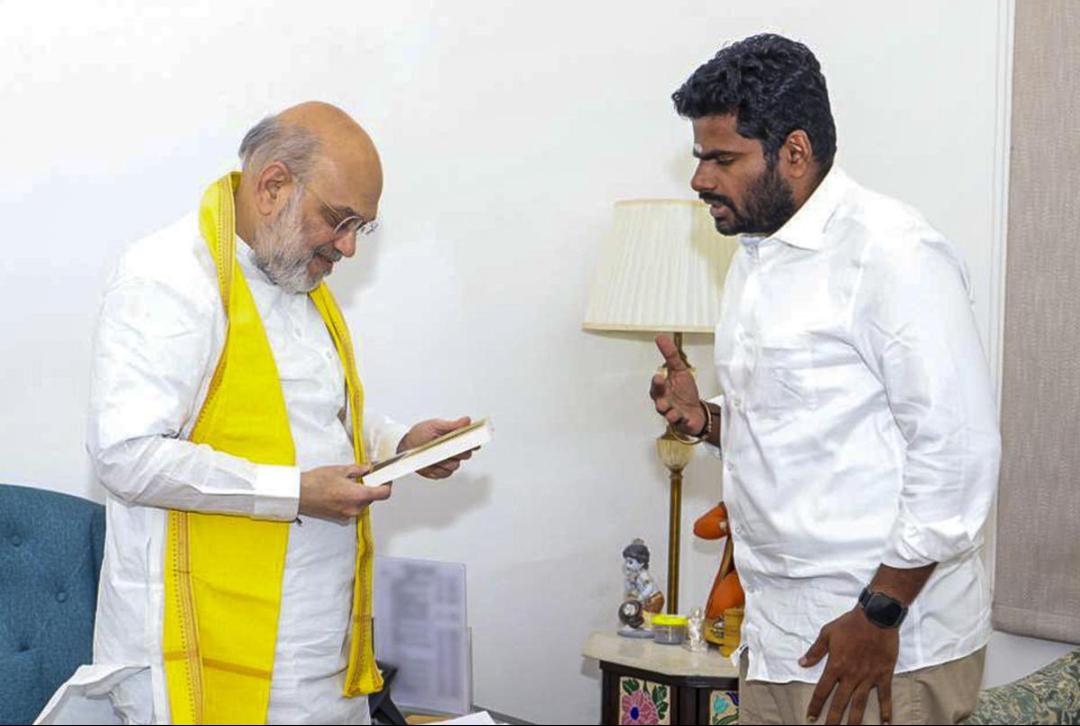
Image credit: Mega update by X
On June 2, 2026, the political world in Tamil Nadu was rocked by major news. K. Annamalai, the former state president of the Bharatiya Janata Party (BJP), officially submitted his resignation letter.
Instead of dealing with local leaders, Annamalai flew straight to New Delhi. There, he handed a detailed five-page resignation report to BJP National President Nitin Nabin. Afterward, he sat down for high-stakes meetings with Union Home Minister Amit Shah and the party’s national general secretary, B.L. Santhosh.
Right now, top BJP leaders are trying to do damage control. They have asked Annamalai to stay in New Delhi and “reconsider” his choice to leave. But close sources say he has made up his mind and is not backing down. So, how did the BJP lose its most popular face in the south?
Why 11% Dropped to 3%
When Annamalai was leading the Tamil Nadu BJP, he had a very clear vision: he wanted the party to grow independently. He strongly believed that the BJP should stop relying on older, local parties like the AIADMK. During the 2024 Lok Sabha elections, his solo strategy paid off massively, and the BJP secured an impressive 11% of the total vote share in the state.
However, things took a sharp turn before the 2026 Tamil Nadu Assembly elections. The central leaders in Delhi changed the game plan. They forced the state unit to team up with the AIADMK again, hoping to gather more votes against the ruling DMK party.
Annamalai hated this idea. He was very unhappy with the alliance strategy and how candidates were being chosen. Because his advice was ignored, he felt deeply “sidelined”. As a result, he stepped down as the state president in April 2025, handing the job over to Nainar Nagenthran.
When the 2026 election results finally came out, they proved Annamalai was absolutely right. The BJP-AIADMK alliance was a massive failure. In his resignation letter, Annamalai clearly pointed out that the BJP’s vote share crashed from a strong 11% down to a weak 3%. Even worse, the number of seats the party held in the state assembly dropped from four seats (won back in 2021) to just a single seat this time. He placed the blame entirely on the bad decision to join hands with the AIADMK.
Hurdles in Submitting in his Resignation
While Annamalai was in Delhi dropping this bombshell, things were getting strange back in Tamil Nadu. The current state BJP chief, Nainar Nagenthran, previously told reporters that he had not received any resignation letter from Annamalai.
To regular people, this sounds confusing. But in politics, it is a classic trick. Annamalai bypassed the local office completely and handed his letter straight to the top bosses in the capital. By pretending not to know anything, the state leadership was simply trying to buy more time. They wanted to make the resignation look like a mere rumor while the leaders in Delhi tried to talk Annamalai out of leaving.
The central leadership is so worried about this mess that they actually summoned Nagenthran to fly to New Delhi to figure out a solution.
Building a Fresh “Tamil-First” Party
Annamalai is not retiring from public life; he is just changing his uniform. Friends close to him say he realized that staying in a national party like the BJP strictly limits his political growth.
Instead of fighting with bosses in Delhi, Annamalai is planning to launch his very own regional political party. Sources claim this new party could officially start within the next six to eight months.
What will this new party look like?
• A “Secular” Identity:
It will move away from the BJP’s traditional image and focus on being secular.
• “Tamil-First” Focus:
The party will prioritize Tamil pride and issues, combining local identity with a broad national vision.
• A Clean Slate:
Annamalai believes there is a huge gap in the market for young professionals and first-time voters who are completely exhausted by the old options (the DMK, the AIADMK, and the BJP).
His team is already doing the background work to either register a brand-new party name or take over an existing one.
He has also started speaking directly to local parents’ worries. Just recently, he strongly criticized the Union government’s decision to make three languages compulsory for CBSE Class IX students, showing he is ready to fight for Tamil Nadu’s specific interests.
Conclusion
The story of Annamalai’s exit is a perfect lesson in how politics actually works in South India. Voters in Tamil Nadu do not like feeling controlled by decisions made thousands of miles away in New Delhi. By forcing an unwanted alliance and ignoring the advice of their most popular local leader, the BJP ended up losing both a crucial election and their biggest star.
Now, Annamalai is taking everything he learned and is setting up a fresh, youth-driven platform. He is ready to rewrite the rules of Tamil Nadu politics, this time entirely on his own terms.