Image credit : Ashish Kushwaha on Unsplash
Introduction: Why Clean Summer Skies Can Be Misleading
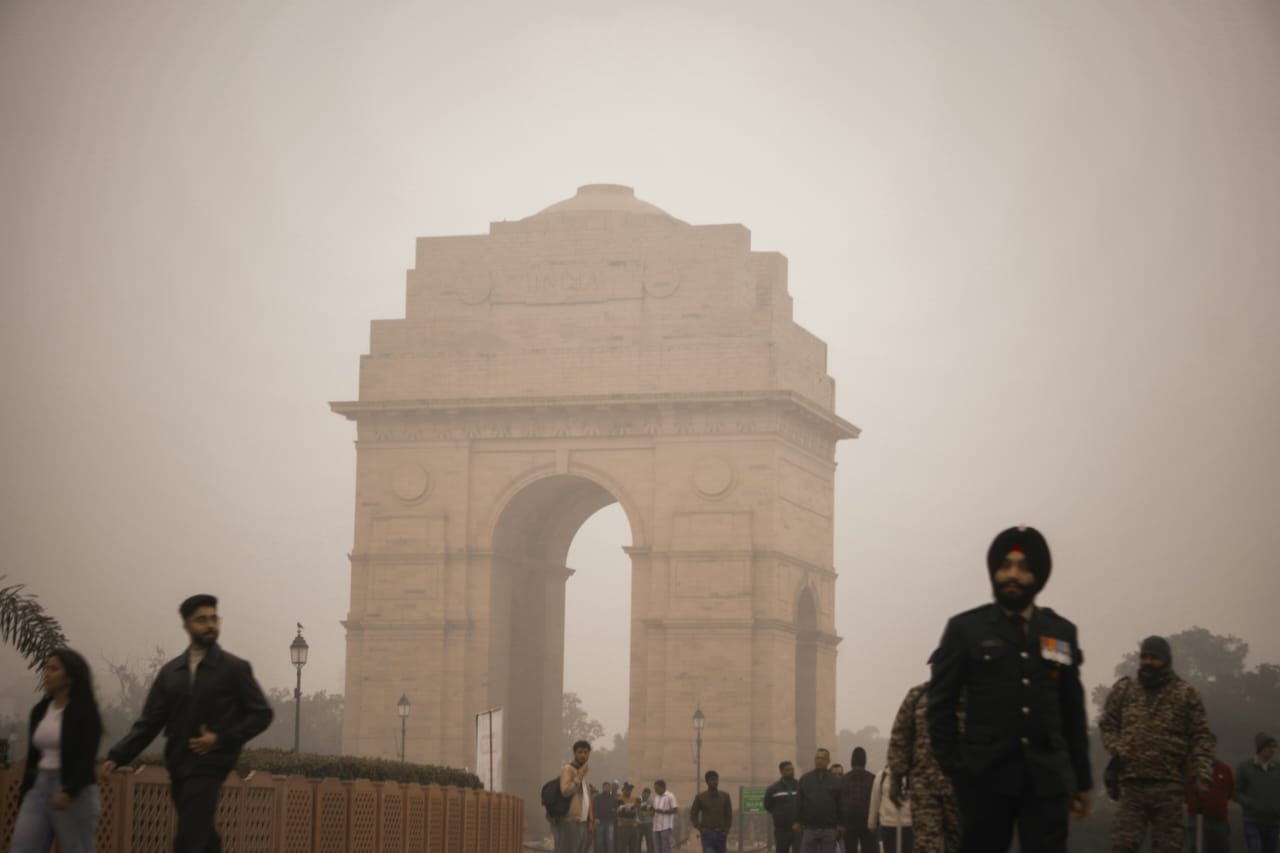
For years, India’s battle against air pollution has followed a familiar seasonal script. Winter is treated as the peak danger period, with low temperatures, stagnant winds, and thick smog choking cities across the country. Summer, by contrast, has traditionally been seen as a respite a time when stronger winds disperse pollutants and improve air quality.
But this understanding is rapidly becoming outdated.
A growing body of scientific evidence suggests that while particulate pollution may decline during warmer months, another pollutant is silently gaining ground: ground level ozone. Unlike smog or soot, ozone cannot be seen, smelled, or directly traced to a single source. Yet it is increasingly emerging as one of the most significant environmental and public health challenges facing urban India.
The rise of ozone pollution reveals a critical truth about climate change and air quality: cleaner looking skies do not always mean cleaner air.
Understanding Ground-Level Ozone
Ozone exists in two very different forms.
High above the Earth’s surface, in the stratosphere, ozone acts as a protective shield that absorbs harmful ultraviolet radiation from the sun. At ground level, however, ozone becomes a dangerous pollutant.
Unlike particulate matter such as PM2.5 and PM10, ozone is not directly emitted from vehicles or industries. It forms through a complex series of photochemical reactions involving nitrogen oxides (NOx), volatile organic compounds (VOCs), and carbon monoxide released from sources such as traffic, factories, diesel generators, fuel evaporation, and open waste burning.
When these pollutants interact under intense sunlight and high temperatures, ozone concentrations rise.
This means that heatwaves and rising temperatures are not merely consequences of climate change they are also catalysts for worsening air pollution.
India’s Emerging Ozone Burden
Recent findings indicate that India is becoming increasingly vulnerable to ground-level ozone pollution.
According to the State of Global Air 2025 report, India ranks among the countries with the highest population exposure to ozone. Long-term exposure to ambient ozone was linked to an estimated 470,000 deaths globally in 2023, with India accounting for a significant share of this burden.
Several factors make India particularly susceptible. Rapid urbanisation, high vehicular density, industrial emissions, widespread biomass burning, and increasingly frequent heatwaves create ideal conditions for ozone formation.
Data analyses conducted across major Indian cities suggest that ozone pollution is no longer confined to isolated episodes. Instead, it is becoming a recurring summer phenomenon.
This marks a fundamental shift in India’s air pollution profile. The challenge is no longer limited to winter smog; it now extends across seasons.
Heatwaves and Ozone: A Dangerous Feedback Loop
The relationship between ozone and heat is deeply interconnected.
Higher temperatures accelerate the chemical reactions responsible for ozone formation. Heatwaves also increase emissions of volatile organic compounds from both natural and human made sources.
As climate change drives more frequent and intense heat events across India, ozone concentrations are likely to rise further.
This creates a dangerous feedback loop. Rising temperatures contribute to higher ozone levels, while ozone itself acts as a greenhouse gas that intensifies warming.
The result is a dual environmental threat where climate change and air pollution reinforce each other.
For India, where heatwaves are already becoming longer, earlier and more severe, this interaction could significantly worsen future health risks.
The Hidden Health Emergency
Ground level ozone primarily attacks the respiratory system.
Unlike particulate matter, which accumulates over time, ozone can trigger immediate physiological responses even after short-term exposure. It irritates the lining of the lungs, causes inflammation of the airways, and reduces overall lung function.
Common symptoms include persistent coughing, throat irritation, chest discomfort, wheezing, shortness of breath, and pain while breathing deeply.
Doctors across several cities have begun reporting an unexpected trend: respiratory flare-ups during summer months.
Traditionally, physicians viewed summer as a relatively safe period for patients with asthma and chronic respiratory conditions. However, increasing instances of sudden exacerbations during periods of extreme heat are challenging these assumptions.
Children, older adults, outdoor workers, and individuals with pre-existing respiratory diseases face particularly high risks.
Research from multiple countries has linked elevated ozone levels with increased emergency room visits, greater dependence on rescue medication, and higher rates of asthma attacks.
Yet in India, ozone remains significantly under-recognised in both clinical practice and public discourse.
Why India’s Air Quality Strategy Must Evolve
India’s air pollution policies have largely focused on particulate matter, and rightly so. PM2.5 continues to account for a substantial share of pollution related illnesses and deaths.
However, the rise of ozone pollution demands a broader approach.
Reducing ozone concentrations requires controlling its precursor pollutants rather than targeting ozone directly. This means stricter regulation of vehicular emissions, industrial pollutants, diesel generators, fuel vapours, and open waste burning.
Traditional responses such as water sprinkling or anti-dust measures offer little protection against ozone because the pollutant forms through atmospheric chemistry rather than direct emissions.
Improved monitoring systems, stronger public health advisories, and city specific action plans will therefore become increasingly important.
Equally critical is integrating climate policy with air quality management. Efforts to reduce greenhouse gas emissions can simultaneously lower ozone forming pollutants, creating benefits for both public health and climate resilience.
Conclusion: Rethinking India’s Air Pollution Calendar
The emergence of ground level ozone challenges long held assumptions about when and how air pollution affects India.
The country’s environmental crisis is no longer confined to winter smog episodes. It now extends into the hottest months of the year, driven by a combination of urban emissions, rising temperatures, and changing atmospheric chemistry.
As India prepares for a future shaped by climate change, policymakers must recognise that air pollution is evolving.
The summer sky may appear clearer than winter’s haze, but appearances can be deceptive. Invisible pollutants like ozone remind us that the absence of smog does not necessarily mean the presence of clean air.
Addressing this challenge will require a shift in both public awareness and policy priorities before an invisible threat becomes a visible health emergency.
Yeh article aapko kaisa laga?