
Indian education system is defined by its hyper-competitive, high-stakes entrance examinations. For millions of students, tests like the National Eligibility cum Entrance Test (NEET) are not mere academic assessments; they function as absolute socio-economic thresholds. Escaping poverty or securing a middle-class future frequently hinges on securing a fraction of the available seats in premier medical and engineering institutions. However, the integrity of this entire framework has been fundamentally compromised by organized exam fraud.
Plague of Paper Leaks: 152 Breaches, 7.5 Crore Affected
The 2026 NEET-UG crisis is not an isolated administrative glitch; it is the climax of an ongoing epidemic. The frequency of examination breaches in India has reached catastrophic proportions. According to recent figures highlighted by the Opposition in Parliament in July 2026, India has suffered at least 152 documented paper leaks over the last decade.
This systemic failure has directly impacted the academic years and careers of approximately 7.5 crore (75 million) students nationwide. From state-level recruitment tests like the BPSC and UP Police Constable exams to national gateways like NEET, the “examination mafia” thrives on a highly vulnerable supply chain. When over two million candidates are tested simultaneously via physical paper-and-pen formats, question papers passing through private printing presses, third-party logistics companies, and localized private test centers cease to be secure documents and instead become lucrative commodities.
Government’s Response: PM Modi and Fast-Track Courts
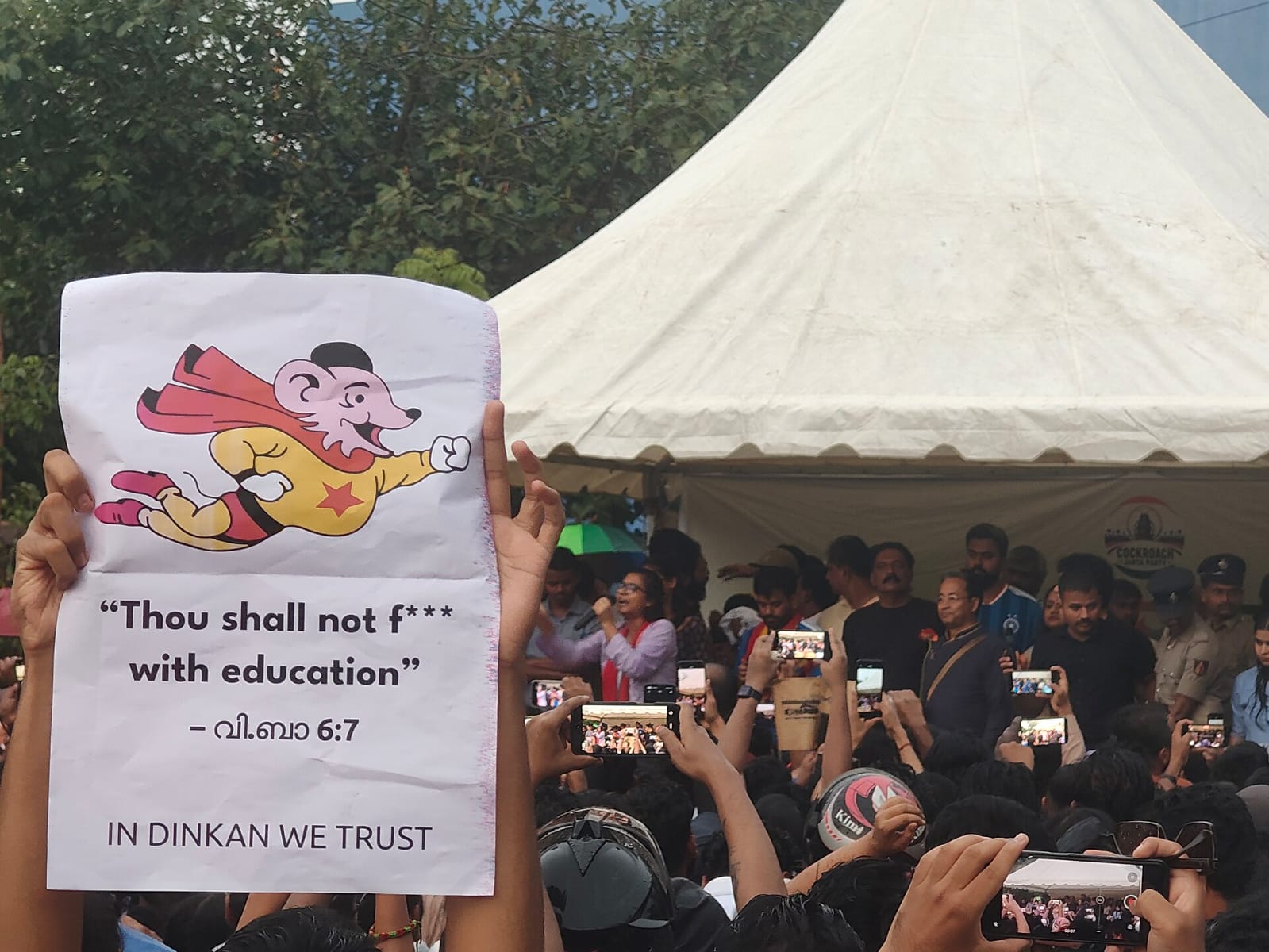
Faced with escalating unrest and the massive “Chalo Sansad” protests in New Delhi, the government’s response has focused heavily on judicial deterrence. In a late-night video message broadcast to the youth on July 23, 2026, Prime Minister Narendra Modi acknowledged the severity of the crisis.
Addressing the nation, the Prime Minister stated: “Friends, I am well aware that the issue of paper leaks is not a small matter. It causes immense distress to lakhs of students and their parents… Our primary responsibility was to ensure that the students did not lose an academic year”. He further assured that the state would not tolerate the syndicates, announcing, “Nothing is more important than the welfare and future of our youth! We have decided to set up fast-track courts to ensure swift and stringent punishment for those involved in paper leaks”.
Following this directive, the Law Ministry immediately initiated the establishment of dedicated fast-track courts across the Bombay, Delhi, Calcutta, and Madhya Pradesh High Courts to ensure day-to-day hearings for ongoing NEET cases.
Anti-Paper Leak Bill: Severe Punishments, Reactive Flaws
Legislatively, the administration has attempted to weaponize deterrence. Building on previous frameworks, the government introduced the Public Examinations (Prevention of Unfair Means) Amendment Bill, 2026 in the Lok Sabha in late July.
The new provisions drastically increase the penalties for organized exam fraud. For individuals caught using unfair means, the minimum imprisonment has been raised to a term of 5 to 10 years, alongside fines up to ₹50 lakh. For organized crime syndicates facilitating these leaks, the law now mandates a minimum of 7 to 10 years in prison and a staggering minimum fine of ₹10 crore.
While these legislative measures project immense administrative resolve on paper, they are fundamentally flawed by their reactive nature. Punitive laws activate only after an examination has been breached, the paper sold, and the academic years of millions derailed. A 10-year prison sentence for a syndicate broker does not refund the emotional and financial toll levied on a middle-class family whose child lost a year of their life.
Acquittal of Sanjeev Mukhiya
Furthermore, history has repeatedly shown that investigative agencies struggle to legally dismantle the highest tiers of these syndicates, exposing the futility of relying on post-leak arrests.
A glaring precedent is the Central Bureau of Investigation’s (CBI) handling of the 2024 NEET-UG paper leak. Sanjeev Kumar, alias Sanjeev Mukhiya, was widely named in the initial Bihar Police FIR as the primary mastermind of the operation. However, in July 2026, the CBI officially clarified that a comprehensive investigation found absolutely no evidence linking Mukhiya to the theft or distribution of the 2024 NEET-UG paper. Consequently, no chargesheet was filed against him for that specific crime.
When alleged masterminds routinely escape primary charges due to a lack of concrete digital or financial trails, while foot soldiers take the fall relying solely on reactive court cases to secure the education system is an exercise in futility.
Institutional Deficits: NTA vs. UPSC
To understand why the system cannot proactively stop leaks, one must examine the severe administrative weakness of the National Testing Agency (NTA), especially when compared to the Union Public Service Commission (UPSC). During recent Supreme Court hearings, the judiciary explicitly questioned why the NTA continuously fails, while the UPSC conducts the nation’s premier civil services examinations maintains ironclad operational security.
The disparity is structurally embedded:
- Constitutional Standing:
The UPSC is an autonomous constitutional body established under Article 315 of the Constitution. The NTA, conversely, is merely a registered society operating under the Societies Registration Act of 1860.
- Staffing and Outsourcing:
A constitutional body utilizes a permanent, highly trained bureaucratic cadre to ensure strict secrecy management. In stark contrast, recent data presented to the Rajya Sabha in July 2026 confirmed that the NTA operates with only 24 occupied permanent posts out of a minimal sanctioned strength of 39. To conduct exams for tens of millions of students, the NTA is forced to rely entirely on 73 contractual employees and 124 outsourced personnel.
The NTA functions as a hollowed-out logistical shell. It is impossible to execute military-grade operational security while relying on temporary, third-party labor to handle sensitive national data.
Grievance of Accountability
The ultimate grievance surrounding the functioning of the NTA is the complete vacuum of proactive, structural accountability. The recent termination of NTA officials and the resignation of the Union Education Minister may temporarily appease public anger, but they are political pressure valves, not systemic cures.
True accountability demands executing long-ignored expert recommendations: terminating the reliance on private test delivery agencies, transitioning to decentralized, encrypted hybrid digital examinations, and upgrading the NTA from an understaffed registered society into a constitutionally fortified institution. Until the state secures the system before the exam rather than policing it after the leak, the illusion of reform will continue to fail India’s youth.
Yeh article aapko kaisa laga?