
Image credit: Image Credits: X Handle of CJP.
When demands for Accountabilty meets Lathi charge.
For millions of young students across India, competitive examinations represent hope. They are the gateway to higher education, government employment, and a better future for working-class families. Aspirants invest years of relentless preparation, late nights, and financial sacrifices into these tests.
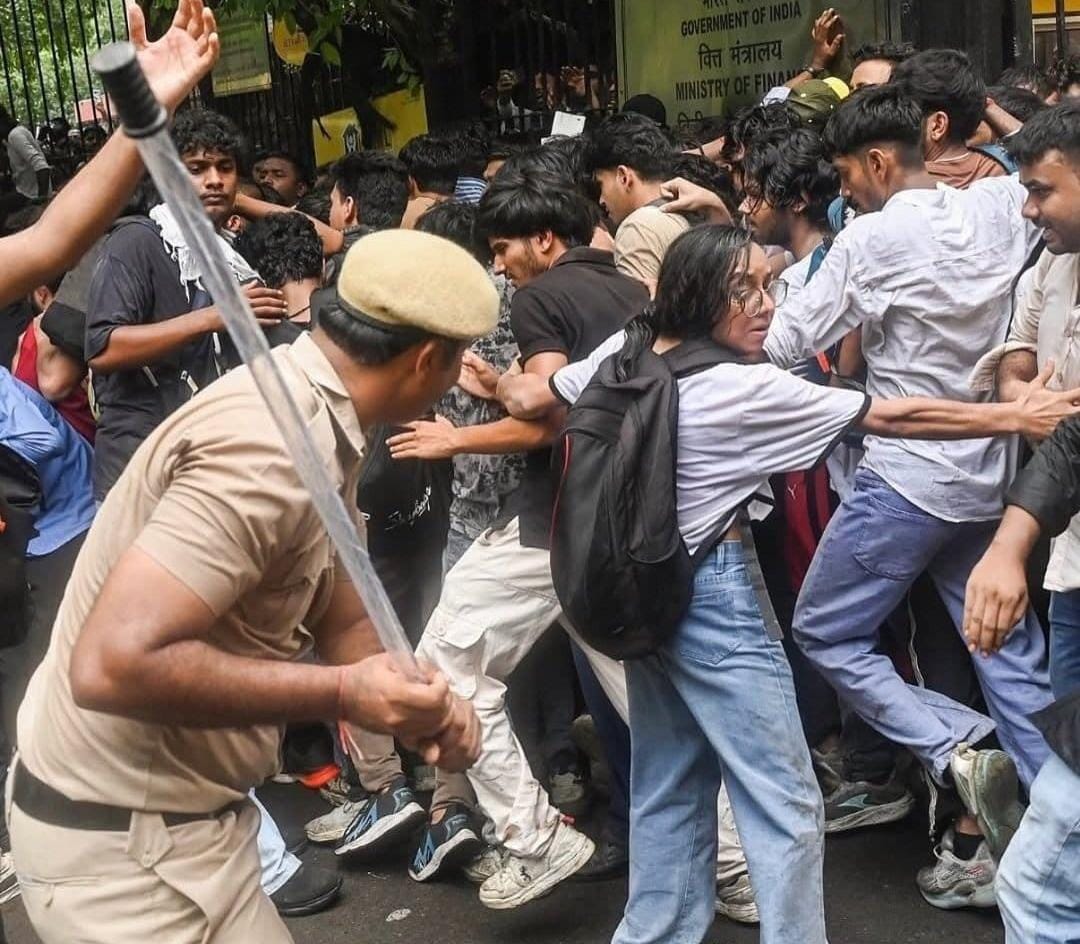
However, when recurring paper leaks and examination irregularities repeatedly derail these efforts, that hope transforms into frustration. In response, thousands of students gathered at Delhi’s historic protest site, Jantar Mantar. Their demand was straightforward: accountability from the government, independent investigations into paper leak syndicates, and systemic reforms to protect their merit.
Instead of an empathetic hearing or constructive dialogue, the peaceful demonstrations were met with an alarming display of state-sponsored force.
Unpacking the brutality: from batons to allegations of severe violence
What unfolded at Jantar Mantar went beyond standard crowd management. Eyewitness accounts, student testimonies, and petitions filed before human rights bodies and the judiciary brought shocking details to light:
- Disproportionate physical force:
protesters reported unprovoked lathi charges where officers targeted unarmed youths. Alarmingly, petitions submitted to the supreme court alleged the use of modified batons embedded with metal nails and electric batons, causing severe physical injuries.
- Allegations of sexual harassment and assault:
multiple female students reported systemic misconduct, including physical assault, unprovoked slapping, and sexual harassment at the hands of male police personnel during detentions and clearings.
- Extreme crowd-control weapons:
protesters faced heavy tear gas and tactics typically reserved for high-conflict zones. Petitions highlight instances involving the alleged use of pellet guns, which left young demonstrators with life-altering injuries, including vision loss.
“we didn’t come with weapons or political agendas. We came with our admit cards and degrees, asking why our hard work was sold to the highest bidder.”
— an affected student protester at Jantar Mantar
Instead of addressing the structural failures of testing agencies, the response aimed to crush the spirit of young citizens asking basic questions about their future.
What message does this send to Indian politics?
The brutal treatment of student protesters is not just a localized law-and-order issue; it carries deep implications for the future of Indian democracy and political culture.1. The criminalization of citizen dissent
When a government responds to peaceful policy questions with heavy surveillance, mass detentions, and physical violence, it shifts the democratic dynamic. Protesting is a constitutionally protected right, not a crime. Labelling youth demanding transparency as criminal elements weakens the core of democratic accountability.2. Deepening disillusionment among the youth
India boasts one of the youngest populations in the world. When young aspirants see their peers beaten, harassed, and jailed simply for asking why an exam was compromised, it breeds cynicism. It sends a dangerous signal: do not question systemic flaws, or you will face the full weight of state power.
3. A shift from governance to self-preservation
Protecting the integrity of public institutions should be a primary duty of any administration. When governments prioritize suppressing the news of a paper leak over fixing the leak itself, governance yields to damage control.
The road ahead: reclaiming democratic spaces and educational integrity
To heal the rift between the state and its youth, urgent structural steps must be taken:
- Independent judicial inquiries:
allegations of police brutality, excessive force, and harassment must be investigated impartially through judicial oversight, ensuring offending personnel are held accountable.
- Transparent testing mechanisms:
examination bodies must adopt independent third-party audits, digital tracking, and strict legal penalties for paper leak networks.
- Protection of the right to protest:
designated democratic spaces like Jantar Mantar must remain open for peaceful assembly without fear of violence, sieges, or intimidation.
Listen to the youth, don’t suppress them
A nation’s strength lies in how it treats its students, the architects of its future. When young people raise their voices against systemic corruption, they are attempting to strengthen the nation’s integrity, not weaken it. Suppressing their demands with batons and tear gas does not fix broken examination systems; it only fractures public trust. True leadership requires listening with empathy, addressing administrative failures, and ensuring that no student ever has to bleed for demanding a fair exam.
Yeh article aapko kaisa laga?