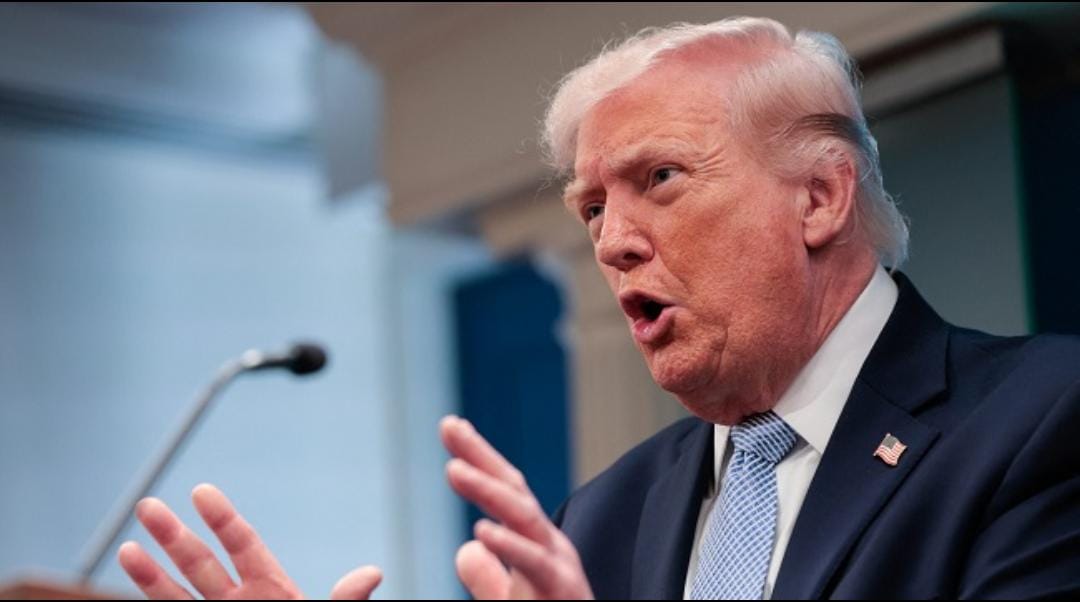
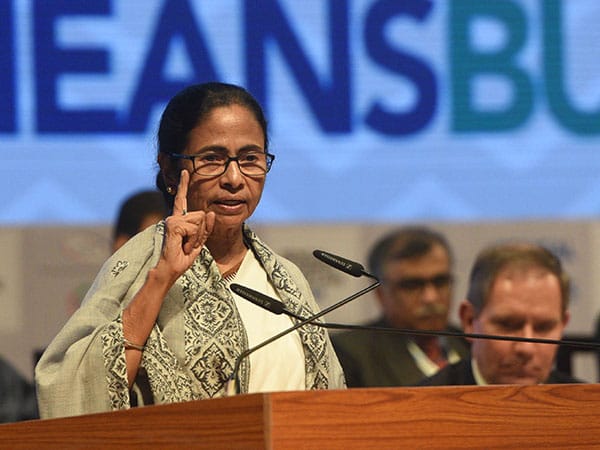
Photo: Chief Minister of West Bengal and All India Trinamool Congress leader, Mamata Banerjee giving a speech at Bengal Business Conclave – Digha 2019, Government of West Bengal
The 2026 Assembly elections in West Bengal wrapped up their final phase on April 29, 2026, and the focus has instantly moved to the exit polls. Most pollsters are predicting a closely fought, sharply divided verdict, but some are pointing to a historic victory for the Bharatiya Janata Party (BJP).
As the state waits for the official vote count on May 4, everyone is asking the same question: Is Chief Minister Mamata Banerjee’s 15-year rule coming to an end? To understand what might happen, we need to look at the actual numbers, the history of poll accuracy in India, the claims made by top leaders, and a massive, controversial change to the state’s voter list.
What Do the Exit Polls Say?
The exit polls have released surprising projections that point to a massive shift in Bengal’s political landscape. Major surveys like Today’s Chanakya project a huge surge for the BJP, estimating they will win around 192 seats, while the Trinamool Congress (TMC) could drop to roughly 100 seats. Another major survey, Matrize, gives the BJP an edge with 146 to 161 seats compared to the TMC’s 125 to 140.
However, not everyone agrees that the TMC is losing. Peoples Pulse is an outlier survey, predicting the TMC will win decisively with 177 to 187 seats, leaving the BJP far behind. These sharply contrasting numbers have kept the suspense incredibly high as counting day approaches.
Can We Trust Exit Polls?
In 2021, a majority of exit polls and political pundits confidently predicted a neck-and-neck race, with several highly publicized surveys declaring that the BJP would cross the majority mark and form the government. The actual results on counting day painted a completely different picture. The TMC crushed the opposition, winning a massive landslide of over 210 seats, leaving the BJP far behind.
Experts explain that predicting Bengal is tough because of the “silent voter” factor. In highly polarized areas where political tension is high, voters especially rural women who strongly back the TMC’s welfare schemes are often afraid to tell survey agents who they actually voted for.
Why the BJP is Confident
Despite past poll failures, the BJP leadership strongly believes that the people of Bengal have voted for a regime change this time around. Leaders point out that the massive voter turnout, which reached a record-breaking 91.5 percent, is a clear sign of a massive anti-incumbency wave against the current government.
Senior BJP leaders have been very vocal about their expected victory. They argue that voters are backing the party for development and identity, and that the BJP expects a historic mandate. High-profile BJP candidate Suvendu Adhikari, who is locked in a direct, intense battle with Mamata Banerjee in the Bhabanipur constituency, has confidently claimed that the ruling party is nervous and resorting to fear tactics.
The Impact of ‘SIR’ Voter Deletions
Before trusting the exit polls entirely, experts point to a massive structural change that makes predicting this election incredibly difficult. Just weeks before the voting began, the Election Commission of India conducted a Special Intensive Revision (SIR) of the voter list. This exercise resulted in the deletion of over 91 lakh names from the electoral rolls across West Bengal. Because of this, the state’s total electorate dropped from 7.66 crore down to around 6.75 to 6.8 crore voters.
The Election Commission stated that this revision was simply meant to clean the rolls by removing dead, duplicate, or shifted voters to create a more accurate database ahead of the polls. The BJP strongly defended the move, stating it was necessary to eliminate bogus or illegal entries from the rolls. However, the ruling TMC alleged that this process unfairly targeted minorities, migrants, and economically weaker sections, raising deep concerns about voter disenfranchisement. Chief Minister Mamata Banerjee even challenged the deletions in the Supreme Court. A breakdown of the numbers shows that 63 percent of the deleted voters were Hindus, while 34 percent were Muslims.
What makes this truly game-changing is where these deletions occurred. They were heavily concentrated in politically crucial districts like Murshidabad, Malda, North 24 Parganas, and South 24 Parganas. In over 140 constituencies, the total number of deleted voters is actually larger than the winning vote margin from previous elections. This massive shake-up has fundamentally altered the electoral dynamics, turning the entire race into a highly unpredictable, margin-driven contest.
Mamata Banerjee’s Counter-Attack
On the other side, Chief Minister Mamata Banerjee has completely rejected the exit polls predicting her defeat. She claims these numbers were broadcast at the “instruction of the BJP” specifically to demoralize her party workers and reassure the stock market before the real results are announced.
Dismissing the BJP’s narrative, she boldly predicted a sweeping victory for her own party, stating, “We will cross 226 seats in 2026. We might cross even 230 seats”. She also thanked the voters for their overwhelming participation, noting that the second phase saw 92.6% voting, marking the highest state turnout since Independence. According to senior TMC leaders like MP Saugata Roy, this massive voter turnout is actually a vote in favor of the TMC, proving that the public is angry with the BJP and stands firmly by Mamata Banerjee.
The Fight Over the Strong Rooms
The tension has now moved from the voting booths directly to the strong rooms where the Electronic Voting Machines (EVMs) are stored. Just days before the May 4 vote count, the TMC accused the Election Commission of India (ECI) and the BJP of serious electoral fraud.
The TMC posted a video claiming that CCTV footage caught ballot boxes being opened without any political party representatives present, calling it the “murder of democracy”. This sparked immediate anger, leading senior TMC leaders Kunal Ghosh and Shashi Panja to stage a public protest outside the Netaji Indoor Stadium in Kolkata.
In response to these fears, Mamata Banerjee sent out a strict order to her party workers to stay on high alert and physically guard the strong rooms, warning them that secret attempts could be made to swap the machines before counting begins. While the ECI has categorically denied these cheating claims, this bitter, on-the-ground fight shows that the battle for Bengal is far from over.
Conclusion
If the exit polls are right, the BJP has managed to capture the anti-incumbency anger and win despite the massive changes to the voter list. But if the TMC wins, it will prove that Mamata Banerjee’s powerful welfare schemes and grassroots connection were stronger than both the BJP’s campaign and the historic deletion of 91 lakh voters. The true reality of West Bengal’s political future remains locked inside the electronic voting machines, waiting to be revealed on May 4.
Yeh article aapko kaisa laga?