
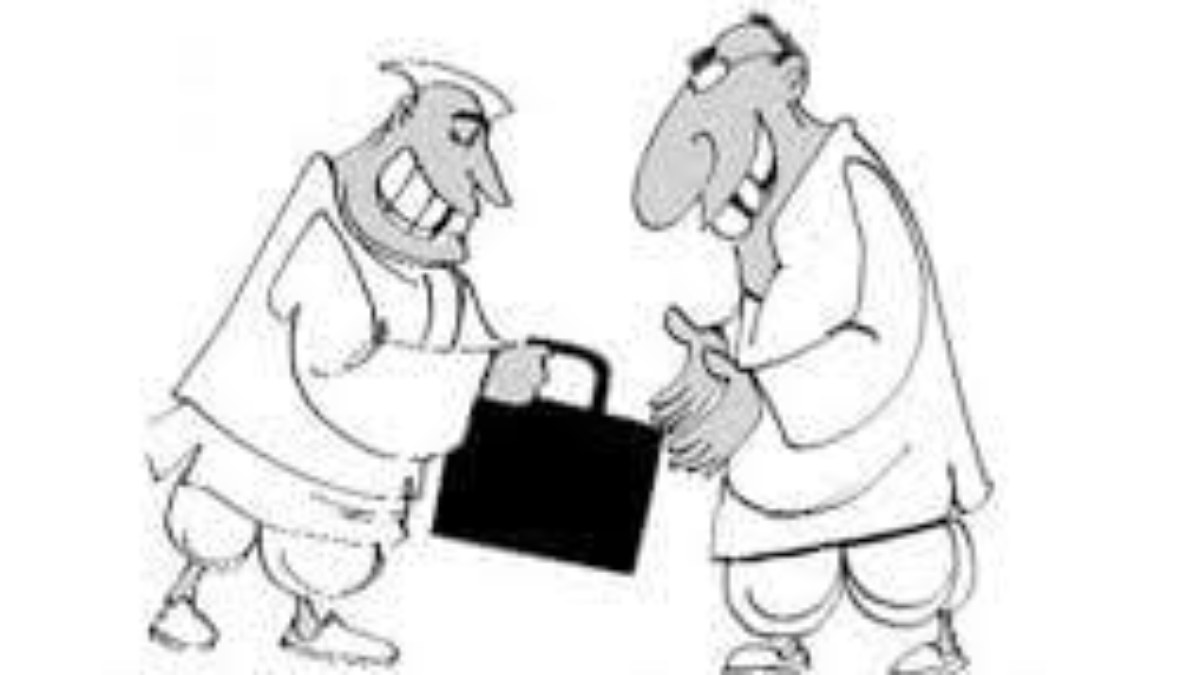
Photo: Anti- defection
A Political Exit That Shakes Constitutional Laws
In a dramatic political development, Raghav Chadha, along with six Members of Parliament from the Aam Aadmi Party, has walked out of the party, triggering one of the most significant constitutional questions in recent times. While political defections are not new to Indian democracy, the scale and timing of this exit have reignited a long-standing debate, whether India’s anti-defection law prevents political instability or quietly legitimises it.
IWritten by Hency Kushwah I
What appears, at first glance, to be a political realignment quickly transforms into a constitutional test. The focus now shifts from politics to law: does this mass departure fall within the protection of the Tenth Schedule, or does it strike at the very idea of representative democracy?
The 2/3rd Rule: Shield or Loophole?
At the centre of this controversy lies Section 4 of the Tenth Schedule, a provision that was never meant to legitimise defections, but increasingly appears to do exactly that.
The clause provides that a member shall not be disqualified if his original political party merges with another political party, and he, along with others, becomes part of that merger or chooses to function separately. Crucially, such a merger is deemed valid only when not less than two-thirds of the legislature party agrees to it.
On paper, this seems restrictive, in practice, it creates a threshold. And once that threshold is crossed, the very nature for which this act is made, itself changes. What would otherwise be disqualification suddenly becomes protection as the law assumes that such a large shift reflects a genuine political decision rather than opportunistic defection. However, the present situation exposes the fragility of that assumption. When a large group of MPs leaves together, the line between collective conviction and coordinated strategy becomes increasingly blurred.
There is a deeper legal problem often ignored. The provision does not treat the two-thirds requirement as an independent test. It is only a sufficient condition, not the foundation of a valid merger. The law requires something more fundamental i.e. the actual merger of the original political party itself.
Without that, a numerical shift inside the legislature has no independent legal standing.
Legislature Party vs Political Party: A Constitutional Disconnect
One of the most complex aspects of anti-defection law is the distinction between the “legislature party” and the “original political party.” The Constitution allows members of a legislature party to merge, even if the original party continues to exist.
In practical terms, this means that elected representatives can walk away from the party under whose banner they were elected, yet retain their seats if they meet the numerical requirement. This creates a constitutional disconnect between the voter’s mandate and legislative behaviour.
The question that arises is not merely legal, but democratic. When voters choose a party, do they also consent to the possibility that their representatives may collectively abandon that party without electoral consequence?
The Role of the Chairman: Authority and Its Limits
The immediate decision on whether these MPs face disqualification will rest with the Chairman of the Rajya Sabha. This office plays a crucial role in interpreting and applying the Tenth Schedule.
This restraint was modified by the Supreme Court in Kihoto Hollohan v. Zachillhu (1992), which allowed for the judicial review, but only after the decision is rendered.
In Ravi Naik v. Union of India (1994), the Court clarified that “voluntarily giving up membership” does not require formal resignation. Conduct alone can be sufficient. Public alignment against one’s party or support for another may itself amount to defection.
This interpretation expands the scope of disqualification, but only in individual cases. When it comes to collective action, the law becomes more complex.
In the last elections of K’taka assembly-level controversies, the Court has walked a careful line to refusing to compel Speakers to act within rigid timelines, while later insisting that decisions must be taken within a reasonable period, often interpreted as around three months.
Further, the Speaker or Chairman is expected to act as a neutral constitutional authority while deciding questions of disqualification. But this expectation often collides with political reality. The office is not out of the party influence. Decisions may be delayed, expedited, or interpreted in ways that align with political interests. In such a situation, obedience to the anti-defection law may appear restrictive, while strategic defiance, if legally structured, becomes advantageous. This transforms the law from a deterrent into a calculated risk.
A Question of Political Morality
Even if the exit falls within the technical boundaries of the law, it does not end the debate. Constitutional validity does not always align with democratic legitimacy.
At its core, the controversy raises a deeper question about political morality. Is it enough for an action to be legally permissible, or must it also respect the spirit of electoral representation? When laws allow outcomes that appear to undermine voter expectations, the gap between legality and legitimacy becomes difficult to ignore.
Moment That Tests the Constitution Itself
The departure of Raghav Chadha and fellow MPs is more than a political episode. It is a constitutional moment that forces a re-examination of the anti-defection framework.
The Tenth Schedule was meant to stabilise Indian democracy. Yet, situations like this suggest that it may also be enabling new forms of instability, structured, strategic, and legally insulated.
Whether this episode leads to disqualification, judicial intervention, or political acceptance, one thing is clear: the law governing defections is once again under scrutiny. And this time, the question is not just about enforcement, but about whether the law itself needs reform.
Yeh article aapko kaisa laga?