
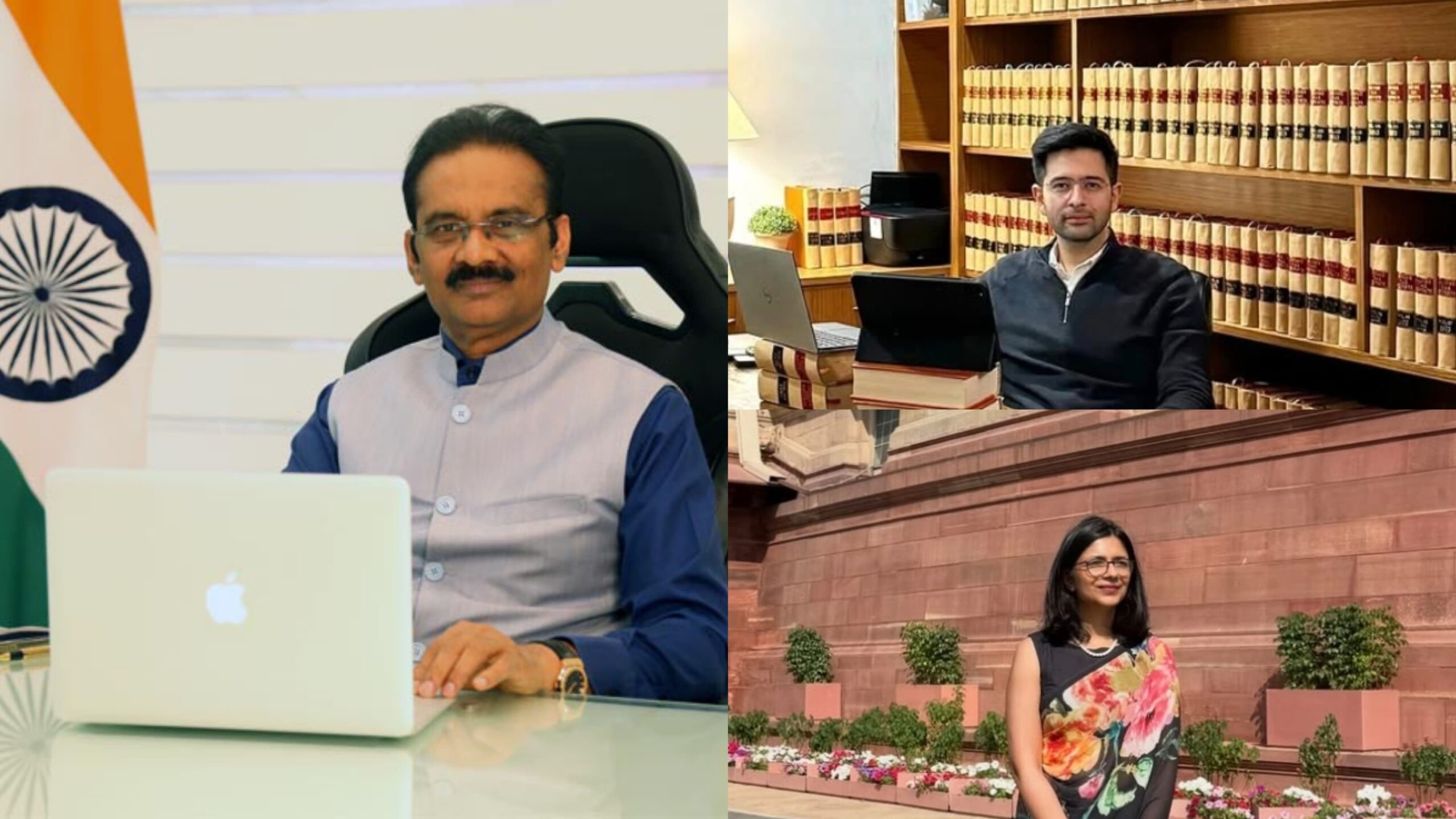
Photo: Majorly (Ashok mittal with core members (Swati & Raghav)
Behind the Spotlight: Evaluating Ashok Mittal and the Seven-Member exodus from AAP
When seven Rajya Sabha members from the Aam Aadmi Party transitioned to the Bharatiya Janata Party, it created a significant structural deficit for the opposition. The departing group included highly recognizable political figures such as Raghav Chadha and Swati Maliwal, alongside Sandeep Pathak, Harbhajan Singh, Rajinder Gupta, Vikram Sahney, and Ashok Mittal. While public discussion naturally centers on the departure of long-term party loyalists, evaluating the specific timeline of Ashok Mittal provides the clearest look at the complex external pressures driving this parliamentary shift.
Departure of Core Loyalists and Strategists
The inclusion of individuals like Swati Maliwal, Raghav Chadha, and Sandeep Pathak in the departing group represents a substantial operational loss for the Aam Aadmi Party. Maliwal built her public career as a vocal advocate for women’s rights and served as a core loyalist of the party for many years. Similarly, Pathak functioned as a primary electoral strategist, while figures like Harbhajan Singh brought significant public recognition to the party’s Punjab contingent.
For career politicians like Chadha, who was recently demoted from his deputy leader position, or Maliwal, who has navigated internal party complexities over the past year, transitioning to a new platform often aligns with seeking a more secure political footing. Their exits are highly notable due to their public profiles, but they follow a recognizable pattern of political realignment driven by internal friction and strategic disagreements.
Contradictory Timeline of Ashok Mittal
In contrast to the career politicians in the group, the timeline surrounding Ashok Mittal presents a highly contradictory administrative scenario. When the Aam Aadmi Party leadership removed Chadha from his deputy leader position three weeks ago, they specifically selected Mittal to assume the role.
Mittal received this official promotion to manage the party’s legislative strategy just days before the mass transition occurred. It is highly unusual in parliamentary procedure for a representative to leave an organization immediately after accepting a major leadership promotion. Mittal assumed the responsibility of guiding the opposition strategy in the Upper House, only to suddenly resign and join the ruling party alongside the exact group of lawmakers he was meant to help lead. This specific sequence of events makes his transition difficult to attribute to standard ideological differences.
Federal Scrutiny and Commercial Operations
Mittal is a prominent businessman managing a large educational and commercial network in Punjab, functioning as the Chancellor of Lovely Professional University alongside several family-owned enterprises.
The timing of his political departure aligns closely with recent actions by law enforcement. Just ten days before he joined the ruling party, the Enforcement Directorate conducted searches across multiple properties connected to his business network under the Foreign Exchange Management Act. For a business leader managing a large institutional network, an active federal investigation presents a serious administrative challenge. Political analysts observe that transitioning to the ruling party is frequently utilized by corporate figures as a strategy to secure a political shield and reduce regulatory pressure on their commercial interests.
Coordinating the Legal Bypass
Despite their varying professional backgrounds and individual motives, the seven parliamentarians required a coordinated strategy to manage their transition legally. The Anti-Defection Law strictly disqualifies lawmakers who voluntarily leave their political party as individuals.
To retain their parliamentary seats, the group needed to utilize a specific legal exception that allows a merger if two-thirds of a party’s legislative members agree to the shift. Since the Aam Aadmi Party held ten seats in the Rajya Sabha, the group required exactly seven members to execute the move.
Mittal, Chadha, Maliwal, and the other four members essentially required each other’s participation to reach this legal threshold. They utilized the group format to navigate the legal requirements, allowing figures like Mittal to secure his business environment while the career politicians secured their ongoing parliamentary status without facing immediate disqualification.
Yeh article aapko kaisa laga?