Image credit: The Creative Commons Attribution-Share Alike 4.0
A Sacred Mountain, A Growing Dispute
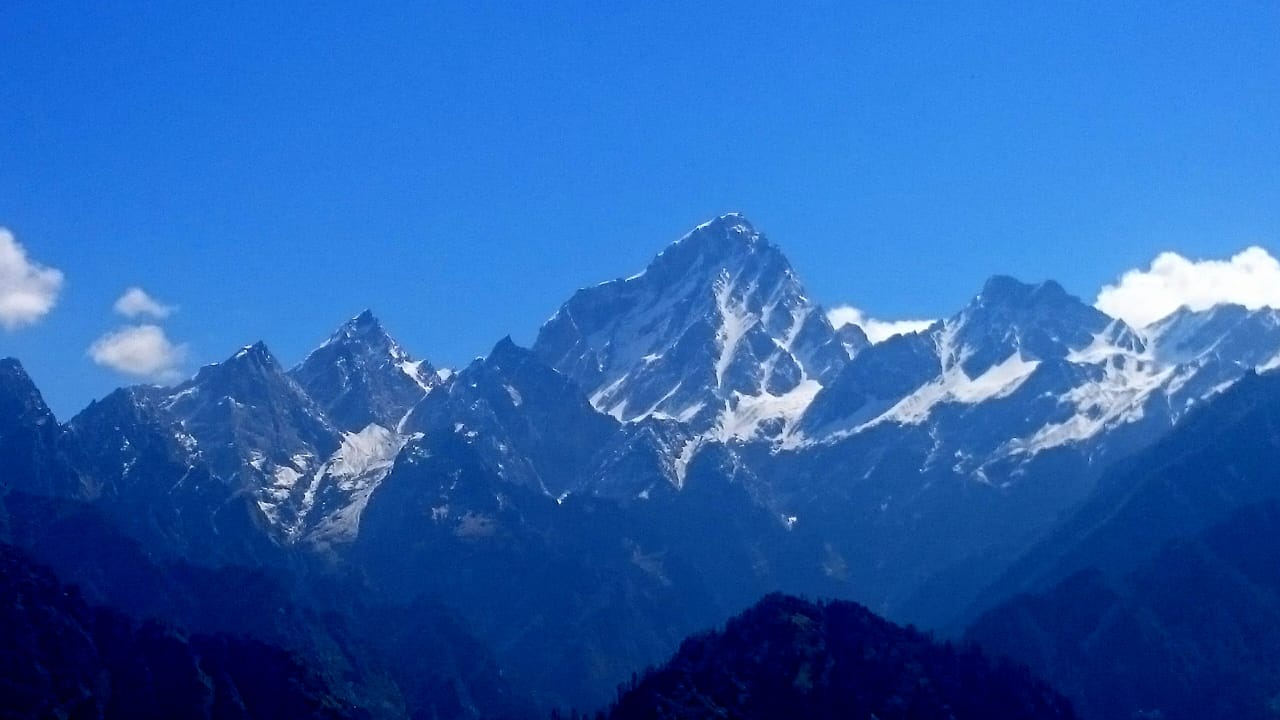
High in the Himalayas, at an altitude of nearly 5,500 metres, stands Om Parvat, a mountain located near India’s borders with Tibet and Nepal. It is famous for a natural snow pattern on its peak that resembles the sacred Hindu symbol “Om”. For thousands of devotees, this unique formation is seen as a divine sign of Lord Shiva.
But in June this year, Om Parvat became the centre of a major controversy. A plan to install a three-tonne Shivling near the mountain was strongly opposed by the indigenous Rung community, who have lived in the region for centuries. What appeared to be a disagreement over placing a religious idol was, in reality, a much larger debate about culture, identity, and the future of a sacred Himalayan landscape.
What Happened?
On June 15, members of the Shri Adi Kailash Group 2020 Trust, an organisation formed by devotees from Patna, Nashik, Jodhpur, Surat, and Noida, reached Nabidang in Uttarakhand. The group had planned to install a massive Shivling near the Om Parvat viewpoint as a mark of devotion to Lord Shiva.
The Shivling had been specially crafted in Rajasthan and transported over a long distance by truck. However, before it could reach the site, members of the Rung community protested against the move. Following the protests, the district administration stopped the Shivling at Garbhadhar, an important halt on the Kailash Mansarovar and Adi Kailash pilgrimage routes.
The administration’s decision temporarily prevented the installation, but it also brought national attention to a conflict that had been quietly building in the region.
Why Did the Rung Community Oppose the Shivling?
The Rungs made it clear that they were not opposing Lord Shiva or Hindu worship. In fact, they themselves deeply revere Shiva. However, their way of worship is very different.
For the Rungs, the Himalayas themselves are sacred. They believe Shiva lives in the mountains, rivers, forests, and glaciers. Om Parvat is not just a pilgrimage destination but a living deity that should remain untouched by human construction.
Community members feared that installing a permanent Shivling would gradually change the spiritual character of the place. According to them, it could open the door to further construction such as temples, shops, roads, and commercial facilities. They believe such developments would disturb the fragile Himalayan environment and slowly replace their traditional beliefs with organised religious practices.
For the Rungs, preserving the mountain in its natural form is itself an act of worship.
More Than a Religious Issue
The dispute goes beyond religion. It reflects a larger concern shared by many indigenous communities across India.
The Rungs worry that their centuries-old customs and traditions could slowly disappear if outside groups begin reshaping their sacred spaces. While many Hindu pilgrims see Om Parvat as a place to express devotion through temples and idols, the Rungs see its untouched natural beauty as its greatest spiritual value.
This difference highlights two distinct ways of understanding faith. One focuses on building visible places of worship, while the other believes that nature itself is the temple.
Neither approach questions the importance of Lord Shiva. Instead, the disagreement is about how devotion should be expressed and who gets to decide the future of sacred landscapes.
“The Challenge of Development and Pilgrimage”
In recent years, Uttarakhand has witnessed rapid growth in religious tourism. Improved roads and government initiatives have made remote Himalayan pilgrimage sites more accessible than ever before.
While this has boosted local economies and tourism, it has also increased pressure on fragile mountain ecosystems and indigenous cultures. Many local communities fear that excessive construction, rising tourist numbers, and commercial activities may permanently alter the character of these sacred regions.
The Om Parvat controversy reflects these concerns. For many observers, it raises important questions about balancing religious aspirations with environmental conservation and the protection of indigenous heritage.
The Administration’s Role
Faced with growing protests, the district administration intervened and halted the transportation of the Shivling before it reached Om Parvat. This decision helped prevent immediate tensions but did not resolve the larger issue.
Officials now face the difficult task of balancing the religious sentiments of devotees with the constitutional rights and cultural traditions of the indigenous community. Any future decision is likely to require careful dialogue among local residents, religious organisations, environmental experts, and the government.
A Debate About Respect and Coexistence
The events at Om Parvat remind us that sacred places often carry different meanings for different communities. While many pilgrims wished to honour Lord Shiva by installing a Shivling, the Rungs believed that protecting the mountain in its original form was the highest expression of devotion.
The controversy is therefore not a conflict between faith and faithlessness. Instead, it is about recognising that India’s spiritual traditions are diverse and that indigenous beliefs deserve equal respect.
As pilgrimage routes continue to expand into the Himalayas, the challenge will be to ensure that development does not erase local cultures or damage delicate ecosystems. Om Parvat has become more than a mountain, it now symbolises the need to balance religious devotion, environmental responsibility, and the rights of indigenous communities.
The debate serves as a reminder that preserving both nature and cultural heritage is essential if future generations are to experience the Himalayas not only as places of pilgrimage, but also as living landscapes of faith and tradition.
Yeh article aapko kaisa laga?