
Photo: Ministry of External Affairs, X/@MEABharat
On June 24, 2026, during the 14th Passport Seva Divas, the Ministry of External Affairs (MEA) clarified that an Indian passport is strictly a “travel document” and not conclusive proof of citizenship. This sparked widespread debate including sharp criticism from public figures like Javed Akhtar, who called the stance “absurd.” If a document requiring intense police verification doesn’t prove you are Indian, what does? Here is the legal reality behind the MEA’s statement, why India lacks a single citizenship card, and how the controversial Citizenship Amendment Act (CAA) adds a deeply unequal layer to the documentation crisis.
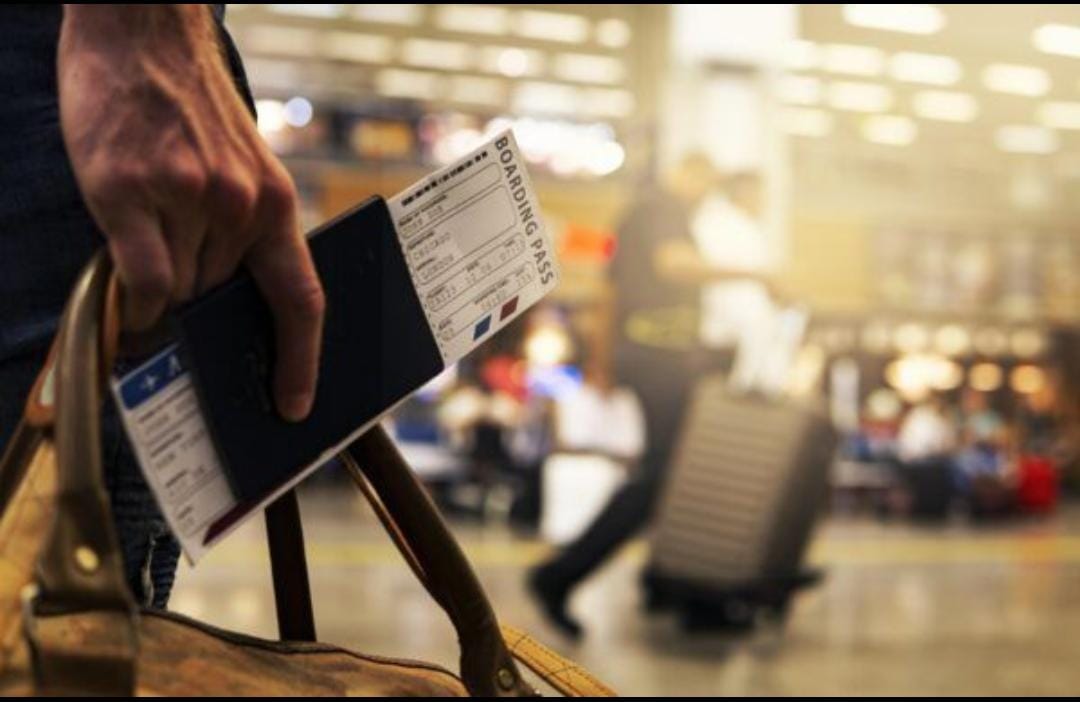
For most people, holding a deep blue Indian passport with National Emblem pasted on it feels like the ultimate proof of belonging to the country. It allows you to cross international borders, represents your nationality to foreign governments, and requires a notoriously thorough police background check to obtain.
However, on Wednesday, June 24, 2026, the Ministry of External Affairs publicly burst that bubble.
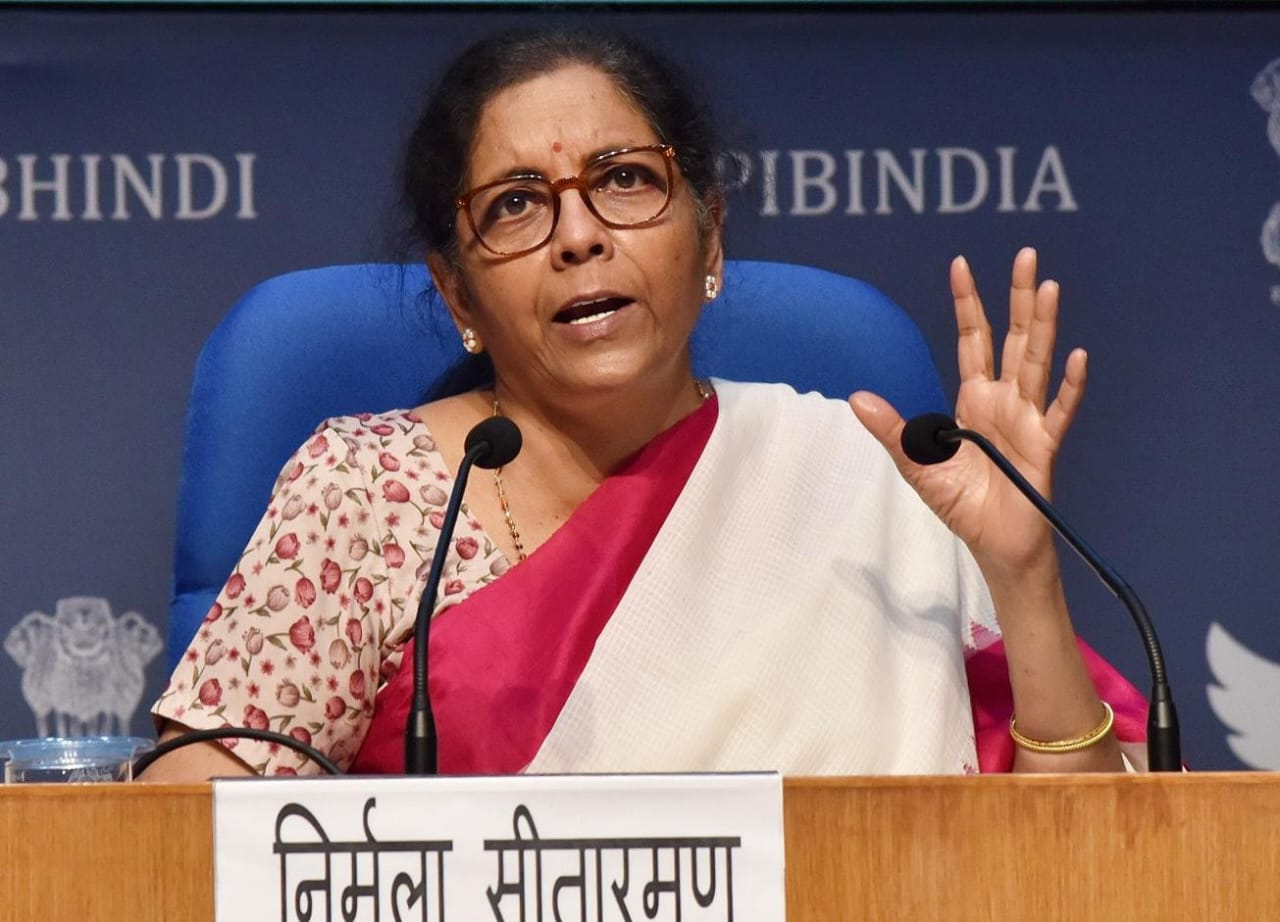
During an event marking the 14th Passport Seva Divas in New Delhi, a senior MEA official stated plainly that while a passport attests to your nationality abroad, it is fundamentally a travel document, not a legal document of citizenship.
This statement immediately caused an uproar. People pointed out the sheer irony of the situation: if the very ministry that issues passports so we can prove we are Indians abroad says it isn’t proof here at home, what is?
What Passports Act States?
The public confusion is completely justified because the Passports Act of 1967 seems, at first glance, to contradict the MEA’s statement. Section 6(2)(a) of the Act clearly states that the passport authority must refuse to issue a passport if the applicant is not a citizen of India.
If you legally must be a citizen to get one, how can the passport not be proof of citizenship?
The answer lies buried deeper in the same law. Legal experts point to Section 20 of the Passports Act, which gives the Central Government the extraordinary power to issue an Indian passport to a non-citizen if the government decides it is in the “public interest” to do so.
Because the law explicitly allows the government to hand a passport to someone who is not an Indian citizen, the courts have long held that simply holding the blue booklet cannot be treated as a 100% conclusive legal guarantee of citizenship. It is strong evidence, but it is not absolute proof. Furthermore, a passport can be obtained through fraud or administrative error, which is why the government legally retains the right to revoke it.
Distinction between Identity and Nationality
The MEA’s clarification has renewed a deeply frustrating debate: If a passport doesn’t prove citizenship, what does?
India does not issue a single, universally held document that serves as definitive proof of citizenship. When you look closely at the IDs in your wallet, they all serve completely different, highly specific purposes:
- Aadhaar Card:
As the Supreme Court recently reiterated during electoral roll hearings, Aadhaar is strictly proof of identity and residence. If you have physically lived in India for 182 days, you can get an Aadhaar card. It has nothing to do with nationality.
- Voter ID:
The Election Commission considers this proof of identity, residence, and electoral eligibility. While technically only citizens are allowed to vote, the card itself is not standalone proof of citizenship in a court of law.
- PAN Card:
Issued by the Income Tax Department to track financial transactions, this can be held by foreign expatriates and is completely unrelated to citizenship.
Bureaucratic Maze of Proving Citizenship
Because there is no “Citizenship Card,” proving that you are legally Indian relies on a complex mosaic of records, heavily dependent on exactly when you were born.
Over the decades, Parliament has progressively tightened the rules, moving away from granting citizenship simply by being born on Indian soil (jus soli) to requiring a bloodline connection (jus sanguinis). Today, your foundational document is your Birth Certificate, but its power depends entirely on your birth year:
1. Born between Jan 26, 1950, and July 1, 1987:
1. Born between Jan 26, 1950, and July 1, 1987:
Your birth certificate alone is absolute proof. Your parents’ nationalities do not matter.
2. Born between July 1, 1987, and Dec 3, 2004:
2. Born between July 1, 1987, and Dec 3, 2004:
You must have a birth certificate and prove that at least one of your parents was an Indian citizen at the time of your birth.
3. Born after Dec 3, 2004:
3. Born after Dec 3, 2004:
The rules are the strictest. You must prove that both parents are citizens, or that one is a citizen and the other is not an “illegal migrant.”
For the vast majority of the 1.4 billion people born in the country, citizenship is proven by digging through municipal birth registries and parents’ records, highlighting a bureaucratic reality that continues to confound the public.
CAA Factor: A Controversial Safety Net
This intense focus on documentation does not exist in a vacuum. The realization that most Indians do not possess conclusive proof of citizenship becomes deeply alarming when paired with the Citizenship Amendment Act (CAA), 2019 (whose rules were formally implemented in 2024), and the looming threat of a nationwide National Register of Citizens (NRC).
The CAA created a highly specific legal carve-out. It offers an expedited path to citizenship for undocumented migrants belonging to six specific religious minorities (Hindus, Sikhs, Buddhists, Jains, Parsis, and Christians) who fled persecution from Pakistan, Bangladesh, and Afghanistan before December 31, 2014.
While framed by the government as a humanitarian gesture, the CAA faces severe constitutional critique for introducing a religious test into a secular democracy. It explicitly excludes Muslims.
When you combine the CAA with the MEA’s stance on passports and IDs, a deeply unequal framework emerges:
- Documentation Crisis:
If a nationwide NRC is conducted, every Indian would be required to produce legacy documents (like ancestral birth certificates) to prove their citizenship. As the MEA just confirmed, showing a Passport, Voter ID, or Aadhaar will not be enough.
- Discriminatory Shield:
In a country where millions of poor and marginalized people lack flawless generational paperwork, many legitimate citizens would inevitably fail this test. However, under the CAA, non-Muslims who fail the documentation test are provided a theoretical safety net, they can claim to be refugees from neighboring countries and eventually acquire citizenship.
- Muslim Exclusion:
Because Muslims are excluded from the CAA, a Muslim citizen who cannot produce the exact same legacy birth documents faces the terrifying prospect of being declared a stateless “illegal migrant,” with no legal safety net available.
Ultimately, the MEA’s clarification that a passport is merely a travel document is legally accurate. But in a political climate where the burden of proving citizenship is incredibly high, and the laws governing who gets the benefit of the doubt are divided by religion, the lack of a universal citizenship document is no longer just a bureaucratic quirk, it is a potential crisis waiting to happen.
Yeh article aapko kaisa laga?